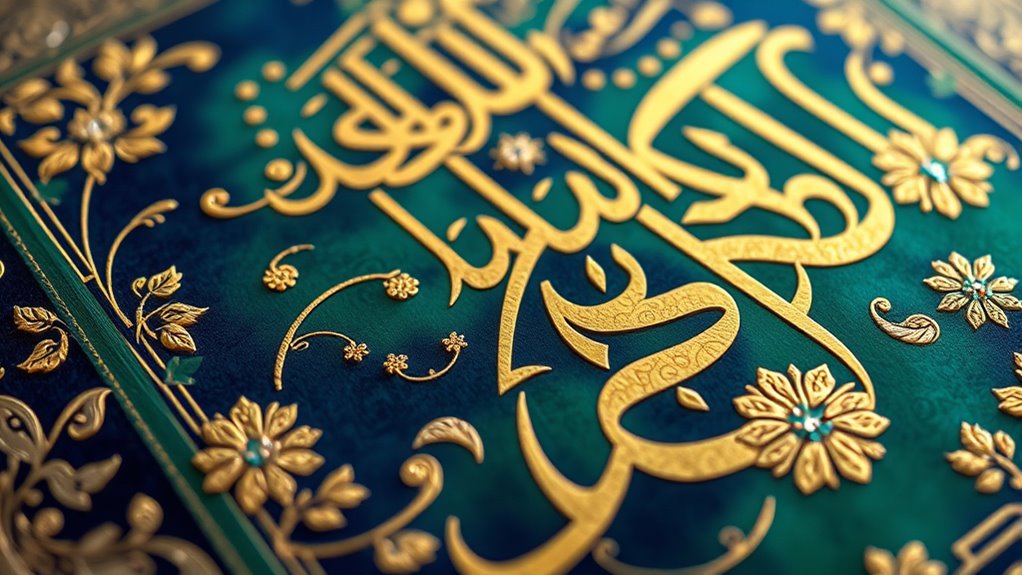

In Islamic art, calligraphy plays a crucial role by serving as both a spiritual practice and a decorative element. It transforms sacred texts like the Quran into intricate visual designs that elevate spaces and objects. Different styles reflect historical periods, regional influences, and societal needs, making calligraphy a unique expression of cultural identity. If you explore further, you’ll discover how this art form continues to evolve and influence Islamic culture today.
Key Takeaways
- Calligraphy is a central visual language that conveys spiritual and religious messages in Islamic art.
- It transforms functional spaces like mosques into artistic and spiritual environments through decorative inscriptions.
- Different styles, such as Kufic and Thuluth, reflect historical periods, regional influences, and societal needs.
- Calligraphy serves as a form of devotion, emphasizing harmony, proportion, and reverence in artistic expression.
- It has evolved over centuries, blending tradition with innovation to maintain its cultural and aesthetic significance.

Have you ever noticed how calligraphy elevates Islamic art beyond mere decoration? It’s not just about beautiful writing; it’s a profound expression of faith, culture, and history woven into every stroke. The historical development of Islamic calligraphy traces back to the earliest days of Islam, emerging as a way to preserve and transmit sacred texts like the Quran. Over centuries, it evolved from simple inscriptions to a highly refined art form with distinct stylistic variations. The early Kufic script, characterized by angular, geometric shapes, was prominent during the 7th and 8th centuries, used mainly for Quranic manuscripts and architecture. As time went on, new styles like Naskh, which is more cursive and easier to read, gained popularity for everyday use and copying texts. Later, Thuluth and Diwani styles developed, showcasing elaborate, flowing forms used for royal decrees and decorative purposes. These stylistic variations weren’t just about aesthetics—they reflected different historical periods, regional influences, and societal needs. For example, the ornate Thuluth script became prominent during the Ottoman Empire, often seen in grand calligraphic panels on mosques and tombs. Meanwhile, the more compact Naskh was favored for its practicality in printing and manuscripts.
Throughout history, calligraphy has been more than just a visual language; it’s a spiritual act, a way to connect with the divine. Artists dedicated themselves to perfecting their craft, often viewing calligraphy as a form of devotion. This deep reverence is evident in the intricate patterns, harmonious proportions, and balance that characterize each script. The stylistic variations also demonstrate how Islamic calligraphy adapted to different cultural contexts, blending regional motifs with classical styles. For instance, Persian calligraphy introduced new flourishes and decorative elements, enriching the tradition further. Calligraphy was often integrated into architecture, adorning mosques, palaces, and textiles, transforming everyday spaces into expressions of faith and artistry. The development of calligraphy in Islamic art shows a continuous dialogue between tradition and innovation, with each era contributing new styles, techniques, and meanings. Whether in the form of a Quranic verse, a decorative panel, or a personal inscription, calligraphy remains a essential, living tradition that elevates Islamic art from mere decoration into a powerful visual language that communicates spiritual and cultural identity.
Frequently Asked Questions
How Has Islamic Calligraphy Influenced Modern Graphic Design?
Islamic calligraphy influences modern graphic design through calligraphic typography, blending traditional scripts with contemporary styles. You’ll notice its impact in logo design, branding, and digital art, where intricate letterforms add elegance and cultural depth. Digital design integration makes it easier to incorporate calligraphic elements seamlessly, allowing you to create visually striking works that honor Islamic artistic heritage while appealing to modern audiences.
What Are the Different Styles of Islamic Calligraphy?
You explore various Islamic calligraphy styles like Kufic script, known for its angular, geometric form, and Thuluth style, distinguished by its elegant, flowing curves. While Kufic emphasizes boldness and structure, Thuluth offers grace and ornamentation. These styles intertwine tradition and artistry, shaping the visual language of Islamic art. By understanding their differences, you appreciate how calligraphy reflects spiritual and cultural expression across centuries.
How Is Calligraphy Used in Islamic Architecture?
You see calligraphy in mosques as it adorns walls, domes, and arches, creating a spiritual atmosphere. Calligraphic ornamentation often features verses from the Quran, emphasizing divine beauty. Artists carefully craft these inscriptions, integrating them seamlessly into architecture. This use of calligraphy elevates the space, making it both visually stunning and spiritually meaningful, inviting reflection and reverence for the divine word in every architectural detail.
What Materials Are Traditionally Used in Islamic Calligraphy?
You notice that traditional ink, made from ink sticks, is essential for Islamic calligraphy, creating rich, deep lines. Parchment and paper serve as your surfaces, while reed pens shape your strokes with precision. These materials, chosen for their durability and beauty, allow your art to flourish, connecting centuries of Islamic tradition. The harmony of ink, parchment, reed pens, and paper embodies the spiritual and artistic depth of Islamic calligraphy.
How Do Islamic Calligraphers Learn and Master Their Craft?
You learn Islamic calligraphy through a rigorous apprenticeship, where you observe and practice under a master calligrapher. You master calligrapher techniques by studying traditional scripts, copying masterworks, and receiving personalized feedback. Repetition and discipline are key as you develop precision and fluidity. With dedication, you refine your skills, internalize the art’s spiritual and aesthetic principles, and eventually create your own beautiful, meaningful calligraphic works.
Conclusion
So, next time you admire Islamic art, remember that its true beauty isn’t just in the intricate patterns or vibrant colors, but in the elegant calligraphy that often goes unnoticed. Ironically, the very script meant to glorify divine words becomes a silent, overlooked masterpiece. You might miss its significance, but it’s the soul of Islamic art—proof that sometimes, the most profound messages are hidden in plain sight, waiting for you to truly see.