
To get clean lines and flat edges in tufting rugs, use sharp tools like a tufting gun and scissors for precise cuts. Outline your pattern with painter’s tape to guide your stitches and maintain consistent tension to keep edges neat. Trim excess yarns regularly to level the pile and ensure uniformity. Proper planning, tool maintenance, and finishing techniques make a big difference, so if you want more tips, keep exploring these essential steps.
Key Takeaways
- Use a sharp tufting gun and quality backing material for precise cuts and stable edges.
- Outline your pattern with painter’s tape to guide stitches and maintain sharp lines.
- Maintain consistent tension during tufting to prevent uneven edges or puckering.
- Trim excess yarns and loose fibers carefully with sharp scissors for a flat, polished surface.
- Regularly check and reinforce edges, and properly maintain tools to ensure clean, professional finishes.

Tufting rugs are a popular and versatile way to add style and comfort to any space. Whether you’re creating a custom piece or refurbishing an existing rug, mastering the basics of tufting helps guarantee your finished product has clean lines and flat edges. One of the key skills you’ll want to develop is your technique for achieving precise cuts and consistent pile height. Using DIY techniques, you can control every detail of your rug, from the shape to the texture. Starting with a sharp tufting gun and quality backing material makes a big difference, allowing you to create sharp outlines and smooth edges. When you’re working on your rug, keep your tools well-maintained; a dull needle or worn-out gun can lead to uneven cuts or loose fibers, which compromise the rug’s look and durability. Additionally, understanding the importance of tool maintenance can help prevent common issues during tufting.
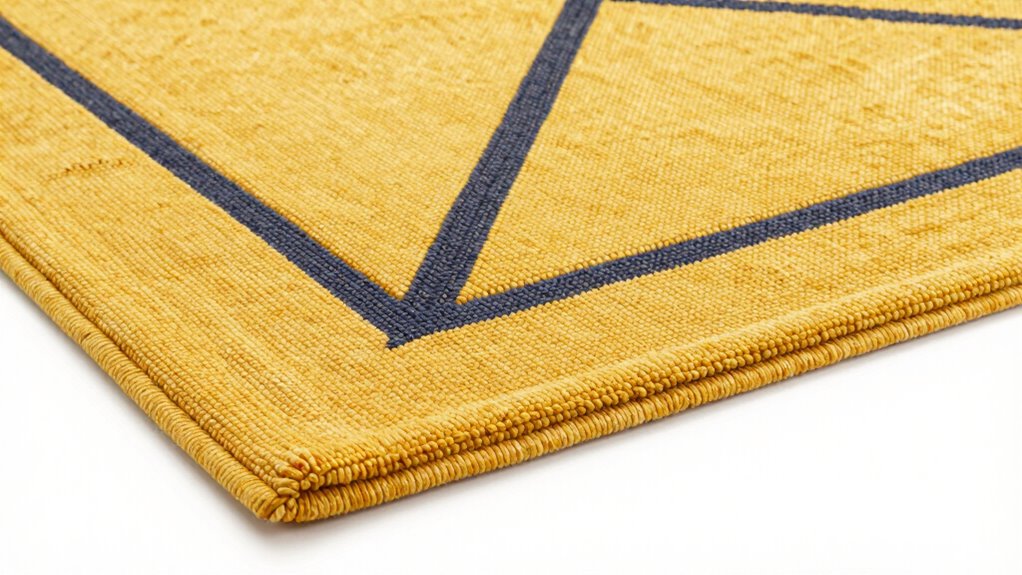
To get clean lines, it’s important to plan your design carefully. Use masking tape or painter’s tape to outline your pattern on the backing before you start tufting. This helps guide your stitches and keeps edges sharp. As you work, stay consistent with your tension—pull too tight, and you risk warping the shape; too loose, and the pile may look uneven. Regularly check your work from different angles to guarantee your lines are straight and edges are flat. When you finish tufting, trimming excess yarns and loose fibers is essential for a polished look. Use sharp scissors or a rotary cutter to clean up edges, making sure the pile is level and flat across the entire rug. Proper finishing techniques help ensure your rug maintains its crisp lines and smooth edges over time.
Plan your design carefully with masking tape and maintain consistent tension for sharp, flat edges.
Rug maintenance plays an essential role in keeping your tufted rug looking its best over time. Regular vacuuming removes surface dirt and prevents particles from embedding into the fibers, which can cause fraying or uneven wear. If your rug gets stained, address spills immediately with a gentle cleaner suitable for the fiber type. Avoid harsh chemicals, as they can damage the fibers or cause discoloration. Also, periodically check for loose tufts or unraveling edges. If you notice any, reinforce them with a bit of fabric glue or by re-tufting small areas. Proper rug maintenance not only preserves the crispness of your clean lines and flat edges but also extends the life of your craftsmanship.
Incorporating good DIY techniques and diligent rug maintenance guarantees your tufted rug remains visually striking and durable. Precision in your initial work, combined with regular care, helps your rug keep that freshly finished look for years. With patience and attention to detail, you can produce a tufting project that boasts sharp lines, flat edges, and a professional appearance, making your space uniquely yours.
Frequently Asked Questions
What Are the Best Tools for Creating Clean Lines in Tufted Rugs?
To create clean lines in tufted rugs, you should use a tufting gun with a precision needle and a straight edge or guide frame. These tools help you maintain consistent tension and control during tufting techniques. Additionally, placing rug padding underneath guarantees stability, preventing shifting that can ruin your clean lines. With these tools, you’ll achieve sharp, flat edges and professional-looking results every time.
How Do I Prevent Tufting Mistakes on the Edges?
Did you know that 78% of rug makers struggle with edge finishing? To prevent tufting mistakes on the edges, focus on tension control and consistent pressure while tufting. Use a guide or straight edge to keep your edges straight, and regularly check your tension to avoid puckering. Proper edge finishing techniques, like trimming and binding, also help make sure clean, flat edges without mistakes.
Can I Dye or Customize My Tufted Rug’s Colors?
Yes, you can dye or customize your tufted rug’s colors. To guarantee successful color blending and pattern customization, use fabric dyes suitable for your rug material. Test dyes on a small, hidden area first. You can mix colors to achieve unique shades or create gradients. Be patient and work gradually to prevent uneven dyeing. Customizing your rug allows you to match your decor perfectly and express your personal style.
What Are Common Issues That Cause Uneven Edges?
Uneven edges often happen because of edge curling or uneven tension during tufting. When your tension isn’t consistent, the edges can ripple or curl, making them look uneven. To fix this, guarantee your tension stays uniform throughout the process and press the edges flat while the rug dries. Properly securing the edges and maintaining steady tension prevents curling and results in cleaner, straighter edges.
How Long Does It Take to Make a Professionally Finished Tufted Rug?
It typically takes about 20-40 hours to make a professionally finished tufted rug, depending on size and complexity. When using DIY techniques, you might spend extra time perfecting clean lines and flat edges. Regular rug maintenance, like cleaning and trimming loose fibers, helps uphold your rug’s appearance. Planning your project and taking your time ensures a polished finish, making your craftsmanship stand out.
Conclusion
Now that you know how to create clean lines and flat edges, your tufted rug will stand out as both art and comfort. Just as precision elevates a masterpiece, attention to detail transforms a simple project into a polished masterpiece. Embrace the process, knowing each stitch and edge reflects your craftsmanship. In the end, a well-made rug isn’t just functional—it’s a proof to your patience and skill, blending beauty with practicality in perfect harmony.