
To build cohesion across different mediums, you should focus on applying consistent visual elements like color schemes, stylistic traits, and motifs. Use a unified palette and recurring themes to strengthen your artistic identity, adjusting textures and hues for each format to maintain harmony. By planning your choices intentionally, each piece becomes part of a larger, connected story. Keep exploring these strategies to create a body of work that feels authentic and unmistakably yours.

Get the latest gadgets delivered free with Prime
- Fast, free delivery on millions of items
- Prime Video, Amazon Music and more included
- Member-only deals all year
Key Takeaways
- Maintain a consistent color palette and tone to reinforce artistic identity across various mediums.
- Apply core stylistic elements, such as line quality or motifs, uniformly to create a recognizable visual language.
- Adapt textures and colors thoughtfully to ensure they translate well between digital and physical formats.
- Plan compositions and thematic elements carefully to create a cohesive narrative throughout the body of work.
- Focus on developing an authentic visual style that flows seamlessly across all formats, enhancing recognition and connection.
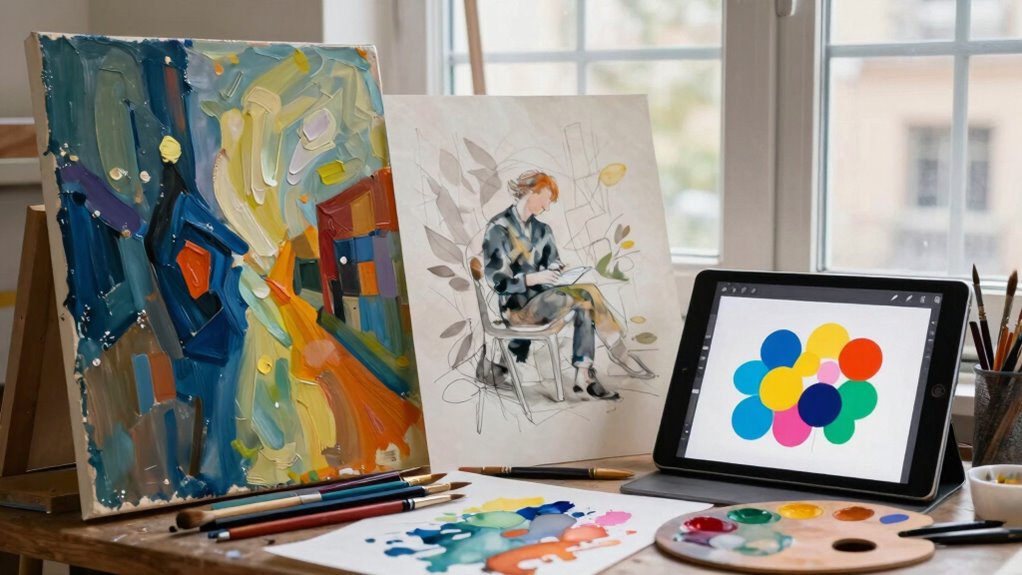
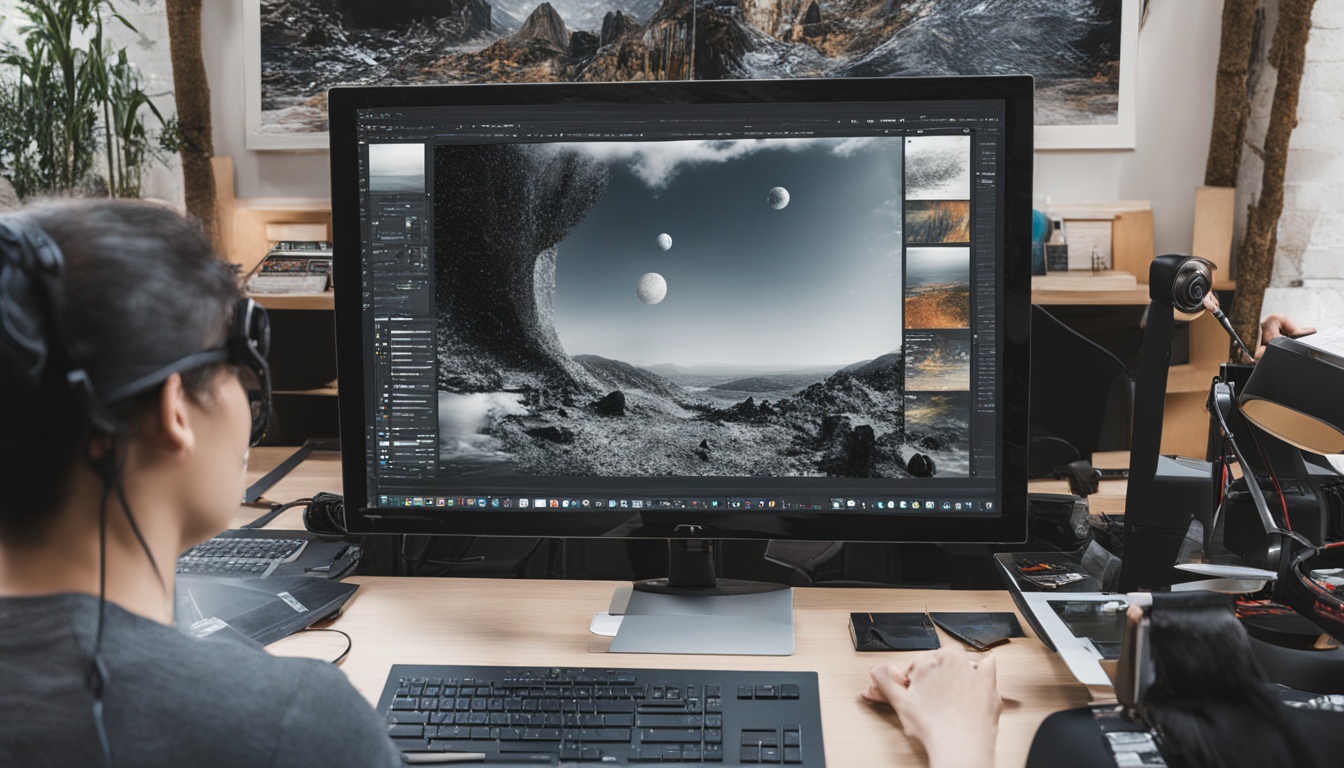
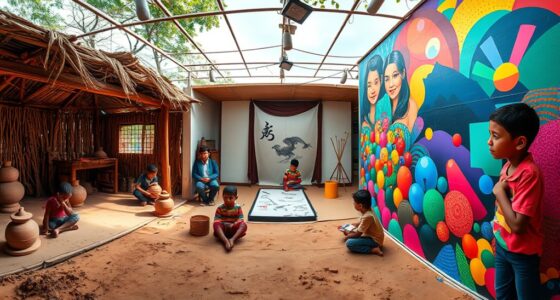
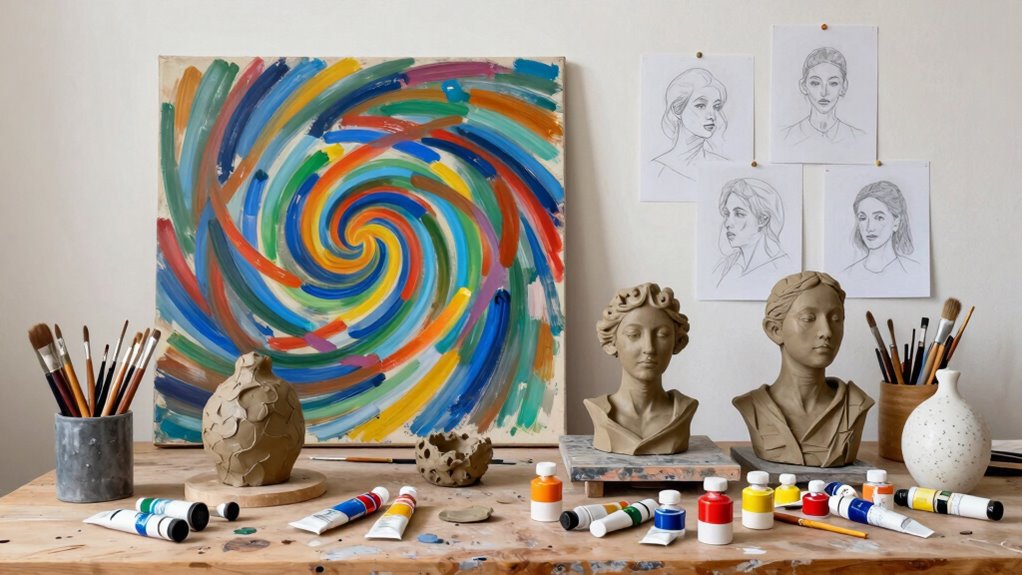
In today’s interconnected art world, artists are increasingly blending different mediums to create cohesive and dynamic works. When you venture into combining painting, digital art, sculpture, or mixed media, maintaining a sense of unity becomes essential. You want your audience to recognize your signature style regardless of the medium used. This is where color consistency and style integration come into play. These elements act as bridges, linking diverse forms into a unified visual language.
Color consistency is your first tool in building cohesion. Whether you’re working with oils, collage, or digital graphics, sticking to a specific palette helps reinforce your identity across mediums. For example, if you favor warm earthy tones, ensure these colors appear in every piece, no matter the medium. This avoids visual dissonance and guides viewers smoothly from one work to another. When you develop a signature color scheme, it becomes a visual anchor, making your work instantly recognizable. Experiment with how different mediums interpret color—digital screens might make hues pop more, while physical textures can add depth. Adjust your palette accordingly to maintain harmony and ensure your color choices evoke the same moods and themes across your entire body of work. Additionally, understanding how different mediums interpret color and texture can help you adapt your palette effectively. Recognizing how to translate these elements across formats is crucial for maintaining overall visual cohesion.
Maintain your signature palette across all mediums to ensure visual harmony and instant recognition.
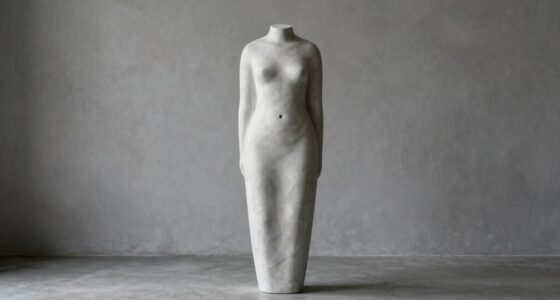
Style integration is equally critical. You want your artistic voice to resonate through every piece, whether it’s a sculpture or a digital illustration. Focus on core stylistic elements—such as line quality, composition, or thematic motifs—and apply them consistently. For instance, if your work is characterized by bold, expressive lines, carry this trait across all mediums. This doesn’t mean copying the same technique in every piece but rather adapting your style’s essence to fit each medium’s strengths. When your style flows seamlessly from one form to another, it creates a cohesive narrative for your audience. You might also develop signature motifs or recurring themes that appear in different formats, further tying your work together.
Ultimately, building cohesion across mediums requires intentionality. You plan your color schemes and stylistic choices carefully, viewing each piece as part of a larger conversation. By maintaining color consistency and integrating your style across different formats, you create a cohesive body of work that feels unified and authentic. This approach not only elevates your artistic practice but also helps your audience connect with your work on a deeper level. In the end, it’s about creating a visual language that’s unmistakably yours—no matter the medium.
As an affiliate, we earn on qualifying purchases.
Frequently Asked Questions
How Do Artists Choose Which Mediums to Combine?
You choose mediums based on their compatibility and how well they complement each other, considering medium compatibility. Artistic experimentation guides you to explore different combinations, pushing boundaries and discovering unique textures or effects. You might start with familiar mediums and gradually test new ones, paying attention to how they interact visually and conceptually. Trust your intuition and goals, selecting mediums that enhance your message and create a cohesive, dynamic piece.
What Challenges Arise When Blending Different Artistic Styles?
Blending styles is like steering through a maze of mirrors—disorienting yet enthralling. You face challenges in maintaining stylistic consistency while fostering interdisciplinary collaboration, risking disjointed visuals or messages. The symbols you choose must harmonize across mediums, ensuring each element complements the others. Balancing these factors demands careful planning, patience, and adaptability. When done right, your work becomes a unified tapestry that invites viewers to explore depths beyond the surface.
How Does Audience Perception Influence Medium Integration?
Audience perception profoundly influences how you integrate different mediums. When your audience engages with your work, their perception influence guides your choices, ensuring the mediums resonate and feel cohesive. You adapt your approach based on feedback and expectations, creating a seamless experience. By understanding your audience’s perceptions, you can craft art that not only captures attention but also fosters deeper engagement across diverse mediums, strengthening the overall impact of your work.
Are There Specific Techniques to Unify Diverse Mediums?
You can unify diverse mediums through technique experimentation, exploring how different tools and methods interact. Focus on creating visual harmony by balancing colors, textures, and forms across all mediums. Try blending techniques or repeating motifs to establish consistency. By actively experimenting and refining your approach, you develop a cohesive visual language that seamlessly bridges various art forms, making your work more unified and engaging for your audience.
How Do Artists Maintain Their Unique Voice Across Mediums?
Did you know that 65% of artists say maintaining a consistent voice across mediums is key to their success? To do this, focus on thematic consistency, ensuring your core ideas remain clear no matter the format. Embrace stylistic evolution by adapting your unique style thoughtfully—this helps your voice stay authentic while fitting each medium. By balancing these elements, you keep your work cohesive and recognizable across diverse artistic expressions.
As an affiliate, we earn on qualifying purchases.
Conclusion
By blending bold brushstrokes, striking sculpture, and seamless storytelling, you build a bond that bridges mediums and boundaries. Embrace experimentation, elevate your expression, and engage your audience with energy and empathy. When your work weaves a wondrous web of unity, you’ll witness how diverse disciplines dance together in delightful harmony. Remember, mastery emerges when you nurture nuance, nurture your niche, and never neglect the power of persistent passion. Keep creating, connecting, and enthralling!
digital and physical art texture brushes
As an affiliate, we earn on qualifying purchases.
As an affiliate, we earn on qualifying purchases.
As an affiliate, we earn on qualifying purchases.
Halloween Picks
halloween
As an affiliate, we earn on qualifying purchases.