Your studio lighting might be misleading your eyes and camera, causing colors to look off. To capture true colors, you need to match your light’s color temperature with your camera’s white balance setting. Use a light meter to measure light levels accurately, and adjust your lights or camera accordingly. Shooting in raw mode also helps fine-tune colors later. Keep going, and you’ll discover how to master your lighting for vibrant, authentic results.
Key Takeaways
- Use a light meter to measure and balance your light sources for consistent, accurate exposure.
- Adjust your camera’s white balance to match the lighting’s color temperature, ensuring true-to-life colors.
- Employ proper color temperature settings for your lights—daylight (higher Kelvin) or tungsten (warmer tones)—to prevent color shifts.
- Shoot in RAW format to fine-tune white balance and correct color inaccuracies during post-processing.
- Regularly calibrate your lighting and camera system to maintain color consistency and avoid misleading color casts.
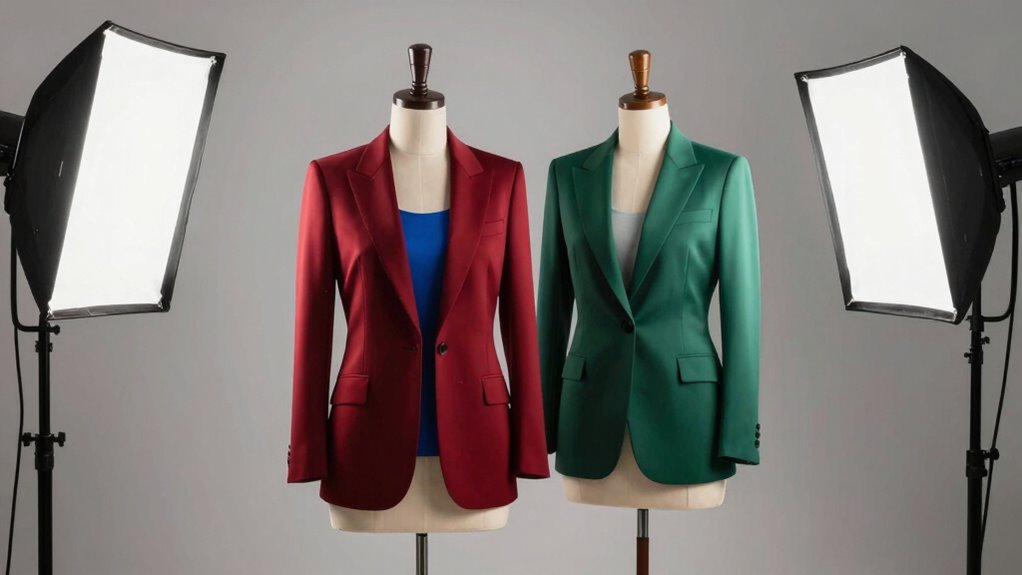
Have you ever wondered how studio lighting influences the true colors in your photographs? It’s a pivotal question because, without proper understanding, your images can look washed out, overly warm, or eerily cold—all because of how your lighting interacts with the scene. One of the key elements to mastering true color reproduction is understanding color temperature. Every light source has a specific color temperature, measured in Kelvin, that affects how colors appear. For instance, daylight has a higher Kelvin value, giving off a bluish hue, while tungsten lights emit a warmer, more yellowish glow. If you don’t consider this, your camera might record colors that don’t match what your eyes see, leading to inaccuracies. Adjusting your lights to match the desired color temperature, or balancing your camera’s white balance settings accordingly, helps guarantee that the colors in your photos are true to life.
Alongside color temperature, light metering plays an essential role in capturing accurate colors. light metering involves measuring the light falling on your subject to determine the correct exposure. Many photographers rely on their camera’s built-in metering modes, but in a studio setting, manual light metering gives you greater control. By using a light meter, you can precisely measure the intensity of your lights and adjust them to achieve a consistent exposure. This consistency is indispensable because inconsistent lighting can skew color rendition. When you meter your lights, you’re fundamentally creating a baseline so that all your colors are captured accurately, regardless of the lighting conditions or the type of light source you’re using. Paying attention to lighting consistency is crucial for ensuring color accuracy across your shots.
Balancing your light sources through proper metering and understanding their color temperature helps eliminate the “lying” effect of studio lighting. If your lights are too warm or too cool and you neglect to adjust your camera settings, your images won’t reflect the true colors of your scene. Instead, they will be tinged with unwanted color casts. To avoid this, always set your white balance or shoot in raw mode, where you can fine-tune colors during post-processing. Combining accurate light metering with an awareness of your lights’ color temperature ensures that the colors in your photographs are as vibrant and true to life as possible. This attention to detail makes a tangible difference, transforming your studio shots from flat and inaccurate to vivid and authentic.
Frequently Asked Questions
How Does Ambient Light Affect Color Accuracy in Studio Photos?
Ambient light can greatly impact your color accuracy in studio photos by causing ambient interference, which disrupts color consistency. It introduces unwanted color casts and fluctuations, making your images look different under various conditions. To maintain true color, you should control ambient light with blackout curtains or flags, and use consistent, quality lighting sources. This way, you minimize interference and guarantee your colors stay accurate across all shots.
Can Different Camera Settings Impact True Color Reproduction?
You can definitely impact true color reproduction with different camera settings. Adjusting white balance guarantees your colors stay accurate, avoiding a washed-out or overly warm look. Proper camera settings matter because they influence how your image is captured. Don’t put the cart before the horse; get your white balance right first, then use color grading in post-processing to fine-tune hues. This combo keeps your colors true to life.
What Are the Best Practices for Calibrating Studio Lighting?
To guarantee accurate color calibration and light consistency, you should regularly use a spectrometer or colorimeter to measure your studio lights. Adjust your lighting setup based on these readings, and verify with a calibrated monitor. Consistently check your lights before shoots, and avoid mixing different light sources. Proper calibration helps you achieve true-to-life colors, giving your images the accuracy and consistency they need.
How Do Colored Gels Influence Perceived Color Correctness?
Did you know that over 80% of viewers perceive colors differently under various lighting conditions? Colored gels markedly influence perceived color correctness by altering light’s hue before it hits your subject. Gel filters help you control and match color perception, ensuring accurate color rendering. By carefully choosing and balancing gels, you prevent color shifts, maintain true color fidelity, and create consistent, professional-looking images that reflect real-life hues.
Are There Specific Light Meters for Measuring Color Temperature?
Yes, there are specific light meter types designed for accurate color temperature measurement. These light meters, like color meters or spectrometers, help you precisely gauge the color temperature of your lights. By using one, you guarantee your lighting setup produces consistent, true-to-life colors. Investing in a dedicated color temperature meter allows you to verify your lights’ output and make adjustments, resulting in more accurate color rendering in your photos.
Conclusion
Remember, your studio lighting isn’t telling the whole truth about color—it’s like a chameleon, constantly shifting. To get true, accurate colors, trust your eyes over the lights and use a good color checker. By doing so, you’ll reveal the real hues hiding behind the illusions, turning your studio into a haven of authenticity. Don’t let your lights fool you; instead, let your eye be the compass guiding you to true color.