
In the digital age, you experience art through new media like virtual reality, interactive installations, and internet platforms. Technology makes art more accessible and encourages your active participation, whether by exploring virtual exhibitions or collecting digital works using blockchain. These innovations blur the lines between creators and viewers, fostering collaboration and new forms of expression. To discover how technology continues to reshape artistic boundaries, keep exploring these exciting developments.
Key Takeaways
- Digital technology transforms traditional art into immersive experiences using VR, virtual exhibitions, and interactive digital landscapes.
- Accessibility is expanded through online platforms, enabling global audiences to view and participate in art actively.
- Blockchain and NFTs establish secure ownership, provenance, and royalties for digital artworks, reshaping art markets.
- Technology blurs roles between artists and viewers, fostering direct interaction and new collaborative creative practices.
- Emerging immersive tools and high-fidelity displays enhance engagement, pushing art beyond conventional physical and digital boundaries.
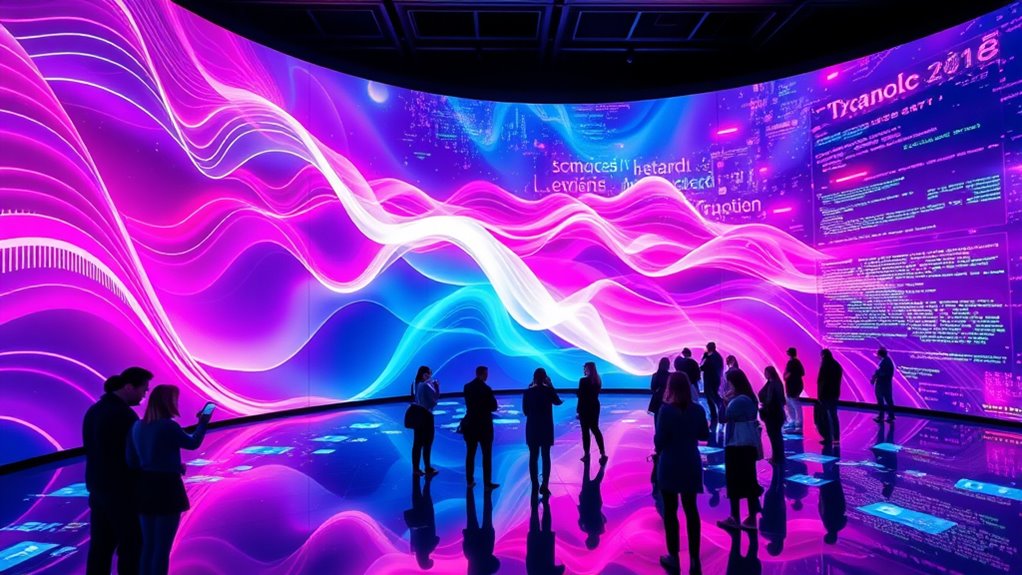
In the digital age, art has transformed from traditional mediums into dynamic, interactive experiences that reach audiences worldwide. You now have access to immersive technologies like Virtual Reality (VR) that allow you to step inside artworks and explore them from every angle. No longer confined to galleries or physical spaces, artists leverage VR to create virtual exhibitions where viewers can wander through digital landscapes or participate in interactive installations. This shift democratizes art, making it accessible to anyone with an internet connection, and transforms passive viewers into active participants. You can experience a painting in 3D, walk through a sculpture, or attend a live concert from your living room—all thanks to VR. Additionally, the integration of high-fidelity digital displays enhances the realism and immersion of these virtual experiences, making them more engaging and authentic for viewers like you. Incorporating digital display technology also allows for more precise and detailed visualizations, enriching your overall experience. Meanwhile, Blockchain Art is redefining how you buy, sell, and own digital artworks. Using blockchain technology, artists can create unique, verifiable digital assets called non-fungible tokens (NFTs). This innovation guarantees that each piece has a secure, tamper-proof record of ownership, giving you confidence in the authenticity and provenance of the art you acquire online. Blockchain also enables artists to receive royalties automatically whenever their work is resold, creating sustainable income streams. As a collector or enthusiast, you can now build a digital portfolio of rare, one-of-a-kind pieces, and prove ownership with blockchain’s transparency and security. This decentralization diminishes the influence of traditional gatekeepers like galleries and auction houses, empowering artists and collectors alike. Both Virtual Reality and Blockchain Art exemplify how technology blurs the boundaries between creator and audience. You don’t need to be physically present to experience groundbreaking art; VR brings exhibitions directly to your headset, while blockchain makes it easy to trade and display digital art securely. These innovations foster new forms of expression and engagement, allowing you to participate in art’s evolution in ways that were once impossible. Whether it’s exploring a virtual gallery, owning a rare digital piece, or interacting with art through augmented or mixed reality, these tools expand your potential to connect with creativity. As the digital landscape continues to evolve, you find yourself at the forefront of a cultural shift—where art is more accessible, interactive, and innovative than ever before. Recognizing the importance of high-fidelity digital displays can further enhance your experience of these digital artworks.
Frequently Asked Questions
How Do Digital Art Markets Differ From Traditional Art Markets?
Digital art markets differ from traditional ones through unique market dynamics and collector behavior. You’ll notice that online platforms enable faster transactions, broader reach, and increased accessibility, changing how art is bought and sold. Collectors often act more impulsively, driven by digital trends and social media influence. This shift creates a more fluid, immediate market environment, contrasting with the slower, more curated traditional art market.
What Are the Copyright Issues Unique to Internet Art?
Imagine your digital art as a delicate butterfly fluttering through a busy marketplace. You face copyright issues like digital ownership, where others may claim your work as theirs. Online infringement becomes a constant threat, making it hard to protect your creations. You must navigate these challenges, safeguarding your art from unauthorized use, while understanding that the internet’s open nature often blurs boundaries, complicating rights and protections.
How Does Digital Art Influence Art Education Methods?
Digital art transforms your approach to art education by incorporating interactive techniques that engage students actively. You can facilitate collaborative projects where learners create and share digital works, fostering teamwork and creativity. This method makes learning more dynamic and accessible, allowing students to experiment with new media. As a result, you enhance their understanding of contemporary art practices, preparing them for a future where digital literacy and collaboration are essential skills.
Can Digital Art Be Considered Authentic or Original?
You might wonder if digital art is truly authentic or original. The authenticity debate centers on whether digital creations hold the same value as traditional art, but your view can shift with context. While originality concerns exist, digital art can be just as genuine, especially when it reflects personal expression or innovative techniques. So, don’t dismiss digital art’s authenticity—it’s evolving, and its originality can be just as impactful as traditional works.
What Role Do Virtual Reality and Augmented Reality Play in Contemporary Art?
Virtual reality and augmented reality revolutionize contemporary art by creating immersive experiences that deeply engage you. They enable interactive storytelling, allowing you to explore artworks in dynamic, personalized ways. These technologies break down traditional boundaries, making art more accessible and participatory. As you navigate virtual spaces, you become part of the artistic narrative, enhancing your emotional connection and understanding of the work’s message.
Conclusion
As you explore art in the digital age, you realize it’s both familiar and revolutionary. Just like flipping through a photo album, you can now swipe through vibrant online galleries, yet behind each click lies groundbreaking technology. It’s a world where traditional brushstrokes meet pixel-perfect precision, blending the old with the new. Embrace this fusion, for in this digital landscape, your creativity becomes limitless—proving that even in pixels, art remains timeless.