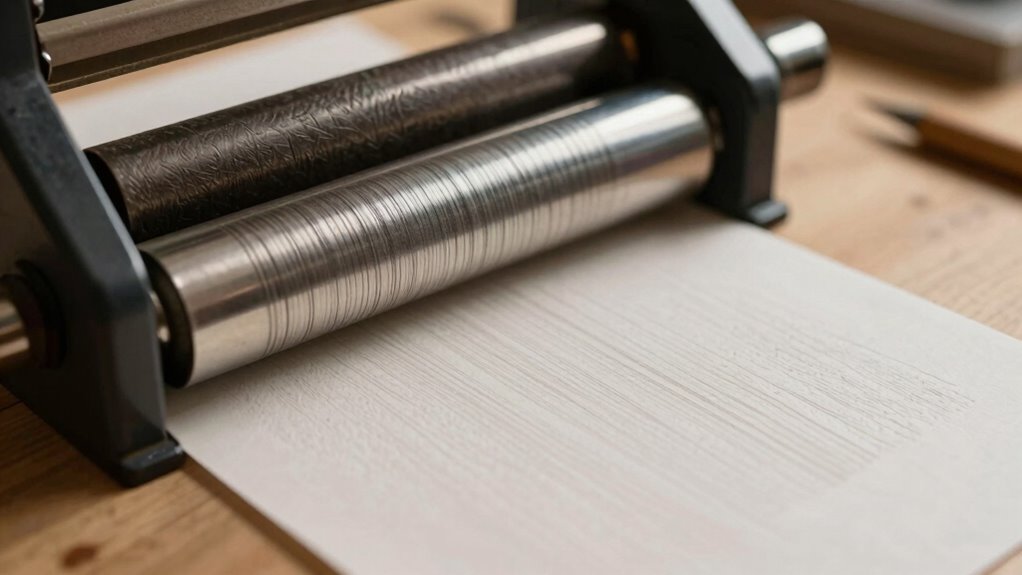

To stop crushing paper and get detailed prints, start by gradually adjusting your etching press pressure, using scrap materials to test. Aim for a balance where ink transfers crisply without damaging or deforming the paper. Use subtle, incremental changes, and watch for signs of smudging or tearing. Familiarize yourself with your press’s controls, and be prepared to tweak settings during each run. Keep moving forward, and you’ll discover how precise pressure brings out the fine details you want.
Key Takeaways
- Begin with light pressure and gradually increase until ink transfers clearly without causing paper damage.
- Use test prints on scrap material to find the optimal pressure for detailed, crisp images.
- Monitor ink transfer closely; too much pressure causes smudging, too little results in faint images.
- Adjust press settings incrementally, ensuring even pressure distribution across the entire print area.
- Regularly inspect prints during calibration to maintain consistent detail and prevent crushing the paper.

When working with an etching press, applying the correct pressure is vital to achieve clean, detailed prints without damaging your artwork. Too much pressure can crush the paper or distort the delicate lines in your image, while too little leaves the ink uneven or faint. To prevent this, you need to master pressure calibration, which involves adjusting the press to apply just the right amount of force. Start by testing on scrap material, gradually increasing pressure until you see a clear, crisp transfer of your image without any smudging or tearing. This calibration process is pivotal because it ensures consistent results across different prints, saving you time and materials in the long run.
A key aspect of proper pressure calibration is managing ink distribution. When you set the press correctly, the pressure evenly presses the inked plate against the paper, allowing the ink to transfer uniformly. If the pressure is too high, it can cause ink to smudge or become overly dense in some areas, obscuring fine details. Conversely, if the pressure is too low, the ink won’t transfer fully, resulting in faint or incomplete images. Achieving the right balance means paying close attention to how the ink spreads on your plate and how it transfers onto the paper. You should consistently check the ink distribution before running a full print, making small adjustments to your press settings if needed.
Proper pressure calibration also involves understanding the specifics of your etching press and the materials you’re working with. Different presses have varying mechanisms for adjusting pressure, so familiarize yourself with these controls. Use the pressure gauge if your press has one, or rely on trial-and-error with light pressure adjustments. Remember, the goal is to apply enough force to transfer the ink clearly but not so much that you damage the paper or distort your artwork. Regularly inspecting your prints during the process helps you make real-time adjustments, guaranteeing each piece maintains high quality.
Frequently Asked Questions
How Do I Determine the Ideal Pressure for Different Paper Types?
To determine the ideal pressure for different paper types, start by considering the paper’s texture and ink absorption. Thicker, textured papers need less pressure to avoid crushing, while smoother, more absorbent papers may require more pressure for sharp details. Test on small samples, gradually adjusting until you see crisp lines without damage. Always observe how the ink transfers and the paper’s surface to find the perfect balance.
Can Adjusting Pressure Affect the Longevity of My Etching Press?
Adjusting pressure is like tuning a finely crafted instrument—too much can wear out your press faster. Proper pressure maintenance and regular press calibration help preserve your equipment’s lifespan. When you dial in the correct pressure, you prevent unnecessary strain on parts, ensuring longevity. Consistent calibration keeps your press operating smoothly, so you get crisp prints without risking damage. Always monitor and adjust carefully to extend your press’s useful life.
What Signs Indicate That the Pressure Is Too High or Too Low?
You’ll notice if the pressure is too high when your paper distorts or wrinkles, and your pressure gauge shows a reading beyond recommended settings. Conversely, if pressure is too low, you’ll see faint or incomplete etching, and the gauge will register a lower number. Adjust the pressure gradually and monitor these signs to make certain you get crisp details without damaging your paper or press.
Are There Safety Precautions When Modifying Press Pressure Settings?
Think of adjusting press pressure like tuning a musical instrument — safety matters. When modifying press settings, always follow press safety protocols and consult equipment calibration guides. I once saw an artist accidentally damage their press because they skipped safety steps, risking injury and costly repairs. Always wear protective gear, double-check settings, and test on scrap material first. These precautions guarantee safe, precise adjustments that protect both you and your equipment.
How Does Pressure Impact the Detail and Quality of Etched Images?
When you adjust the pressure, it directly impacts your etched image’s detail and quality. Proper pressure calibration ensures you avoid crushing paper, allowing etching finesse to shine through. Too much pressure can blur lines, while too little might lack definition. By fine-tuning your press pressure, you’ll achieve crisp, detailed images. Consistently calibrate your press to maintain peak etching finesse, resulting in high-quality, professional-looking prints.
Conclusion
Remember, finding the right etching press pressure is like gently guiding a whisper rather than shouting. When you soften your touch, you invite your artwork to reveal its finest details without the risk of overstepping boundaries. Embrace patience and subtlety, allowing your techniques to breathe life into each print. With a delicate approach, you’ll discover a world of intricate beauty—where every line tells a story, and your creativity flows freely, unburdened by unnecessary pressure.