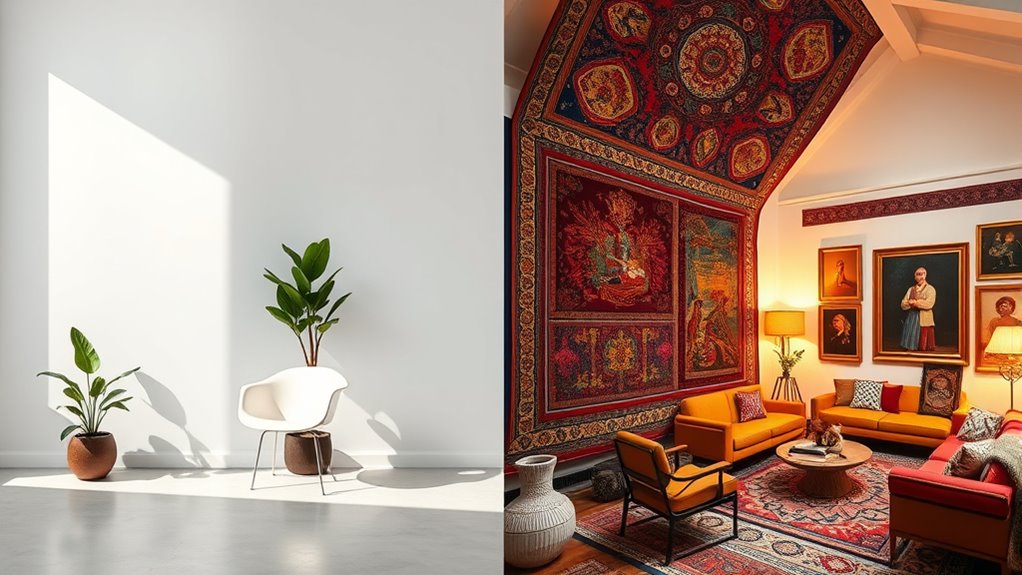

Minimalism and maximalism are two contrasting aesthetic philosophies that influence how you design and experience your environment. With minimalism, you focus on simplicity, neutral colors, and purposeful space to create calm and clarity. Maximalism, on the other hand, thrives on vibrant colors, layered textures, and eclectic arrangements for energy and expression. Understanding these styles helps you choose what best reflects your personality, and if you keep exploring, you’ll discover even more about their unique influences.
Key Takeaways
- Minimalism emphasizes simplicity, neutral tones, and intentional space, promoting calm and clarity, while maximalism celebrates vibrancy, layered textures, and expressive decor.
- Minimalist design uses clean lines, functional furniture, and subdued palettes to create open, uncluttered environments; maximalism features eclectic styles and vivid colors for energetic spaces.
- Minimalism aims to reduce mental clutter and foster mindfulness; maximalism encourages creativity, self-expression, and visual complexity.
- Spatial arrangements reflect their philosophies: minimalism employs purposeful placement with negative space; maximalism uses layered, dynamic layouts with abundant objects.
- Both styles influence emotional states and daily experiences, with minimalism promoting tranquility and maximalism inspiring vibrancy and discovery.
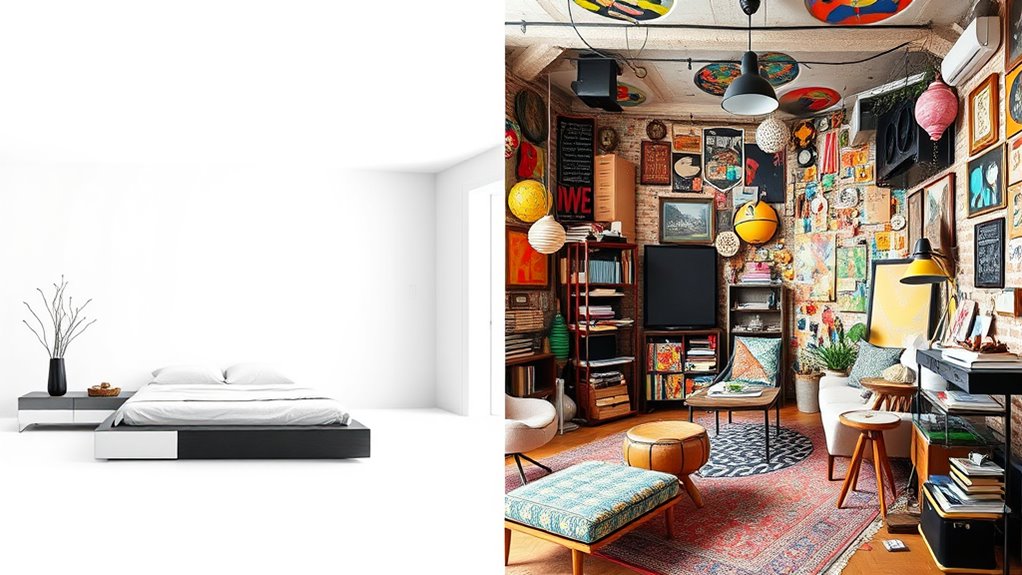
Have you ever wondered which style truly resonates with you—minimalism or maximalism? Your choice reflects not only your aesthetic preferences but also how you perceive and interact with your surroundings. In minimalism, the focus centers on simplicity and clarity. You’ll find that the color palettes tend to be subdued—think neutral tones, soft whites, grays, and muted shades—creating an environment that feels calm and uncluttered. Spatial arrangements are deliberate; each piece has a purpose, and unnecessary items are kept to a minimum. This approach emphasizes negative space, allowing your eyes to rest and your mind to breathe. It’s about stripping away excess to highlight the essentials, making your space feel open and organized. If you lean toward minimalism, you likely appreciate clean lines, functional furniture, and a sense of tranquility that comes from avoiding visual chaos.
On the other hand, if maximalism appeals to you, you probably thrive in environments bursting with energy and personality. Your color palettes are richer and more diverse—vivid hues, jewel tones, and contrasting shades that evoke warmth and vibrancy. Spatial arrangements in maximalist spaces are often layered and dynamic, deliberately filled with an array of textures, patterns, and decorative objects. It’s a celebration of abundance; you’re not afraid to mix and match styles, sizes, and colors to create a personalized, eclectic vibe. Every surface might tell a story, and nothing feels out of place because it’s all part of a curated chaos that reflects your unique identity. Maximalism invites you to express yourself freely, filling your space with meaningful items and bold choices that make a statement.
Deciding between the two isn’t just about aesthetics—it’s about how you want your environment to make you feel. Do you crave serenity and simplicity, or do you prefer energy and a sense of discovery? Minimalism can help you clear mental clutter and focus, fostering peace and mindfulness. Maximalism, however, energizes and inspires, encouraging creativity and individuality. Both styles require intention: minimalism demands discipline in keeping only what serves a purpose, while maximalism requires a keen eye for balancing variety without tipping into chaos. Ultimately, your choice will shape your daily experience and how you engage with your space. Whether you prefer the quiet elegance of minimalism or the lively richness of maximalism, understanding these fundamental differences enables you to craft an environment that truly reflects who you are.
Frequently Asked Questions
How Do Minimalism and Maximalism Influence Emotional Well-Being?
You feel more emotional clarity when embracing minimalism, as it reduces clutter and creates a calming environment that fosters focus and peace. Maximalism, on the other hand, offers vibrant aesthetic expression, which can energize you and boost creativity. Both philosophies influence your emotional well-being differently; minimalism promotes tranquility, while maximalism ignites excitement. Your choice shapes how you experience and express your feelings daily.
Can Personal History Affect Preference for Minimalism or Maximalism?
Your personal history dramatically shapes your aesthetic preferences, wielding influence more powerful than a tidal wave. It molds whether you’re drawn to minimalism’s sleek serenity or maximalism’s vibrant chaos. Experiences, cultural background, and memories carve deep into your soul, steering your aesthetic choices. So, your history isn’t just background noise; it’s the architect of your visual world, making your preferences uniquely yours—an emotional blueprint etched into every space you cherish.
What Are Common Misconceptions About Minimalism and Maximalism?
You might think minimalism means completely removing decorative clutter and maximalism means filling every space, but that’s a misconception. Minimalism emphasizes aesthetic simplicity, not emptiness, while maximalism celebrates bold, layered decor without chaos. Both styles can be thoughtfully curated, and it’s not about strict rules but about expressing your personality through your environment. So, don’t assume one is better—each offers unique ways to create a meaningful space.
How Do These Aesthetics Impact Cultural Identity?
You see how these aesthetics shape cultural identity by reflecting cultural symbolism and societal values. Minimalism often emphasizes simplicity, humility, and focus on essentials, highlighting values like restraint and clarity. Maximalism celebrates abundance, richness, and complexity, showcasing cultural symbolism and societal pride. Both styles serve as visual expressions of identity, conveying stories, beliefs, and history through choices that echo cultural roots and societal values.
Are There Hybrid Styles Combining Both Minimalism and Maximalism?
You can definitely find hybrid interior styles that blend minimalism and maximalism, creating an eclectic design. These hybrid interiors feature clean lines and simple spaces alongside bold patterns, vibrant colors, and layered textures. You might choose a minimalist furniture piece with maximalist accessories or combine sleek, understated walls with richly decorated accents. This approach allows you to enjoy the balance of both aesthetics, making your space uniquely expressive and visually interesting.
Conclusion
Ultimately, choosing between minimalism and maximalism reflects your personal taste and how you want to experience space. Imagine a small apartment redesigned with minimalist principles—you feel calm and uncluttered. Conversely, a maximalist space bursting with colors and patterns might energize you daily. Your environment influences your mood and creativity, so consider what style aligns with your lifestyle. Whether you prefer simplicity or abundance, embracing your aesthetic can truly enhance your everyday life.