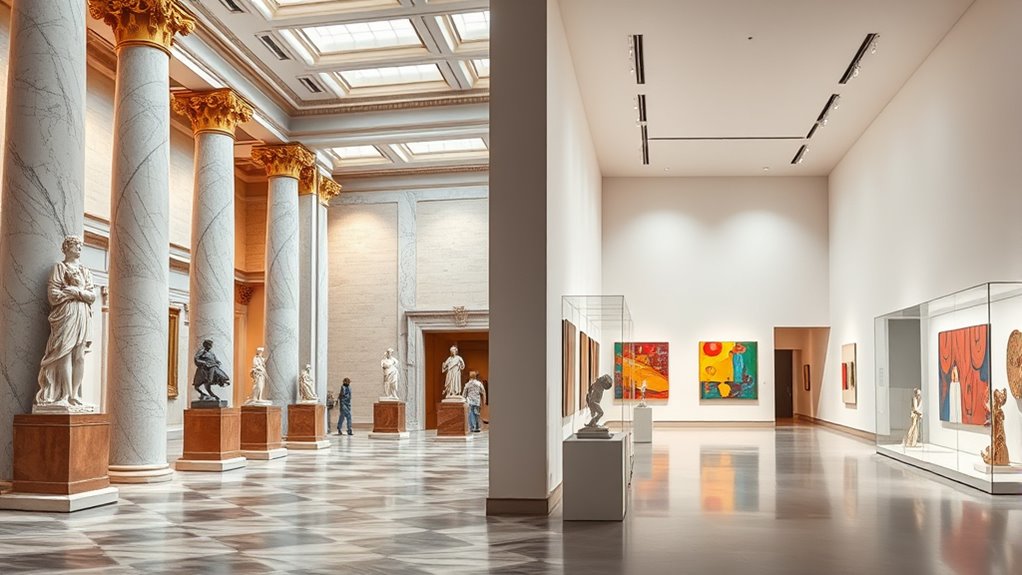

Museums and galleries each play essential roles in the art world. Museums focus on preserving and protecting historic artworks, offering educational programs and long-term exhibits that deepen understanding. Galleries, on the other hand, showcase contemporary and emerging artists with rotating displays and a more personal atmosphere, often supporting sales. Knowing their differences helps you appreciate how they enrich your experience with art. If you want to discover more about their unique functions, keep exploring further insights.
Key Takeaways
- Museums focus on art preservation, education, and safeguarding cultural heritage, often displaying long-standing and historical collections.
- Galleries primarily showcase contemporary and emerging artists’ works through temporary, rotating exhibitions.
- Museums invest heavily in climate control and security to protect priceless artworks, emphasizing long-term preservation.
- Galleries offer a more intimate environment, fostering personal interactions between visitors and artists, and facilitating art sales.
- Both serve to enrich art appreciation, with museums emphasizing educational immersion and galleries supporting artistic innovation and commerce.
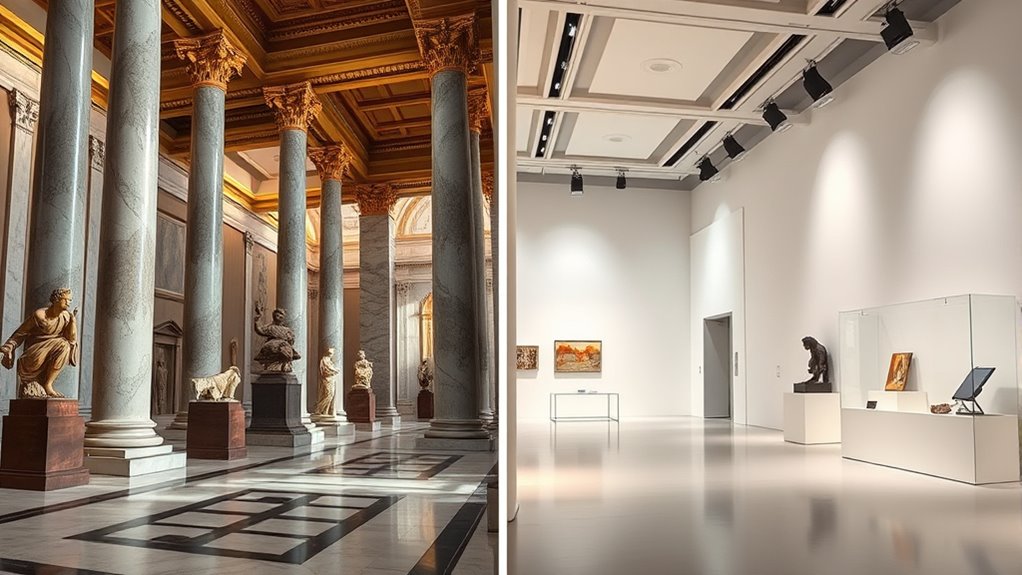
Ever wondered what sets museums apart from galleries? While both serve as spaces to appreciate art, they have distinct roles that influence how you experience them. Museums focus heavily on art preservation, guaranteeing that priceless works of art are protected for future generations. You’ll notice that museums invest considerably in climate control, security, and careful handling to maintain the integrity of their collections. This dedication to art preservation means that the artworks you see are often centuries old, carefully curated and maintained with great expertise. As a visitor, you benefit from this commitment, knowing that the art is being preserved with the utmost care. Museums also aim to educate and engage visitors through curated exhibitions, educational programs, and detailed displays, making your experience more immersive and meaningful. They see their role as custodians of cultural heritage, preserving history and knowledge alongside the art itself.
Galleries, on the other hand, tend to have a more dynamic and commercial focus. They often showcase contemporary art or works by living artists, aiming to support emerging talent and facilitate sales. If you’re visiting a gallery, you might find a more intimate and flexible environment, where the emphasis is on direct engagement with art and artists. Galleries thrive on visitor engagement in a different way—they foster personal interaction, offering you opportunities to discuss artworks directly with curators or artists. Unlike museums, which often have fixed collections, galleries frequently host temporary exhibitions, giving you fresh perspectives and new art regularly. They also tend to be more accessible in terms of price point, making it easier for you to purchase pieces or simply enjoy a quick, inspiring visit.
In essence, museums are about safeguarding cultural treasures and offering educational experiences, often with a focus on long-term preservation that guarantees art can be appreciated for generations. Galleries, meanwhile, are more about the here and now—highlighting contemporary works, supporting artists, and creating engaging environments where you can explore new ideas and buy art. Both spaces enrich your understanding of art but do so through different lenses: museums through preservation and education, galleries through innovation and direct engagement. Knowing this helps you choose the right experience depending on what you’re seeking—whether it’s the historical depth and preservation of art or the lively, immediate connection with contemporary works. Ultimately, both museums and galleries play essential roles in nurturing your appreciation of art, each offering unique ways to see, learn, and connect.
Frequently Asked Questions
How Do Museums and Galleries Fund Their Operations Differently?
You’ll find that museums often rely on public funding and government grants to cover their costs, ensuring access to cultural and educational resources. Galleries, on the other hand, typically depend on private donations, sales, and sponsorships, especially if they’re commercial or private entities. This funding difference shapes how each operates, with museums focusing on public service and galleries emphasizing private patronage and art sales.
Can Private Collectors Influence Museum or Gallery Exhibits?
Imagine stepping into a gallery or museum, where private influence can quietly shape what you see. You might wonder if private collectors hold sway over exhibit control, subtly steering displays to showcase their treasures. Yes, private collectors can influence exhibits, potentially swaying a museum or gallery’s narrative. This private influence can add richness or bias, reminding you that behind the scenes, personal interests often shape what’s on display and what remains unseen.
What Are the Career Paths Within Museums Versus Galleries?
You can pursue various career paths in museums and galleries, such as curatorial careers or conservation roles. In museums, you might manage collections, research artifacts, or develop exhibitions, while galleries often focus on sales, marketing, and artist representation. Both environments require passion for art and strong organizational skills. Your choice depends on whether you want to work behind the scenes preserving history or engaging directly with clients and artists.
How Do Museums and Galleries Impact Local Communities?
Imagine a local museum hosting community events and workshops. You see how it fosters community engagement by bringing people together and promoting cultural preservation. Museums and galleries play essential roles in strengthening local identity, supporting education, and encouraging pride. Their efforts create a sense of belonging, inspire creativity, and preserve history, making neighborhoods more vibrant and connected. These institutions truly impact communities by nurturing shared culture and lifelong learning.
Are There Legal Differences in Ownership and Acquisition Processes?
You should know that legal frameworks govern ownership and acquisition processes for both museums and galleries. Acquisition regulations set the rules for how items are purchased, gifted, or donated, guaranteeing proper documentation and provenance. Ownership laws determine who holds legal title to artworks or artifacts. These legal differences help protect cultural heritage, prevent theft, and ensure transparency in acquiring and maintaining collections. So, understanding these legal distinctions is essential for responsible management.
Conclusion
As you step back and consider the roles of museums and galleries, one thing becomes clear: their differences shape your experience in unexpected ways. Will you find yourself drawn into the timeless stories of museums, or captivated by the fresh, cutting-edge displays of galleries? The choice is yours, but remember—each space holds secrets waiting to be uncovered. The next visit might just change how you see art forever. Are you ready to explore what’s hidden behind those doors?