To ship art without heartbreak, you need to pack each piece with care, using high-quality materials like bubble wrap, foam padding, and sturdy boxes. Wrap items individually, secure all edges, and add cushioning layers, especially for fragile items. Choose a reputable carrier with experience handling delicate artwork, and clearly label packages as “Fragile.” Proper documentation and insurance are essential to protect your investment. Follow these principles closely—next, you’ll discover how to put them into action effectively.
Key Takeaways
- Properly assess the artwork’s fragility and select suitable packing materials like bubble wrap and sturdy boxes.
- Wrap each piece individually, securing corners and edges, and consider double-boxing with cushioning for added protection.
- Document the artwork’s condition beforehand with detailed photos and descriptions to support insurance claims if needed.
- Choose a reputable carrier experienced in handling fragile art, clearly labeling packages as “Fragile” and “Handle with Care.”
- Combine meticulous packing, insurance coverage, and careful carrier selection to minimize damage risks during transit.
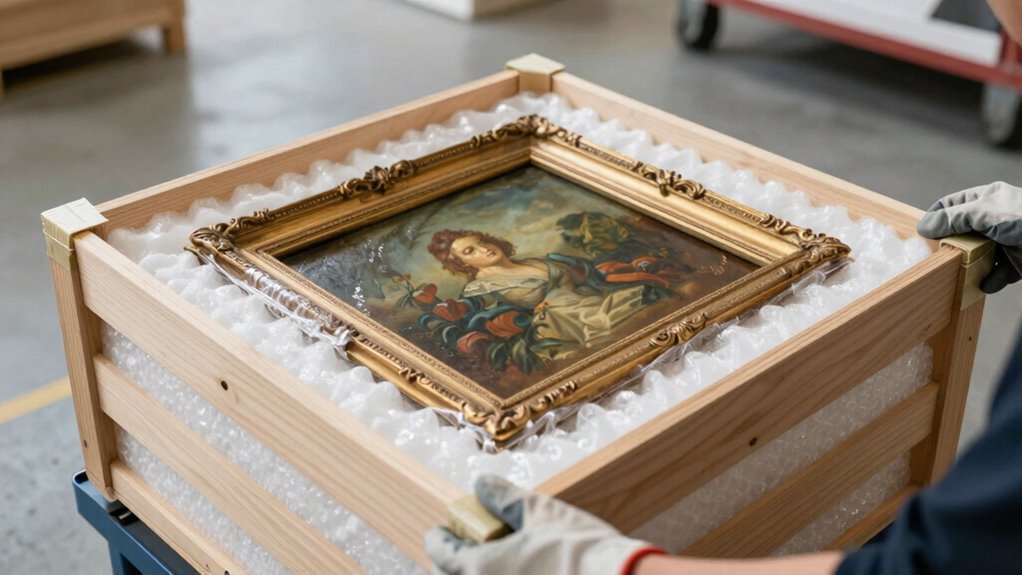
Shipping art can be nerve-wracking, especially when you want to guarantee it arrives safely and intact. When your artwork includes fragile items, the stakes are even higher. You’ve put so much effort into creating or acquiring this piece, and now you face the challenge of ensuring it reaches its destination unharmed. The key lies in meticulous packing and choosing the right shipping options. First, assess the fragility of each item. For particularly delicate pieces—like glass, ceramics, or thinly framed works—you need to take extra precautions. Use high-quality packing materials designed for fragile items, such as bubble wrap, foam padding, and sturdy boxes. Wrap each piece thoroughly, securing every corner and edge. For added protection, consider double-boxing fragile items: place the wrapped art inside a slightly larger box with cushioning material between the two layers to absorb shocks during transit. Incorporate thermal behavior considerations if shipping in extreme temperatures to prevent damage caused by temperature fluctuations.
In addition to careful packing, you should explore insurance options. Shipping art can be unpredictable, and even with the best precautions, accidents happen. Insurance provides peace of mind, covering potential losses or damages. Many courier services offer specialized insurance for valuable or fragile items, so be sure to inquire about coverage options when you book your shipment. It’s wise to document the condition of your art before shipping—taking photographs and creating detailed descriptions—so you can substantiate any claims if necessary. This documentation becomes invaluable if you need to file an insurance claim after an incident.
Choosing the right shipping carrier is equally important. Opt for a courier with a proven track record of handling fragile and valuable items carefully. Some carriers offer specialized art shipping services, which include climate-controlled environments and dedicated handling. When arranging the shipment, clearly label the package as “Fragile” and “Handle with Care.” These labels alert handlers to treat your artwork with caution, reducing the risk of mishandling during transit.
Ultimately, a combination of careful packing, appropriate insurance, and selecting a reputable carrier ensures your art arrives safely. While no method can eliminate all risks, these steps considerably lower the chances of damage or loss. When you approach art shipping with precision and preparation, you can confidently send your treasured pieces across distances, knowing you’ve minimized heartbreak and maximized protection.
Frequently Asked Questions
How Can I Estimate Shipping Costs for Artwork?
To estimate shipping costs for artwork, start by considering the size, weight, and fragility of your piece. Use this information to determine the necessary packing materials, like bubble wrap or foam padding, which can add to your costs. Check carrier websites for rates based on dimensions, weight, and destination. Remember, accurate packing materials and proper weight calculation are key to reliable cost estimation and safe delivery.
What Insurance Options Are Best for Fragile Art?
For fragile art, you should opt for specialized art insurance that offers fragile coverage. This type of insurance is specifically designed to protect delicate pieces during transit and storage. It’s essential to verify that the policy covers accidental damage, theft, and environmental risks. You’ll want a provider that understands the unique value and vulnerability of your artwork, giving you peace of mind knowing your fragile pieces are well protected throughout the shipping process.
How Do Customs Regulations Affect International Art Shipments?
Customs regulations substantially impact your international art shipments. You need to prepare accurate customs documentation to avoid delays or holds. Be aware of import restrictions that might restrict or prohibit certain artworks from entering specific countries. Failing to comply can lead to fines or confiscation. Always research each destination’s rules, work with customs brokers if needed, and guarantee your paperwork is thorough to facilitate smooth, trouble-free shipping.
What Are Common Damages During Art Transportation?
Think of your art as a delicate butterfly, easily crushed if not handled properly. Common damages during transportation include scratches, cracks, and tears. To prevent these, you must master crating techniques and follow strict handling protocols. Proper padding, secure fastening, and gentle movement guarantee your masterpiece remains intact. By treating your art with this care, you can safeguard its beauty throughout the journey, avoiding heartbreak at every turn.
How Can I Track My Artwork During Transit?
You can track your artwork during transit using reliable art tracking tools provided by your shipping carrier or third-party services. These tools offer real-time shipment updates, so you stay informed about your artwork’s location and status. Make sure to enable notifications and check the tracking regularly. This way, you’ll have peace of mind knowing exactly where your precious piece is and can prepare for its arrival accordingly.
Conclusion
By following these packing principles, you can ship your art confidently, knowing it’s protected every step of the way. Did you know that properly packed art is 50% less likely to arrive damaged? That’s a huge difference, saving you time, money, and heartbreak. So, take the time to pack carefully, use the right materials, and double-check your work. Your artwork—and your peace of mind—will thank you for it.