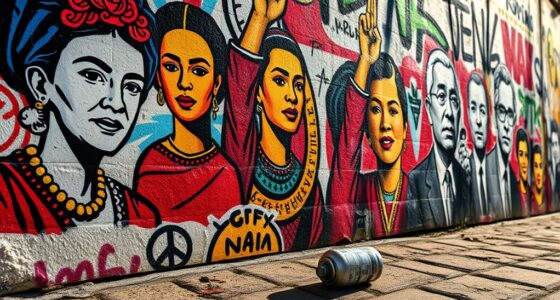
Collaborations between activists and artists create powerful social change by combining creative expression with advocacy. These projects inspire emotion, challenge perceptions, and spark dialogue, often influencing cultural norms and public discourse. Funding opportunities grow through visibility, media attention, and demonstrated impact, making these partnerships sustainable. Case studies show how such collaborations turn ideas into movements that foster empathy and societal shifts. To understand how these alliances forge lasting change, explore the inspiring examples ahead.

Get the latest gadgets delivered free with Prime
- Fast, free delivery on millions of items
- Prime Video, Amazon Music and more included
- Member-only deals all year
Key Takeaways
- Successful case studies highlight how artistic activism fosters emotional engagement and societal dialogue, leading to cultural shifts.
- Projects like the “Fearless Girl” statue demonstrate the power of collaboration to promote gender equality awareness.
- Visual content and media coverage amplify the impact of activist-art collaborations, attracting funding and broader audiences.
- Collaborations often leverage grants and sponsorships by framing initiatives as innovative cultural and social interventions.
- Strategic partnerships can transform ideas into movements, driving long-term societal change through collective creative efforts.

Throughout history, collaborations between activists and artists have proven to be powerful tools for social change. When you combine artistic expression with activism, you create a cultural impact that resonates far beyond individual communities. Artists have a unique ability to evoke emotion, challenge perceptions, and spark dialogue, making their work a potent vehicle for advocacy. As an activist, partnering with artists can amplify your message, reaching audiences that might not engage with traditional activism. These collaborations often result in memorable visuals, performances, or installations that stick in people’s minds and inspire action. The cultural impact of such partnerships is undeniable—they shape public discourse, influence cultural norms, and foster empathy. When you consider funding strategies, it’s clear that these collaborations can also open new avenues for financial support. Many artists are skilled at attracting grants, sponsorships, and donations, especially when their work aligns with social causes. Funding can come from government grants dedicated to arts and culture, private foundations interested in social justice, or corporate sponsorships eager to associate with meaningful initiatives. By framing your project as both an artistic endeavor and a social intervention, you can tap into a broader spectrum of funding sources that might not be available to traditional activism alone. Collaborations often benefit from a shared vision that blends artistic innovation with social purpose, making it easier to secure funding because it appeals to multiple stakeholders. You can also leverage the media attention that comes with high-profile projects to attract further financial backing. Successful partnerships often showcase how art can provoke thought and inspire change, which appeals to funders seeking impactful, culturally relevant projects. Incorporating high-quality visual content into your collaboration can further enhance its appeal and reach. Furthermore, these collaborations can serve as case studies demonstrating the tangible benefits of integrating arts into activism, thus encouraging more financial investment in similar initiatives. When you approach funding with a strategic mindset, emphasizing both the cultural impact and the innovative use of art to foster social progress, you’re more likely to garner support. Ultimately, the power of collaborations between activists and artists lies not just in their ability to produce compelling work but also in their capacity to mobilize resources, influence culture, and drive societal change. By understanding and leveraging funding strategies effectively, you can ensure that your joint efforts have a lasting impact. When artists and activists work together thoughtfully, they create a ripple effect—shaping culture, securing resources, and inspiring collective action that transcends individual projects. This synergy can turn ideas into movements, making a real difference in the world.
Frequently Asked Questions
How Do Activists Choose the Right Artists for Collaboration?
You choose the right artists by focusing on community alignment and artistic relevance. Look for artists whose values and previous work reflect your cause, ensuring their engagement resonates with your community’s needs. Consider their style and message, making sure it complements your activism goals. Collaborate with those who genuinely understand your issues, as authentic connections strengthen the impact and foster meaningful, lasting partnerships.
What Are Common Challenges Faced During Activist-Artist Partnerships?
They say “unity is strength,” but activist-artist partnerships often face challenges like crossing artistic boundaries and stakeholder conflicts. You might struggle to balance creative freedom with activism goals, leading to disagreements. Managing different visions and priorities becomes tough, especially when stakeholders have conflicting interests. These issues can hinder collaboration, requiring clear communication, mutual respect, and compromise to turn challenges into opportunities for impactful work.
How Do Collaborations Impact Public Awareness and Behavior Change?
You see that collaborations boost public awareness by leveraging media influence, making messages more memorable and widespread. They also drive cultural shifts by inspiring new attitudes and behaviors. When activists and artists team up, you’re more likely to notice change because their combined efforts resonate deeply with audiences, encouraging action. This synergy helps shift societal norms, fostering greater engagement and understanding around important issues.
What Funding Sources Support Activist-Artist Joint Projects?
Imagine a garden blooming with support—you’ll find grant opportunities and sponsorship options fueling your activist-artist projects. These funding sources act as seeds that grow impactful works, attracting foundations, government agencies, and private donors enthusiastic to nurture social change. Your creative efforts thrive on these resources, enabling you to craft powerful messages and reach wider audiences. Securing diverse funding ensures your collaboration blossoms into meaningful, lasting change.
How Are Success and Impact Measured in These Collaborations?
You measure success and impact in these collaborations through metrics evaluation and stakeholder feedback. Metrics like audience engagement, media coverage, and social media reach help quantify influence, while stakeholder feedback provides qualitative insights into community impact and message resonance. Combining these approaches gives you a holistic view of how effectively the partnership raises awareness, drives change, and meets its goals, ensuring continuous improvement and meaningful outcomes.
Conclusion
Your journey through these collaborations shows that when activists and artists unite, they create powerful waves of change—waves so strong, they can reshape the world. By blending passion and creativity, you witness ideas that ignite revolutions and inspire millions. Never underestimate the impact of this dynamic partnership; it’s a force more unstoppable than any opposition. Keep believing in the power of art and activism working together—because together, you can move mountains and transform realities.
Fall Picks
fall essentials
As an affiliate, we earn on qualifying purchases.