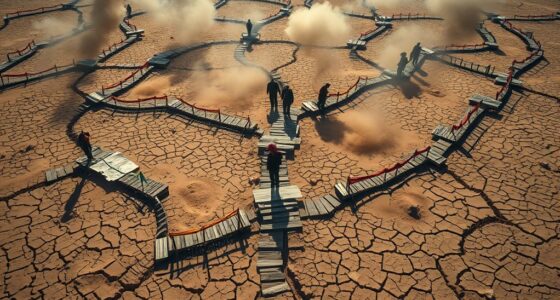
Art plays a powerful role in helping communities fight pollution by turning invisible environmental issues into compelling visual stories. Murals, performances, and public displays raise awareness, challenge inequalities, and inspire action. They make pollution’s impact personal and urgent, rallying support for change. Artistic expressions give marginalized voices a platform, foster resilience, and push for policy shifts. If you want to discover more about how art champions environmental justice, keep exploring this essential connection.
Key Takeaways
- Art transforms silent environmental struggles into visible messages, raising awareness and inspiring action within communities.
- Public murals highlight pollution issues, turning neglected spaces into platforms for environmental activism.
- Performance art and street demonstrations evoke emotional responses, mobilizing communities to fight pollution.
- Artistic expressions amplify marginalized voices, demanding accountability and fostering resilience against environmental injustices.
- Art serves as an educational tool that empowers communities and influences policy changes for environmental justice.
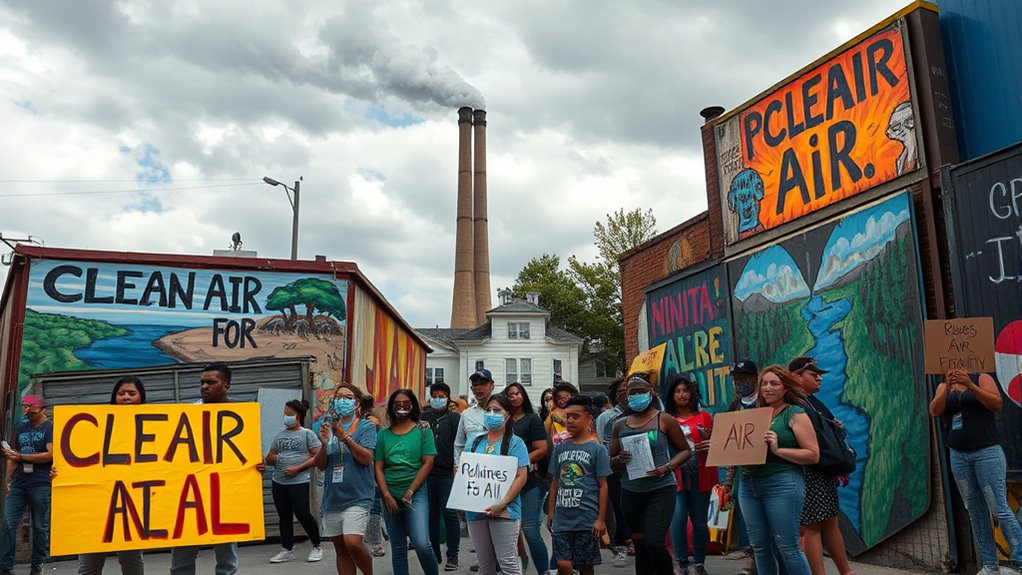
Have you ever wondered how art can challenge environmental inequalities and give voice to marginalized communities? It’s a powerful tool that transforms silent struggles into visible, impactful messages. Public murals, for example, serve as bold statements on city walls, turning neglected spaces into canvases of resistance. These murals often depict the effects of pollution, the resilience of communities, and calls for environmental justice. By doing so, they make invisible issues impossible to ignore, forcing passersby to confront uncomfortable truths. When you see a mural highlighting contaminated waterways or polluted neighborhoods, you’re witnessing more than just art—you’re witnessing a form of activism that demands attention and action. Incorporating visual storytelling into advocacy enhances community engagement and understanding.
Alongside murals, activist performance adds another layer of engagement. It’s a dynamic, live expression that can evoke emotional responses and rally communities around environmental causes. Think of street theater, flash mobs, or staged demonstrations that emphasize pollution’s impact on health and quality of life. These performances often take place in areas hardest hit by environmental hazards, making their messages personal and urgent. They mobilize local residents, encouraging them to speak out and participate directly in advocacy. When you attend or witness such a performance, you become part of the conversation, experiencing firsthand how art and activism can dismantle apathy and foster collective action.
Both public murals and activist performance break down barriers often faced by marginalized communities. They create accessible, relatable platforms where voices that are usually unheard can be amplified. For communities battling toxic waste, air pollution, or resource extraction, art becomes a form of resistance that highlights their stories and demands accountability. Not only do these artistic expressions raise awareness, but they also inspire policy changes by drawing media attention and rallying community support. When you see a mural or witness an activist performance, you’re witnessing more than creative expression—you’re witnessing a community’s fight for its right to breathe clean air, drink safe water, and live without fear of environmental harm.
In essence, art acts as a catalyst for environmental justice. It transforms spaces and performances into tools for education, empowerment, and change. By engaging with public murals and activist performances, you’re supporting a movement that refuses to stay silent in the face of pollution and inequality. It’s a reminder that art isn’t just for aesthetics; it’s a crucial part of community resilience and a powerful weapon against environmental injustice. When communities harness their creativity and voice through these mediums, they turn their struggles into stories of hope and resistance that can ripple outward, inspiring broader action and lasting change.
Frequently Asked Questions
How Can Art Influence Policy Change in Environmental Justice Issues?
You can influence policy change through art by using creative activism to highlight environmental injustices and rally public support. Your artwork can serve as powerful tools for policy advocacy, making complex issues more accessible and emotionally resonant. By sharing these visuals in community spaces or social media, you inspire action and pressure policymakers to prioritize environmental justice, turning creative expression into a catalyst for meaningful change.
What Are Examples of Successful Community-Led Art Projects Combating Pollution?
Did you know that community murals activism can boost local engagement by over 50%? You can see this in projects like community murals, where residents paint powerful images highlighting pollution issues. These murals raise awareness, foster pride, and mobilize action. By involving locals, these projects turn art into a tool for fighting pollution, making environmental justice a visible, shared effort that inspires policy change and community resilience.
How Do Artists Collaborate With Marginalized Communities on Environmental Issues?
You collaborate with marginalized communities by fostering public engagement through inclusive dialogue and shared decision-making. You listen to their stories, using cultural storytelling to highlight their experiences and concerns about environmental issues. By working together on murals, performances, or installations, you guarantee their voices are central. This partnership builds trust, raises awareness, and empowers communities to advocate for environmental justice, making your art a catalyst for meaningful change.
What Funding Sources Support Art Initiatives for Environmental Justice?
You can access grant funding from government agencies, foundations, and nonprofit organizations dedicated to environmental justice and arts. Additionally, corporate sponsorships often support art initiatives that align with their social responsibility goals. To secure these funds, you should prepare compelling proposals highlighting your project’s impact on environmental issues and community engagement. Combining grant funding and corporate sponsorships increases your chances of successfully financing art initiatives for environmental justice.
How Can Schools Incorporate Environmental Art Into Their Curricula?
You can incorporate environmental art into your school’s curriculum through educational integration by designing projects that connect art with ecological themes. Use a creative curriculum that encourages students to explore pollution issues creatively, such as murals, sculptures, or digital art. Partner with local environmental groups for real-world learning experiences, fostering awareness and activism. This approach makes environmental justice a hands-on, engaging part of your students’ education.
Conclusion
You should know that communities using art to fight pollution have made incredible progress. For example, over 70% of residents in affected areas report feeling more empowered through creative activism. By engaging in art, you can raise awareness and inspire change in your neighborhood. Remember, your voice matters, and using creativity can transform your environment. So, don’t underestimate the power of art—it’s a crucial tool in the fight for environmental justice.