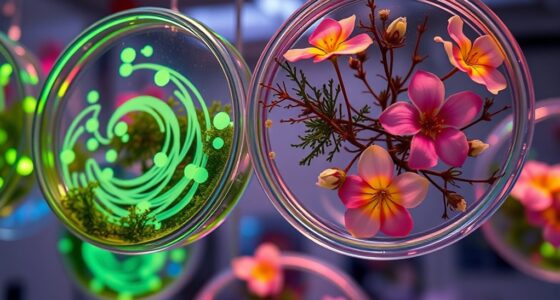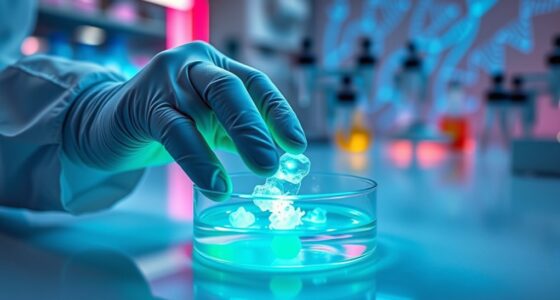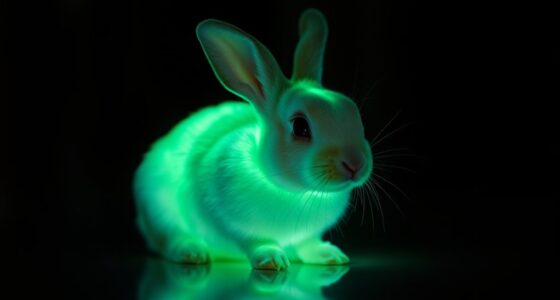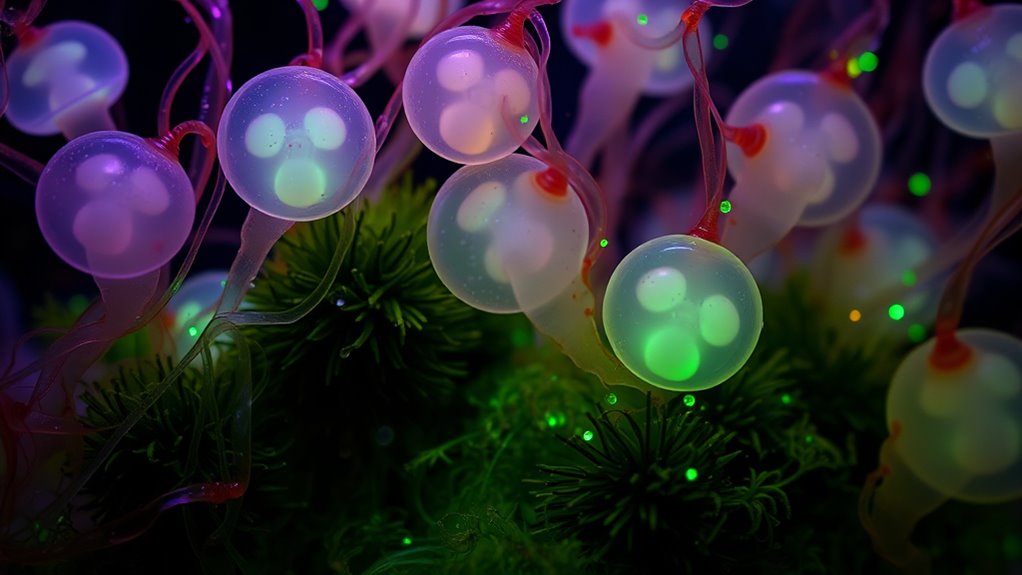

Bioart 101 explores how artists use living materials like cells, bacteria, and tissues to create dynamic, experimental works. This innovative field combines biology and art, using techniques such as genetic modification to produce glowing bacteria or living sculptures. It prompts questions about ethics, sustainability, and our relationship with life. If you want to understand the techniques, ethical considerations, and the impact of this fascinating art form, exploring further reveals even deeper insights.
Key Takeaways
- Bioart combines biology and technology to create artworks using living materials like cells, bacteria, and tissues.
- Techniques include genetic modification and growing living structures to produce visual and conceptual effects.
- Ethical considerations involve manipulating life, potential environmental impacts, and respecting living organisms.
- Bioartists integrate scientific methods responsibly, emphasizing moral responsibilities and regulatory compliance.
- The process fosters a dialogue about the relationship between science, art, ethics, and the nature of life.

Have you ever wondered how artists combine biology and technology to create innovative works? This fascinating intersection is the foundation of bioart, where living materials like cells, bacteria, and tissues become the medium for artistic expression. Artists manipulate biological systems not just to produce visually striking pieces but to challenge perceptions about life, science, and ethics. One common technique they use is genetic modification, where they alter the genetic makeup of organisms to achieve desired traits or effects. For example, some artists modify bacteria to produce glowing colors or grow tissues that mimic natural forms, blurring the line between science and art. However, these practices raise important ethical considerations. Genetic modification in art prompts questions about manipulating life for aesthetic purposes and the potential risks involved, such as unintended genetic consequences or environmental impact. As an artist working with living materials, you must weigh the creative potential against these ethical dilemmas, ensuring responsible use of biotechnology.
In bioart, ethical considerations are central. You need to stay informed about the moral implications of working with living organisms, especially when genetic modification is involved. Some argue that altering genetic material for artistic expression can be disrespectful to the integrity of living systems, while others believe it opens new avenues for understanding life itself. When creating bioart, you might work with genetically modified organisms (GMOs), but doing so responsibly involves understanding the possible long-term effects and adhering to regulations. You might also face questions about consent—are these living entities capable of giving it? Or do you, as the creator, assume moral responsibility for their well-being? These debates are ongoing, and as an artist, you need to navigate them thoughtfully, balancing innovation with ethical integrity. Additionally, understanding the genetic modification techniques involved can help ensure safe and responsible practices throughout your artistic process.
Your role in bioart isn’t just about the final piece; it’s about the entire process. When you incorporate genetic modification, you step into a domain that combines scientific precision with artistic vision. You might engineer bacteria to fluoresce under specific conditions, creating living installations that change over time. Or you might grow tissues that respond to environmental stimuli, emphasizing the dynamic relationship between living systems and their surroundings. Throughout this process, considering ethical implications isn’t an afterthought—it’s integral to your work. Responsible bioart respects the organisms involved and acknowledges the broader social and ecological impacts. By doing so, you contribute to a field that not only pushes artistic boundaries but also promotes responsible scientific exploration, encouraging viewers to reflect on our relationship with living matter and the ethical responsibilities it entails.
Frequently Asked Questions
How Do Bioartists Ensure Safety When Working With Living Organisms?
You guarantee safety by following strict biosafety protocols, which guide proper handling and disposal of living organisms. You also focus on organism containment, using sealed environments and barriers to prevent accidental release. By wearing protective gear and working in controlled spaces, you minimize risks. Regular training and adherence to safety guidelines help you avoid contamination or harm, making sure your bioart practices stay safe for both you and the environment.
What Ethical Considerations Are Involved in Bioart Practices?
Have you ever wondered if creating genetically modified organisms for art respects ethical boundaries? You should consider the potential environmental impacts and the moral implications of manipulating living materials. Bioartists must navigate issues like biosafety, consent, and ecological consequences, ensuring their work doesn’t harm ecosystems or cross ethical lines. Are you comfortable with pushing biological boundaries, or do you think certain limits should always be respected?
Can Bioart Be Used for Medical or Therapeutic Purposes?
Yes, bioart can be used for medical applications and has significant therapeutic potential. You might see it aiding in tissue engineering, creating implants, or developing innovative treatments. Artists and scientists collaborate to explore how living materials can improve health outcomes, making bioart a promising field for both advancing medicine and offering new therapeutic avenues. Its creative approach can lead to breakthroughs that benefit patients and enhance healing processes.
How Does Bioart Differ From Traditional Contemporary Art?
Bioart differs from traditional contemporary art by emphasizing biological aesthetics and creating living sculptures that evolve over time. You’re engaging with living materials, which adds a dynamic, biological dimension to your work. Unlike static traditional art, bioart often explores themes of life, growth, and decay, making it more interactive and experimental. This approach challenges conventional notions of art, pushing boundaries by integrating science and living processes into the creative expression.
What Are the Future Technological Advancements in Bioart?
You might wonder what’s next in bioart’s evolution. With advances in synthetic biology and gene editing, future bioart could push boundaries by creating living sculptures that evolve or heal themselves. Imagine art that responds to its environment or even to viewers’ emotions. These innovations could redefine creativity, merging science and art in ways we’ve only begun to explore. The possibilities are as exciting as they are unpredictable.
Conclusion
As you step back from bioart’s delicate dance with life, you realize it’s more than just creation—it’s a gentle whisper of possibility and hope. This art invites you to imagine a future where beauty and ethics intertwine softly, nurturing our connection to living things. Embrace the gentle power of bioart, knowing it’s a tender reminder that even the tiniest life can inspire profound reflection and change in us all.