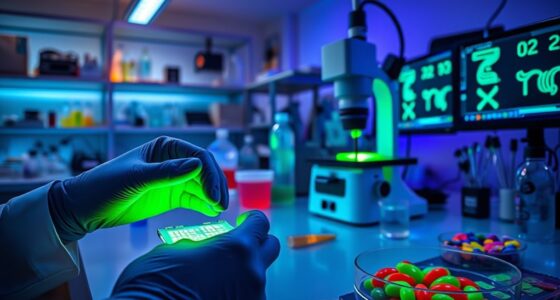
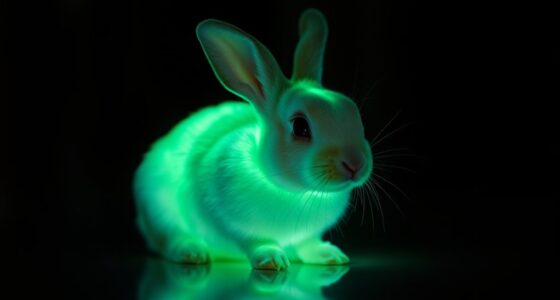
Bioprinting in art uses living cells to create intricate 3D structures, blending science and creativity. Artists now layer living cells with scaffolds or bioinks using advanced bioprinters, producing sculptures that can change over time or respond to their environment. Some works even integrate genetically modified organisms or responsive materials. As this innovative field evolves, new possibilities emerge. Stay curious to explore how these living artworks are shaping the future of creative expression.
Key Takeaways
- Bioprinting in art involves depositing living cells layer by layer to create intricate 3D structures.
- Specialized bioinks, including living cells and biocompatible materials, enable precise 3D cell placement.
- Techniques like extrusion and inkjet bioprinting allow artists to craft dynamic, living sculptures and responsive environments.
- Examples include bioprinted tissue sculptures, living walls, and artworks that change or evolve over time.
- Ethical and sustainability considerations are vital, focusing on responsible material use and minimizing ecological impact.
The Evolution of Bioprinting in Artistic Expression

Bioprinting has transformed artistic expression by bridging science and creativity in unprecedented ways. You now have the power to craft living sculptures that challenge traditional art boundaries. This evolution began with simple experiments, where artists explored the potential of printing with biological materials. Over time, advancements in bioprinting technology allowed for more intricate and realistic creations, blending biological processes with artistic vision. As a result, artists started to push the limits of what art could be—creating dynamic, living works that change over time. Bioprinting’s ability to combine biology and art opened new dialogues about life, mortality, and the nature of creativity itself. Additionally, the financial investment in bioprinting technology continues to grow, fueling further innovations and artistic possibilities. This ongoing evolution continues to inspire innovative projects that redefine artistic expression in the 21st century.
Techniques and Materials Behind Living Cell Sculptures

Building on how artists have harnessed bioprinting to create dynamic, living sculptures, understanding the techniques and materials involved is key to appreciating these innovative works. You’ll find that bioprinting uses specialized printers that deposit living cells layer by layer, often combined with biocompatible scaffolds or hydrogels. These materials provide structure and support, allowing cells to grow and organize into complex forms. Techniques like extrusion-based bioprinting and inkjet bioprinting enable precise placement of cells and biomaterials. You’ll also encounter diverse bioinks made from living cells, collagen, alginate, or fibrin, chosen for their compatibility and ability to mimic natural tissues. Mastering these materials and methods access new possibilities for creating vibrant, functional, and sustainable art installations. Furthermore, innovations in 3D structure design are expanding the scope of what bioprinting can achieve in artistic expression.
Inspiring Examples of Bio-Art Installations

Among the most enthralling bio-art installations are those that seamlessly blend living tissues with artistic expression, creating immersive experiences that challenge traditional notions of art. These installations often utilize bioprinting to craft living sculptures or environments that respond to viewers. For example, some artists embed living cells into displays that change color or form over time, engaging audiences in dynamic ways. You might witness bio-art that features:
- Living walls with genetically modified plants
- Sculptures made from bioprinted tissues
- Interactive displays reacting to touch or sound
- Installations that evolve, decay, or regenerate
These examples push boundaries, transforming art into living, breathing entities. They invite you to rethink the relationship between life and creativity, emphasizing the potential of bioprinting to forge new artistic frontiers.
Ethical and Sustainability Considerations in Bio-Art

As bio-art pushes the boundaries of creativity, it also raises important ethical and sustainability questions that you need to contemplate. You must consider the moral implications of creating living artwork, especially when involving genetically modified or ethically sensitive biological materials. Questions about consent, ownership, and potential harm to living organisms are central. Sustainability is equally crucial; you need to evaluate the environmental impact of bioprinting processes, such as resource consumption and waste management. Responsible practices involve minimizing ecological footprints and ensuring that the use of biological materials aligns with conservation principles. Incorporating materials selection and waste reduction strategies can significantly enhance the sustainability of bioprinting. By addressing these concerns proactively, you contribute to a more ethical and sustainable bio-art scene, fostering innovation without compromising moral standards or environmental integrity.
The Future of Living Art: Innovations and Challenges

The future of living art is poised for rapid transformation as technological advances open new creative possibilities. You’ll see groundbreaking innovations that blend biology with artistry, pushing boundaries further than ever before. However, challenges remain, such as ethical concerns, technical limitations, and regulatory hurdles. To navigate this landscape, you should consider:
- Improving bioprinting precision and scalability
- Ensuring bio-compatibility and safety
- Addressing intellectual property and ethical questions
- Developing clear regulations and guidelines
These factors will shape how living art evolves and integrates into society. Embracing innovation while managing risks is essential for creating sustainable, meaningful living artworks. The next era promises astonishing creativity, but it demands responsible stewardship from creators and regulators alike. As the field advances, understanding bioprinting technology and its potential impacts will be crucial for fostering responsible innovation.
Frequently Asked Questions
How Do Bioprinters Ensure Cell Viability During the Printing Process?
Bioprinters keep cell viability high by controlling temperature, pressure, and flow rate during printing. They use gentle extrusion methods and biocompatible materials to minimize stress on cells. Additionally, they maintain ideal humidity and nutrient supply, ensuring cells stay alive and healthy throughout the process. Precise control and careful handling help you produce viable, functional biological structures without damaging the living cells.
What Types of Living Cells Are Most Commonly Used in Bioprinting Art?
Did you know that over 60% of bioprinting art projects use human-derived cells? You’ll mostly see stem cells, fibroblasts, and chondrocytes because they’re versatile and easy to grow. These cells help artists explore new visual and tactile experiences, pushing the boundaries of creativity. By choosing specific cell types, you can create living sculptures that change over time, adding a dynamic dimension to your artwork.
Can Bioprinted Structures Be Displayed Outdoors or in Natural Environments?
Yes, bioprinted structures can be displayed outdoors or in natural environments, but you need to take into account their durability and environmental impact. You might use protective coatings or choose biocompatible, weather-resistant materials. Keep in mind, these structures could degrade over time or interact with the environment in unexpected ways. Proper planning ensures your art remains safe, sustainable, and visually striking while embracing natural settings.
How Do Artists Address Potential Health Risks Associated With Bio-Art?
You address health risks in bio-art by following strict safety protocols, like using sterile environments and non-toxic materials. You also educate viewers about potential hazards and include clear signage. Regularly consulting with biologists or safety experts helps you stay compliant with regulations. By taking these precautions, you guarantee your bio-art remains a fascinating, safe experience for everyone, minimizing risks while showcasing innovative, living art.
Are There Legal Regulations Governing the Creation and Exhibition of Living Cell Sculptures?
You should know that regulations around living cell sculptures are still evolving, with some guidelines in place to guarantee safety and ethical standards. While specific laws vary by country, many jurisdictions require permits, ethical reviews, and adherence to biosecurity protocols. As an artist, it’s wise to stay informed about local regulations and collaborate with bioethicists or legal experts to navigate the delicate balance between innovation and responsibility.
Conclusion
As you explore bioprinting in art, remember you’re not just observing a new medium—you’re witnessing the birth of living masterpieces. With each innovation, it’s as if art itself gains a heartbeat, blending science and creativity in a dance of endless possibilities. Embrace this brave new world where life and art intertwine, for the future holds a canvas alive with potential, waiting for you to shape its vibrant, living stories.