In bioart, you face tough ethical questions about where to draw the line. You must consider the morality of genetically modifying organisms for artistic purpose and whether the potential risks, like unintended ecological effects, outweigh creative gains. Animal experimentation raises issues about animal rights and harm. Balancing innovation with responsibility is complex, and ongoing debates challenge you to think about the moral limits of using life forms in art. Explore further to understand how society is shaping these boundaries.
Key Takeaways
- Ethical concerns center on genetic modification’s potential ecological and health risks versus artistic innovation.
- Animal experimentation in bioart raises issues about animal rights and the justification of harm for artistic purposes.
- The line between natural and artificial is blurred, prompting debates over playing god with living organisms.
- Responsibility and safety must be prioritized to prevent unintended consequences from bioart practices.
- Society must navigate moral boundaries, balancing creative exploration with ethical obligations toward life forms.
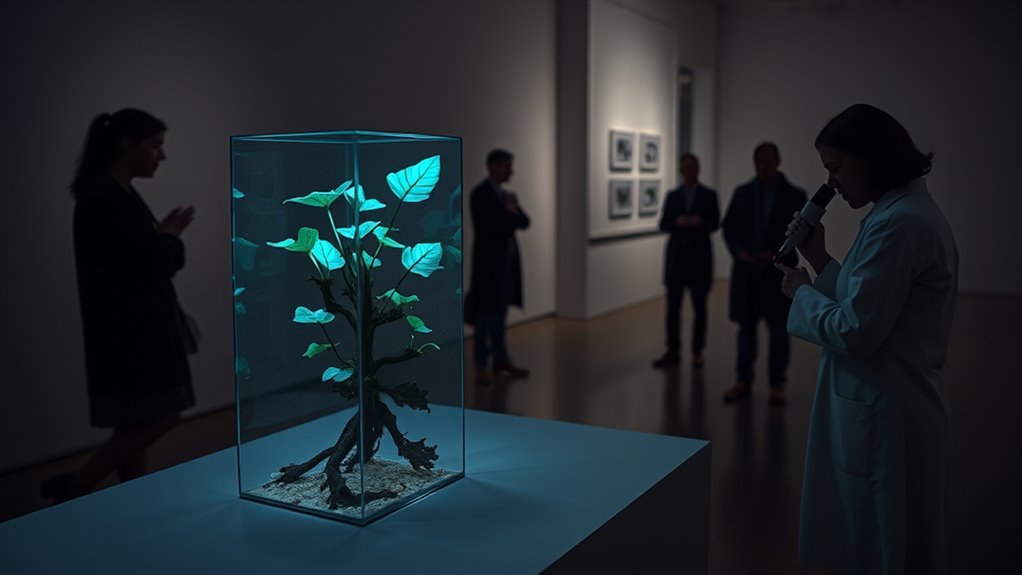
Bioart, which merges biological sciences with artistic expression, often sparks intense ethical debates because it challenges traditional boundaries and raises questions about morality, safety, and responsibility. When you explore this domain, you’ll encounter provocative works that utilize genetic modification to alter living organisms or employ animal experimentation to create striking visuals or concepts. These techniques push the limits of conventional science and art, prompting you to consider whether the ends justify the means.
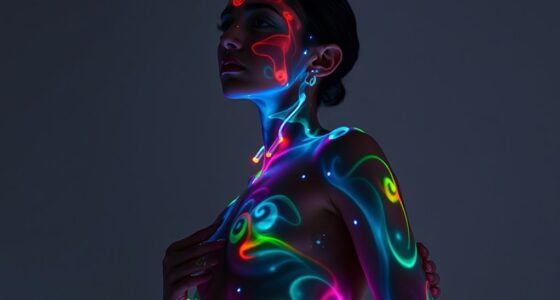
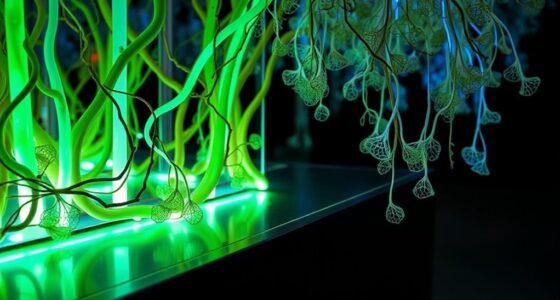
Genetic modification in bioart involves editing the DNA of organisms to produce extraordinary visual effects or to explore new aesthetic territories. You might see artists who manipulate genes to create glowing plants or animals with unusual features, blurring the line between natural and artificial. While these innovations can inspire awe and challenge your perceptions of life, they also raise concerns about unintended consequences. For instance, altering an organism’s genetic makeup could have unpredictable effects on ecosystems or human health if such modifications were to escape controlled environments. The debate intensifies as you weigh the creative potential against the ethical implications of playing god with life itself.
Genetic editing in bioart sparks awe and ethical concerns over unintended consequences and playing god with life.
Animal experimentation remains another contentious issue in bioart. Artists often utilize animals to demonstrate biological processes or evoke emotional responses, sometimes involving invasive procedures or living displays. You may find yourself questioning whether subjecting animals to experimental art is justifiable, especially when the animals endure discomfort or harm. Critics argue that such practices violate animal rights and reduce sentient beings to mere tools for artistic exploration. Conversely, some defend these works as necessary to challenge societal norms, raise awareness, or provoke critical dialogue about human-animal relationships. As you reflect on these practices, you’re compelled to consider where your own boundaries lie regarding the use of animals in the pursuit of artistic or scientific advancement.
The core of these ethical debates lies in balancing innovation with responsibility. You’re asked to consider whether pushing artistic expression through genetic modification and animal experimentation aligns with moral standards. Is it acceptable to manipulate life forms for the sake of art? Do the potential benefits outweigh the risks involved? These questions don’t have easy answers, but they serve as a reminder that in bioart, the line between creativity and ethics is often blurred. Moreover, advancements in diverse designs available for artistic purposes challenge you to think about how innovation interacts with ethical considerations. As you engage with these works, you become a participant in a larger conversation about how society should navigate the complex interplay of science, art, and morality in the age of rapid biological advancement.
Frequently Asked Questions
How Do Cultural Differences Impact Bioart Ethical Standards?
Cultural differences considerably shape your bioart ethical standards by influencing what society considers acceptable or taboo. You’ll find that cultural ethics often define the boundaries of artistic expression, pushing or restricting certain practices. These varying perspectives impact your approach to bioart, as what’s seen as innovative in one culture might breach artistic boundaries in another. Respecting diverse cultural ethics ensures your work remains sensitive and ethically conscious across different societal contexts.
What Legal Frameworks Govern Bioart Practices Internationally?
You need to understand that international bioart practices are governed by various legal frameworks focusing on Intellectual Property and Regulatory Compliance. Countries have specific laws protecting inventors’ rights and ensuring safe, ethical research. You should always check local regulations, obtain necessary permits, and respect patents. While some standards align globally, you must adapt your practices to each jurisdiction to avoid legal issues and uphold ethical standards in bioart.
Can Bioart Ever Be Completely Free of Ethical Concerns?
You might think bioart can be completely free of ethical concerns, but artistic autonomy always intersects with moral boundaries. Despite your desire for unrestricted creativity, ethical issues inevitably arise around manipulating life forms, risks, and societal impact. No matter how innovative, bioart can’t fully escape ethical considerations because it challenges deeply rooted moral values, urging you to balance artistic freedom with responsible practice.
How Do Artists Address Potential Environmental Risks of Bioart?
You address potential environmental risks of bioart by prioritizing genetic safety and ecological impact. You conduct thorough risk assessments before creating bioart projects, ensuring genetically modified organisms don’t harm ecosystems. You also collaborate with scientists and environmental experts to develop safety protocols, minimize unintended consequences, and monitor long-term effects. By emphasizing responsible practices, you help prevent ecological disruptions while exploring innovative artistic expressions in bioart.
What Role Do Public Opinions Play in Shaping Bioart Regulations?
Public opinion acts as a compass guiding bioart regulations, shaping ethical consensus like a lighthouse in foggy waters. Your engagement in dialogues and debates influences policymakers, ensuring regulations reflect societal values. When the public voices concern or support, it helps draw clear boundaries for bioartists, balancing innovation with responsibility. Your active participation guarantees that bioart advances ethically, respecting community standards and fostering responsible scientific and artistic exploration.
Conclusion
As you explore bioart’s ethical landscape, remember that nearly 60% of people believe it’s crucial to establish clear boundaries. While pushing creative limits can inspire innovation, you must consider the moral implications involved. Striking a balance between artistic expression and ethical responsibility ensures that bioart advances without crossing critical lines. By staying informed and thoughtful, you can help shape a future where science and art coexist ethically and responsibly.