
📊 Full opportunity report: EuroHPC. The compute substrate. on ThorstenMeyerAI.com — validation score, market gap, and execution plan.

Get the latest gadgets delivered free — and shop member deals
- Fast, free delivery on millions of items
- Access to Prime Big Deal Days deals on October 6–7
- Prime Video, Amazon Music and more included
TL;DR
EuroHPC’s current infrastructure supports mid-sized AI training but faces structural limits for frontier models. The €20 billion AI Gigafactory plan aims to address these gaps, with ongoing developments expected through 2026.
EuroHPC’s compute infrastructure currently supports European AI projects at the regional and mid-sized model level, but it remains insufficient for the training of frontier-class models, which the Compute Concentration Audit framework aims to address.
EuroHPC JU has established a network of 19 AI Factories across 21 European countries, supported by a €10 billion investment for 2021-2027. These facilities enable regional ecosystems for AI development, primarily supporting models up to approximately 70 billion parameters, as demonstrated by Apertus on the Alps system.
However, the infrastructure’s capacity for training larger, trillion-parameter models remains limited. The existing flagship systems, such as JUPITER, LUMI, and Leonardo, are ranked among the top supercomputers globally, but their architecture and resource allocation are primarily designed for mid-sized models rather than frontier AI training.
The €20 billion InvestAI Facility plans to create up to five AI Gigafactories, intended to enable training of trillion-parameter models. The selection process for these facilities is ongoing through 2026, with a strategic deadline set around the August 2 EU AI Act enforcement window. The current compute substrate confirms operational capability at the AI Factory tier but highlights a structural gap for frontier AI development, which the Gigafactory initiative seeks to close.
EuroHPC.
The compute
substrate.
€10 billion AI Factories + €20 billion AI Gigafactories. 19 AI Factories + 13 Antennas. JUPITER #4, LUMI #9, Leonardo #10. Federation Platform shipped April 15. The compute substrate underlying every project in the seven-essay framework — and the three structural complications the framework didn’t address directly.
This is the eighth standalone essay in the European sovereign-LLM track and the first Tier 2 expansion piece. The prior seven essays documented six institutional answers plus the integrative synthesis framework. Every one of those projects depends operationally on the EuroHPC compute substrate or a national-equivalent. Apertus trained on Alps (10,752 GH200 superchips, 4,096 GPUs). OpenEuroLLM allocated millions of GPU hours across multiple EuroHPC systems. Minerva trained on Leonardo. AMÁLIA on Deucalion. Mistral on commercial cloud + ASML strategic-investor partnership. Aleph Alpha historically on alpha ONE + now Schwarz Group STACKIT + €11B Berlin DC. The compute substrate is the unifying infrastructure question the seven-essay framework didn’t address directly. Summer 2026 is the operational moment when the substrate’s strategic positioning is determined.
Two tiers. One scale gap.
The EU policy framework operates two structurally distinct programmatic tiers. The bifurcation explicitly acknowledges that current AI Factory tier infrastructure is insufficient for frontier-class model training. The AI Gigafactory framework is the EU policy framework’s operational response to the structural capability gap Finding 1 from the synthesis essay surfaces empirically.
Six flagships. Six chromatic cross-references.
The flagship EuroHPC systems crystallize the substrate underlying the seven-essay framework. Three rank in the global TOP500 top 10. Two are exascale (one operational, one deploying 2026). All six are project-cross-referenced in the seven-essay framework. The chromatic register of each system maps to its project cross-reference.
30B+ trained
LUMI users
training
Factory
2026
70B
Three cohorts. 21 European countries.
The AI Factory selection has expanded rapidly through December 2024 – October 2025 across three cohorts. 13 AI Factory Antennas in 7 EU Member States plus 6 partner countries complete the framework. The Antennas are the institutional infrastructure connecting Apertus (Switzerland) and other partner-country projects to the EuroHPC framework.
Three complications. Three policy gaps.
The compute substrate analysis surfaces three structurally distinct complications. These are not criticisms of EuroHPC — they are the operational realities the strategic discourse should integrate. The Federation Platform partially addresses the first; the AI Factory Antennas framework partially addresses the second; the AI Gigafactory framework explicitly addresses the third.
Summer 2026. Three deadlines simultaneously.
The June 2026 AI Gigafactory selection process, the August 2 EU AI Act enforcement window, and the Q4 2026 EuroHPC Federation Platform second release all converge in summer 2026. This is the operational moment when the European sovereign-AI compute substrate’s strategic positioning is determined for the 2027-2029 horizon.
4 weeks ago
from now
moment
from now
from now
months
from now
The work is real across the EuroHPC framework. Substantial infrastructure built. 19 AI Factories operational or in deployment. 13 Antennas connecting smaller member states. EuroHPC Federation Platform shipped April 15, 2026. Apertus 70B operationally demonstrates Alps-tier training. The structural complications are also real. Heterogeneity hidden cost. Geographical concentration. Scale-tier bifurcation. Both can be true at once. Summer 2026 is the operational moment when the European sovereign-AI compute substrate’s strategic positioning is determined.
Implications of EuroHPC Infrastructure for Europe’s AI Leadership
The current EuroHPC compute substrate demonstrates Europe’s capacity to support regional AI development and mid-sized model training, confirming operational readiness at this level. However, the infrastructure’s limitations for frontier model training pose a significant challenge to Europe’s ambitions to lead in cutting-edge AI research. For more details, see The Compute Reckoning.
The €20 billion InvestAI Facility and the planned AI Gigafactories are strategic responses to this gap, aiming to establish the necessary large-scale compute capacity. The ongoing procurement and deployment processes will determine whether Europe can achieve its goal of training trillion-parameter models domestically, reducing reliance on external cloud providers and maintaining technological sovereignty.
Additionally, the concentration of flagship systems in wealthier member states may exacerbate structural inequalities, potentially limiting broader regional participation in frontier AI development. The heterogeneity of hardware and software environments further complicates optimization efforts and operational efficiency across the continent.
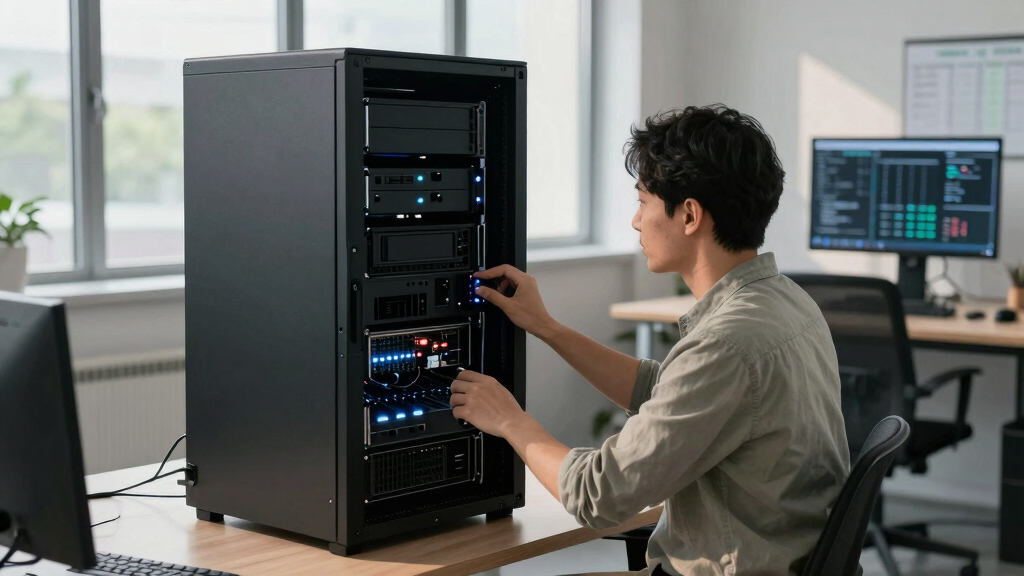
high performance GPU server for AI training
As an affiliate, we earn on qualifying purchases.
As an affiliate, we earn on qualifying purchases.
European Supercomputing and AI Infrastructure Development Timeline
Since its creation in 2018, EuroHPC JU has coordinated Europe’s supercomputing efforts through a combination of regional AI Factories and flagship systems, including JUPITER (ranked #4 globally), LUMI (#9), and Leonardo (#10). These systems have supported various AI projects, including training on models up to 70 billion parameters.
The 2021-2027 investment plan allocates €10 billion for infrastructure and AI Factories, with additional funding for AI Gigafactories. The first release of the EuroHPC Federation Platform in April 2026 marks a significant step in operationalizing the infrastructure, with the ongoing selection process for the Gigafactories expected to conclude by summer 2026. Prior essays and analyses have identified a capability gap for training larger models, which the new infrastructure initiatives aim to address.
“The EuroHPC infrastructure confirms operational support for mid-sized AI projects but reveals a structural insufficiency for frontier-class model training, which the €20 billion AI Gigafactory framework aims to resolve.”
— Thorsten Meyer
As an affiliate, we earn on qualifying purchases.
Unresolved Challenges in Europe’s Compute Infrastructure Expansion
It remains unclear how quickly and effectively the AI Gigafactories will be deployed and scaled to support frontier AI training. The specific hardware configurations, procurement timelines, and operational integration of these large-scale facilities are still developing. Additionally, the impact of hardware heterogeneity and geographical concentration on operational efficiency and regional equity needs further assessment.
large scale AI training infrastructure
As an affiliate, we earn on qualifying purchases.
As an affiliate, we earn on qualifying purchases.
Next Steps for Europe’s AI Infrastructure Strategy
Key milestones include the final selection and commissioning of AI Gigafactories by summer 2026, with operational testing and capacity ramp-up expected through late 2026 and into 2027. The ongoing Compute Concentration Audit will inform these developments and help shape Europe’s ability to support frontier AI models.
As an affiliate, we earn on qualifying purchases.
Key Questions
What is the current capacity of EuroHPC systems for AI training?
EuroHPC systems like JUPITER, LUMI, and Leonardo support models up to approximately 70 billion parameters, sufficient for mid-sized AI projects but not for frontier-class models.
What are AI Gigafactories, and how will they change Europe’s AI landscape?
AI Gigafactories are large-scale facilities designed to enable training of trillion-parameter models, addressing current capacity gaps and supporting Europe’s leadership in advanced AI research.
When will the new AI Gigafactories become operational?
The selection process is ongoing through 2026, with expected operational deployment starting in late 2026 or early 2027, depending on procurement and construction timelines.
How does hardware heterogeneity affect Europe’s AI infrastructure?
Differences in hardware architectures (CUDA, ROCm, multi-generation hardware) increase software complexity and optimization overhead, which can hinder operational efficiency and scalability across the continent.
Will the concentration of flagship systems in wealthier member states limit broader participation?
There is concern that geographical concentration may reinforce inequalities, though efforts are ongoing to expand regional access and develop distributed compute resources.
Source: ThorstenMeyerAI.com
Halloween Picks
halloween
As an affiliate, we earn on qualifying purchases.