
The future of biofabrication in creative disciplines is exciting, offering you new ways to merge science and art. As tools become more accessible, you’ll find yourself working with living tissues to craft innovative, dynamic artworks. This blending challenges traditional boundaries, allowing you to create living sculptures, responsive installations, and evolving pieces that breathe life into your projects. Stay with us to discover how these groundbreaking approaches are shaping the next wave of artistic expression.
Key Takeaways
- Biofabrication will enable the creation of dynamic, living artworks that evolve over time, enhancing experiential art forms.
- Artistic bioprinting will become more accessible, fostering collaboration between scientists, artists, and designers.
- Living tissues will serve as innovative mediums for storytelling, cultural expression, and societal reflection.
- The integration of biological processes into art will blur traditional boundaries, redefining artistic creation and perception.
- Future biofabrication in art will emphasize sustainability, interactivity, and the merging of science and creativity.
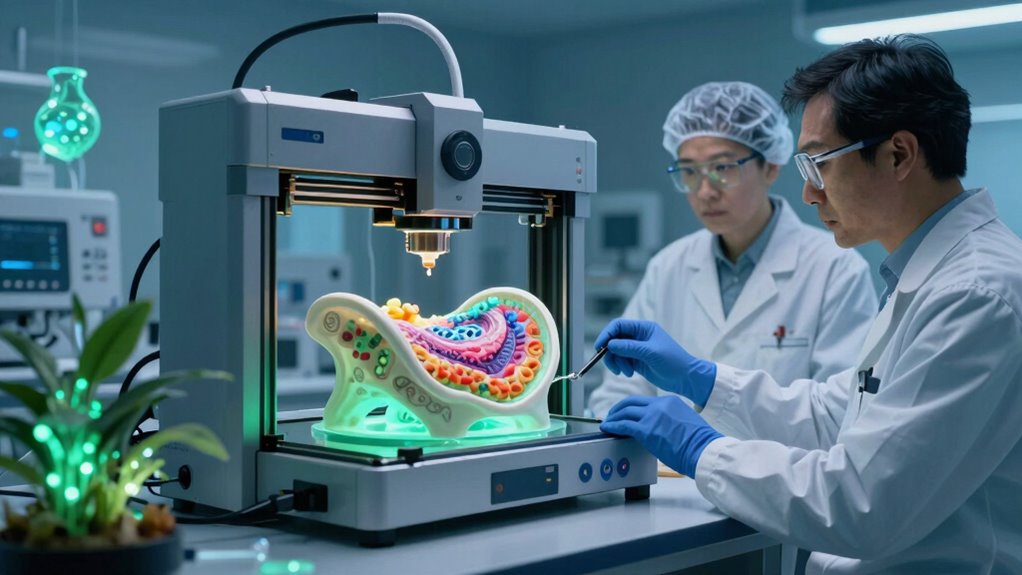
Have you ever wondered how the boundaries between science and art are blurring? As biofabrication advances, you’re starting to see a fascinating crossover where biological engineering meets creative expression. One of the most exciting developments is the creation of synthetic tissue through artistic bioprinting. Instead of viewing biofabrication solely as a scientific process, artists and designers are harnessing it as a medium for innovation, pushing the limits of what’s possible in visual and tactile art. You might imagine a sculpture that’s alive, with layers of living cells carefully printed to produce intricate textures and forms. This convergence allows you to explore new aesthetics and challenge traditional notions of art, blurring lines between the organic and the synthetic.
Biofabrication blurs science and art, turning living tissues into innovative, textured artistic expressions.
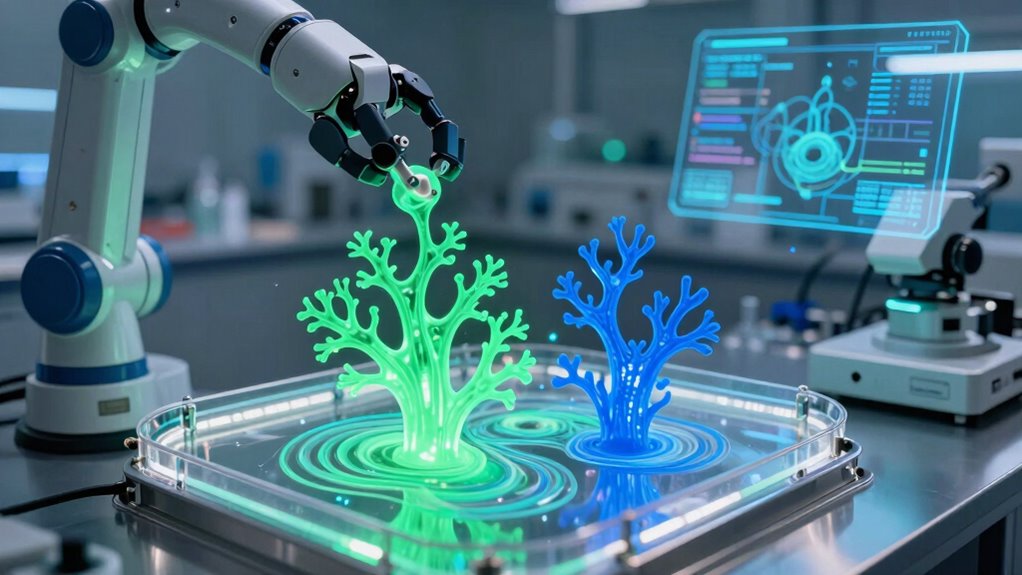
In this domain, synthetic tissue isn’t just a biomedical tool; it’s an artistic material. Artists are learning to manipulate living cells with precision, using bioprinters to craft structures that are both visually stunning and biologically functional. Think about vibrant, multi-layered installations that mimic natural tissues, or delicate, translucent sculptures that seem to breathe. Artistic bioprinting enables you to experiment with color, form, and texture in ways never before possible. It invites you to see biological processes as an artistic palette, where the growth of tissue becomes part of the creative process. This isn’t just about creating pretty objects; it’s about exploring how life itself can be a form of art. Additionally, understanding the biological basis of living tissues enhances your ability to manipulate these materials creatively.
As biofabrication tools become more accessible, you’ll find that the line between creator and scientist is dissolving. You might work in a studio where living materials are as common as paint or clay, using bioprinters to turn your ideas into living art pieces. The potential to blend aesthetics with functionality opens up new avenues for storytelling and cultural expression. For instance, creating living murals that evolve over time or designing bio-art installations that respond to environmental stimuli. These projects challenge you to rethink the role of art in society, emphasizing sustainability, biology, and innovation. The use of biofabrication techniques is revolutionizing how art is conceived and realized.
Ultimately, the future of biofabrication in creative disciplines promises an era where art is not only seen but also experienced as a living, breathing entity. You become both creator and curator of living artworks, shaping biological materials into meaningful forms. Artistic bioprinting and synthetic tissues serve as tools that expand your creative horizon, transforming biological science into a dynamic canvas for expression. It’s a future where science and art don’t compete but collaborate, inviting you to reimagine what art can be in the age of biofabrication.
As an affiliate, we earn on qualifying purchases.
Frequently Asked Questions
How Does Biofabrication Influence Traditional Artistic Techniques?
Biofabrication influences traditional artistic techniques through bio innovation, offering new materials and methods that expand your artistic expression. You can incorporate living tissues or bio-printed elements into your work, pushing the boundaries of conventional art forms. This fusion of biology and creativity enables you to explore organic textures and dynamic forms, ultimately enriching your artistic practice and inspiring innovative, sustainable approaches that challenge traditional techniques.
What Ethical Considerations Are Involved in Biofabrication for Art?
You need to contemplate bioethics dilemmas like consent, environmental impact, and the potential for unintended consequences when using biofabrication in art. As an artist, you hold artistic responsibility to guarantee your creations respect life and nature. Balancing innovation with ethical standards is vital, so you must evaluate the moral implications and maintain transparency, fostering trust and integrity in your work.
How Accessible Is Biofabrication Technology for Independent Artists?
You might feel like biofabrication is out of reach, but don’t be discouraged. Accessibility barriers and equipment affordability are shrinking thanks to emerging open-source tools and affordable bioprinting options. While high-end labs still dominate, independent artists now have more opportunities to experiment with biofabrication. With curiosity and resourcefulness, you can start exploring this fascinating frontier, transforming your creative visions into living, breathing art.
What Are the Environmental Impacts of Biofabrication Practices?
Biofabrication practices can impact the environment through resource consumption and waste generation, but they also hold potential for environmental sustainability. You might find that using renewable materials and optimizing processes reduces resource use, making your projects more eco-friendly. However, it’s crucial to evaluate energy sources and waste management to minimize environmental impacts. By prioritizing sustainable choices, you can contribute positively to ecological health while advancing your creative work.
Can Biofabrication Be Integrated With Digital Art Forms?
They say, “A picture is worth a thousand words,” and you can now blend biofabrication with digital art forms for organic integration and digital symbiosis. You can create living sculptures or dynamic installations that respond to digital stimuli, making art more interactive and sustainable. This fusion opens exciting possibilities for artists, allowing them to push boundaries and craft innovative, eco-friendly works that blur the lines between biology and technology.
living tissue sculpture supplies
As an affiliate, we earn on qualifying purchases.
As an affiliate, we earn on qualifying purchases.
Conclusion
As biofabrication continues to evolve, you’ll discover new ways to innovate, to challenge, and to transform. You’ll experiment with science, art, and design, pushing boundaries and redefining possibilities. You’ll inspire, create, and explore, blending technology with imagination. You’ll imagine futures where biology and creativity intertwine seamlessly, shaping your world in ways never before thought possible. Embrace the journey, embrace the future, and let your creativity lead the way in this exciting frontier.
biological art installation tools
As an affiliate, we earn on qualifying purchases.
As an affiliate, we earn on qualifying purchases.
As an affiliate, we earn on qualifying purchases.