
The GFP bunny sparks a complex ethical debate about transgenic art, raising concerns about animal welfare, consent, and potential suffering. While it showcases scientific innovation and artistic expression, many question whether using animals as living tools crosses moral boundaries. You might consider whether such creations respect animal rights or exploit them for curiosity. If you want to explore how these issues shape ongoing discussions, there’s more to uncover.
Key Takeaways
- The GFP Bunny, created by scientists to express fluorescent protein, raises ethical questions about animal welfare and invasive genetic modification.
- Transgenic art like the GFP Bunny challenges moral boundaries by using animals as living art pieces, sparking debates on animal rights.
- Ethical concerns focus on potential suffering, lack of consent, and whether such modifications prioritize scientific curiosity over animal dignity.
- Long-term ecological and societal risks of widespread genetic manipulation highlight the need for responsible, morally conscious scientific practices.
- Balancing artistic innovation with respect for animal welfare is crucial, as transgenic art prompts ongoing reflection on scientific and ethical boundaries.
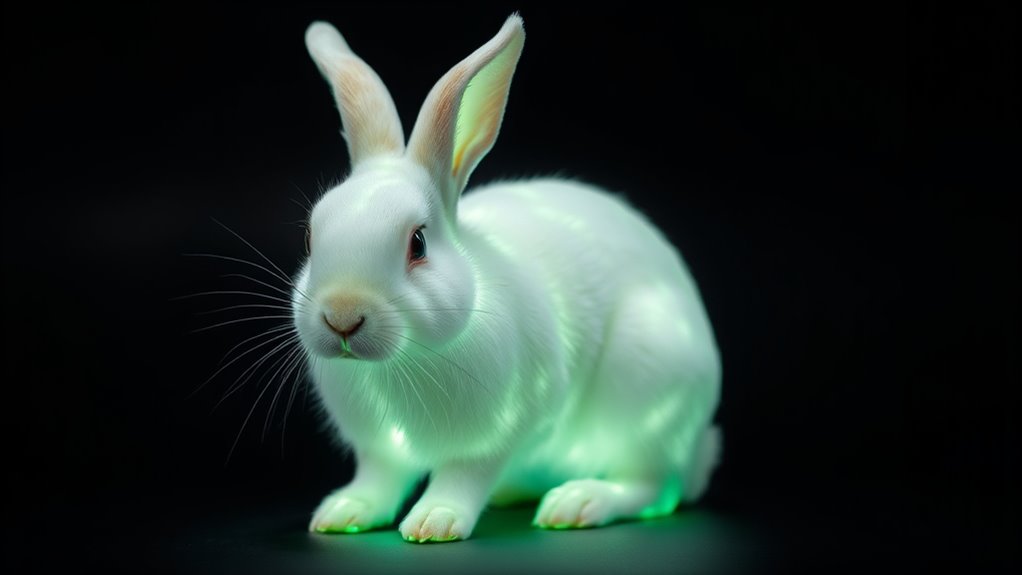
The creation of the GFP Bunny, a genetically modified rabbit expressing green fluorescent protein, sparked widespread debate about the ethics of transgenic art. You might wonder whether such scientific artistry pushes the boundaries of creativity or crosses moral lines. When you consider animal rights, this project raises important questions about the welfare of the rabbit. Did the creators ensure the bunny’s comfort and health? Or was it subjected to invasive procedures for the sake of artistic innovation? These concerns matter because animals used in scientific experiments, even for groundbreaking art, deserve respect and humane treatment.
Proponents argue that transgenic art like the GFP Bunny represents a remarkable form of artistic innovation. It blends science and art, challenging traditional notions of creativity and pushing technological boundaries. You may see the project as a way to inspire dialogue about the potential of genetic engineering. It’s a unique form of expression, showcasing how art can evolve with science’s rapid progress. By manipulating genes, artists can create living works that provoke thought on identity, nature, and the future of biotechnology. From this perspective, the GFP Bunny isn’t just a biological experiment; it’s a statement about the possibilities of human ingenuity.
Transgenic art like the GFP Bunny sparks dialogue on science, creativity, and the future of biotechnology.
However, critics emphasize that such projects risk trivializing animal rights. They argue that using animals as tools for artistic expression can be exploitative, reducing living beings to mere mediums for human curiosity. You might feel uncomfortable knowing that the rabbit’s genetic modification was performed without its consent, raising ethical questions about agency and respect. Is it justifiable to alter an animal’s DNA for the sake of pushing artistic frontiers? Critics contend that true artistic innovation shouldn’t come at the expense of animal suffering or dignity.
Moreover, some worry about the long-term implications of transgenic art. If genetic modifications become more common, could we face unforeseen ecological or ethical consequences? You may wonder whether society is prepared to handle the responsibilities that come with manipulating life at such a fundamental level. Balancing scientific progress with moral considerations becomes vital in this context.
In the end, the GFP Bunny’s creation forces you to reflect on whether the pursuit of artistic innovation justifies the means. It challenges you to consider how far you’re willing to go in merging science and art while respecting animal rights. As technology advances, these debates will only grow more complex, making it essential to weigh the ethical implications alongside creative possibilities.
Frequently Asked Questions
What Are the Long-Term Health Effects on Transgenic Animals?
You might wonder about the long-term health effects on transgenic animals. These effects can include issues with genetic stability, leading to unforeseen health problems over time. Regular health monitoring is essential to detect and manage potential issues early. While some transgenic animals remain healthy, others may develop immune responses or genetic mutations, so ongoing research and careful observation are vital to understand and mitigate long-term risks.
How Is Public Opinion Shaping Policy on Transgenic Art?
You see that public perception and ethical debates heavily influence policies on transgenic art. When the public is concerned about animal welfare and ethical implications, policymakers tend to impose stricter regulations. Conversely, positive views can foster more experimental freedom. Your awareness of these debates shapes how laws evolve, ensuring that societal values and ethical considerations remain central in the development and acceptance of transgenic art projects.
Are There Alternatives to Using Live Animals in Artistic Projects?
Yes, you can explore synthetic alternatives and virtual simulations instead of live animals in artistic projects. These technologies allow you to create realistic, interactive experiences without causing harm or raising ethical concerns. By using digital art, augmented reality, or computer-generated imagery, you can achieve your creative goals ethically, engaging audiences effectively while respecting animal welfare. This approach also offers greater flexibility and innovation in your artistic expressions.
What Are the Legal Rights of Transgenic Animals Created for Art?
You have to understand that transgenic animals created for art often lack clear legal rights. Intellectual property rights typically cover the genetic modifications and artistic representations, but animals’ welfare isn’t always protected. You should consider that legal protections vary by jurisdiction, and animal welfare concerns might restrict certain uses. It’s essential to balance creative expression with ethical responsibilities, ensuring that the animals’ rights and well-being are respected throughout the process.
How Does Transgenic Art Impact Biodiversity and Ecosystems?
You might think transgenic art harms biodiversity, but it can actually raise awareness about ecological balance. By introducing novel genetic traits, you may increase genetic diversity, which strengthens ecosystems against diseases and environmental changes. However, if not carefully managed, it risks disrupting existing species and ecological interactions. Your responsibility is to guarantee that transgenic art promotes biodiversity without endangering the delicate balance of ecosystems.
Conclusion
As you reflect on the GFP Bunny, you see more than just a glowing rabbit—you see a symbol of the delicate balance between innovation and morality. This luminous creature beckons you to contemplate how far you’re willing to go in pursuit of art and progress. Ultimately, it challenges you to weigh the beauty of discovery against the shadows it casts, reminding you that every act of creation carries a ripple that touches the essence of ethics itself.