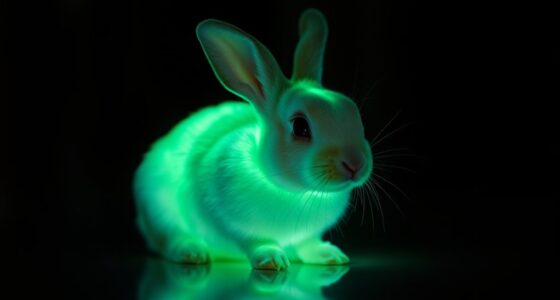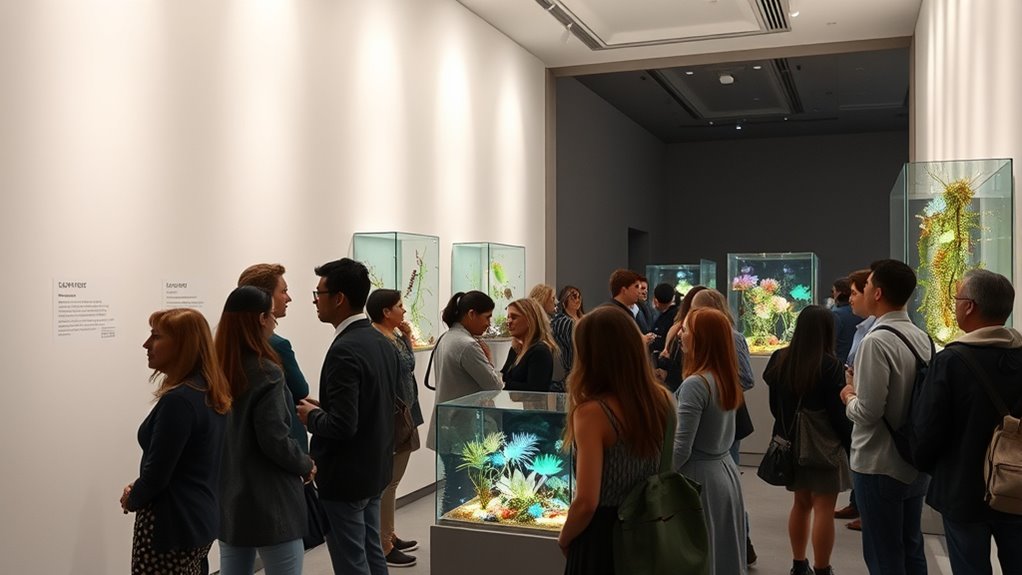

Public perceptions of bioart are influenced by ethical questions, cultural norms, and societal beliefs about manipulating living tissues for art. You might feel curious, skeptical, or concerned, especially when bioart raises moral issues or challenges traditional views of life and morality. Media portrayals and education shape these attitudes, highlighting potential risks and benefits. If you stay engaged, you’ll discover more about how bioart sparks debates that reflect deeper societal values and fears.
Key Takeaways
- Public reactions to bioart vary from curiosity and admiration to skepticism and ethical concern.
- Ethical debates influence societal acceptance, with worries about manipulating life forms and moral boundaries.
- Cultural values shape perceptions, with bioart challenging norms around beauty, identity, and morality.
- Media portrayal and education impact understanding, either fostering curiosity or reinforcing fears about bioart.
- Risks such as misuse and unintended consequences generate caution and resistance among the public.

Have you ever wondered how the public perceives bioart, the innovative blend of biology and artistic expression? Many people approach this emerging field with curiosity, but also with a mix of skepticism and concern. Ethical considerations sit at the core of these mixed reactions. When you see bioart involving genetically modified organisms or living tissues, questions naturally arise: Is it right to manipulate life forms for artistic purposes? Some worry about crossing moral boundaries, especially when it involves human or animal tissues. Others fear that blurring the lines between science and art might diminish the seriousness of biological research or lead to unintended consequences. These ethical debates influence how people view bioart’s legitimacy, its societal role, and whether it should be embraced or restricted.
Beyond ethics, bioart’s cultural impact plays a significant role in shaping public perceptions. When you witness bioart pieces that challenge traditional notions of beauty, identity, or morality, it can evoke strong emotional reactions. For some, bioart becomes a mirror reflecting cultural anxieties about technology, genetics, and the future of humanity. It prompts viewers to reconsider what it means to be alive or human, often sparking conversations about the boundaries of scientific experimentation. Conversely, others might see bioart as disruptive or even threatening to established cultural norms, perceiving it as an unnatural interference with nature’s order. The way bioart interacts with societal values and cultural narratives influences how open or resistant the public is to this art form.
Public perception is also shaped by the broader societal context—media coverage, education, and personal experiences all matter. When bioart is presented as provocative or controversial, it can reinforce fears or misunderstandings. Conversely, educational initiatives that explain the scientific background and ethical safeguards can foster curiosity and acceptance. You might find that some communities celebrate bioart’s potential to raise awareness about environmental issues or medical advancements, viewing it as a catalyst for positive change. Additionally, understanding spiritual and esoteric meanings behind biological art forms can deepen appreciation and open new dialogues about the intersection of science, spirituality, and culture. Others remain wary, concerned about potential misuse or the moral implications of creating living art. Ultimately, people’s perceptions are complex, influenced by their cultural background, moral outlook, and level of scientific literacy.
Frequently Asked Questions
How Do Artists Ensure Ethical Standards in Bioart Projects?
You guarantee ethical standards in bioart projects by prioritizing informed consent from all participants and maintaining transparency practices. You clearly explain the project’s purpose, potential risks, and benefits, allowing participants to make knowledgeable decisions. By openly discussing methods and intentions, you build trust and uphold ethical integrity. This proactive approach demonstrates your commitment to respecting individual autonomy and adhering to ethical guidelines throughout your bioart work.
What Are the Legal Implications of Creating Bioart?
When creating bioart, you face legal implications like protecting your intellectual property and managing liability concerns. You should secure patents or copyrights for your unique work to prevent unauthorized use. Additionally, you need to comprehend potential liabilities if your project causes harm or breaches regulations. Staying informed about legal standards and consulting legal experts helps you avoid disputes and ensure your bioart complies with relevant laws and ethical guidelines.
How Do Different Cultures Perceive Bioart’s Cultural Significance?
You’ll find that cultural acceptance of bioart varies widely, shaped by ethical diversity across societies. Some cultures embrace bioart’s innovative potential, viewing it as a reflection of scientific progress and artistic expression. Others remain cautious, emphasizing ethical concerns and traditional values. Your perception of bioart’s cultural significance depends on these differing cultural norms, which influence how society interprets the ethical implications and artistic value behind bioart creations.
What Safety Protocols Are in Place for Bioart Exhibitions?
Think of bioart safety protocols as a fortress protecting everyone. You’ll see strict biohazard containment measures, like sealed labs and protective gear, ensuring no accidental release of biohazards. Risk assessment protocols are thoroughly followed, much like a safety checklist before a daring adventure, to identify potential hazards and prevent accidents. These protocols keep both artists and the public safe, turning creative exploration into a secure, inspiring environment.
How Does Bioart Influence Scientific Research and Public Policy?
Bioart influences scientific research and public policy by fostering public engagement, which raises awareness and sparks debates about ethical and societal implications. Your involvement helps shape policy development as policymakers consider public opinions and bioart’s potential risks and benefits. By participating in discussions and exhibitions, you contribute to a more informed dialogue, encouraging responsible research practices and policies that balance innovation with safety and ethics.
Conclusion
As you consider public perceptions of bioart, it’s clear many see it as innovative but also controversial. Remarkably, a recent survey shows that 62% of people feel uneasy about the ethical implications of bioart. This statistic highlights how curiosity often clashes with concern, shaping public opinion. As bioart continues to evolve, understanding these perceptions helps you navigate its future, balancing creativity with ethical responsibility to foster broader acceptance and dialogue.