
🔍 Read the full analysis: A Checklist For Matching Gear To AI Workflow Automation In 2026 on ThorstenMeyerAI.com

Get the latest gadgets delivered free with Prime
- Fast, free delivery on millions of items
- Prime Video, Amazon Music and more included
- Member-only deals all year
TL;DR
ThorstenMeyerAI.com published a checklist for matching recording, call, file-handling and everyday-computer gear to an AI workflow workspace. It names several products but does not provide a product for every category or establish independent performance comparisons; its main guidance is to check compatibility and prioritize the equipment gaps that disrupt work.
ThorstenMeyerAI.com has published a 2026 checklist for equipping a workspace used for AI workflow automation, recording, calls, file handling and everyday computer tasks. The guide names several gear picks, but frames them as options to match against a person’s ports, operating setup, desk space and connected devices—not as a universal shopping list.
The checklist spans six categories: a USB microphone, an autofocus webcam, a portable SSD, a USB-C docking station, an ergonomic wireless mouse and an uninterruptible power supply (UPS). Its central recommendation is to identify compatibility needs first, then address the equipment problems that interrupt work most often rather than purchasing every category at once, as advised in this AI automation hardware checklist.
For audio, the guide lists the RØDE PodMic USB Dynamic Broadcast Microphone, described in its product name as supporting USB-C and XLR. It advises checking the connection available on the computer or hub, cable reach and microphone placement. The webcam section provides selection criteria but names no product: readers are told to check the computer or dock connection, mount, intended software and focus behavior in their own use, including the equipment considerations covered in this home office tech setup checklist.
The storage pick is the SanDisk 2TB Extreme Portable SSD. The guide says to compare capacity with working file needs and check connections across the computers that will use the drive; it does not establish transfer performance or durability from the product name. Its docking-station pick is the Targus USB-C Universal Quad 4K Docking Station with 100W Power Delivery. Those specifications are presented as details to verify against the host computer and displays, not as proof that every setup will support them.
RØDE PodMic USB Dynamic Broadcast Microphone, XLR + USB-C
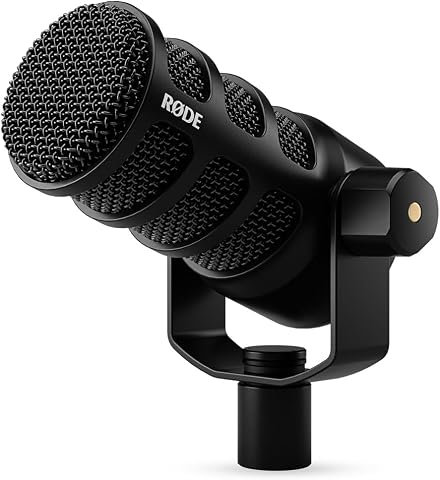
The RØDE PodMic USB is a versatile broadcast microphone with both XLR and USB-C connections, suitable for streaming, podcasts, and recording. It features onboard audio processing with APHEX DSP, noise rejection for speech clarity, and zero-latency monitoring for real-time audio feedback.
Pros:
- Versatile XLR and USB-C connectivity for flexible setup
- Built-in audio processing enhances sound quality
- Effective noise rejection for clear speech
- Zero-latency monitoring for real-time audio
Cons:
- May require additional equipment for professional XLR use
- Bulkier design compared to traditional microphones
Best for: Workspaces that want USB-C and XLR connection options
Not ideal for: Setups that cannot accommodate its listed connections
Bottom line: Choose it when its USB-C or XLR connections fit the equipment and recording workflow you already have.
Fit Gear to the Workday
The checklist’s practical point is that gear has to work as a system. A microphone, drive or dock may have the desired feature on its product label, yet still fail to fit a computer’s ports, desk layout or normal work routine. Checking those constraints before buying can help readers avoid equipment that adds setup friction instead of reducing it.
For people using AI tools alongside calls, recordings and file transfers, interruptions can arise from ordinary hardware mismatches as well as software. A drive that cannot connect across devices or a dock that does not support the intended computer-and-monitor combination may complicate everyday work. The guide presents these categories as possible workspace needs; it does not report measured productivity gains or show that any listed product improves AI automation outcomes.
Its advice to prioritize frequent bottlenecks also makes the list a staged purchasing guide rather than a prescription to buy six items. That distinction matters for readers with functioning built-in cameras, adequate storage or no need for additional desk connections.
Six Categories, Different Needs
The source describes a workspace for recording, calls, file handling and everyday computer use, rather than a single standardized AI setup. Its categories cover inputs and peripherals, storage, desk connections and power protection. Which items are relevant depends on the devices and tasks a person already has.
Some advice is product-specific, while other sections are general selection guidance. The microphone, SSD and dock have supplied picks; the webcam section explicitly has no supplied product. The checklist names an ergonomic wireless mouse and UPS, but the material provided here does not include their detailed recommendations. The source also cautions against inferring performance or broad compatibility from product names alone.
“Prioritize the gaps that interrupt your work most often, rather than buying every category at once.”
— ThorstenMeyerAI.com checklist
Compatibility Depends on Each Setup
The checklist does not provide independent product testing, comparative performance results or evidence that the named picks work with every computer and peripheral. Details such as transfer performance, durability, autofocus behavior and dock support must be checked against product documentation and the buyer’s actual setup.
The supplied material does not name a webcam, and it gives no detailed product pick or buying criteria for the mouse and UPS. It also does not specify a particular AI platform, operating system, computer model or standard workflow against which compatibility could be assessed. The publication date is not stated, so the timing of the guide’s release cannot be pinned down beyond its 2026 framing.
Check the Setup Before Buying
Readers can apply the checklist by listing the devices they use, the ports and cables available, their desk and mounting constraints, and the tasks that most often stall. They can then verify each candidate product’s specifications against that list, including the computer, dock, display and software combinations relevant to their work.
The guide does not announce a future update, testing program or additional release. Any purchasing decision should wait on confirmation of the individual product details and compatibility requirements that the checklist itself says to verify.
Key Questions
Is the checklist a recommendation to buy all six items?
No. It advises readers to prioritize the gaps that interrupt their work and not buy every category at once.
Which products does the guide name?
It lists the RØDE PodMic USB Dynamic Broadcast Microphone, the SanDisk 2TB Extreme Portable SSD and the Targus USB-C Universal Quad 4K Docking Station with 100W Power Delivery. The webcam section provides selection advice but no named product.
Does the guide confirm that the listed products work with every computer?
No. It tells readers to check ports, cables, host-computer capabilities, displays and other setup details. Product names alone do not establish universal compatibility.
Does the source provide performance test results?
No performance comparisons or independent test results are included in the supplied material. Readers are directed to verify details such as transfer performance, durability and autofocus behavior with product information relevant to their use.
Source: ThorstenMeyerAI.com