
AI art makes visuals more accessible and inclusive by using adaptive interfaces, visual enhancement tools, and inclusive design principles. These technologies help you engage with art regardless of physical or sensory limitations, offering personalized controls and real-time adjustments that suit your needs. Whether you’re exploring new creative possibilities or experiencing art in ways that suit your abilities, AI-driven tools can transform your artistic journey. Keep exploring to discover how these innovations reshape visual accessibility for everyone.
Key Takeaways
- AI art enhances accessibility through adaptive interfaces that cater to diverse abilities and individual needs.
- Visual enhancement tools allow users with low vision to better perceive and engage with artwork.
- Inclusive design principles in AI platforms promote equitable participation for all users.
- Real-time AI adaptations personalize visual and interactive experiences for users with disabilities.
- AI-driven tools foster broader creative expression, making visual storytelling more inclusive and accessible.
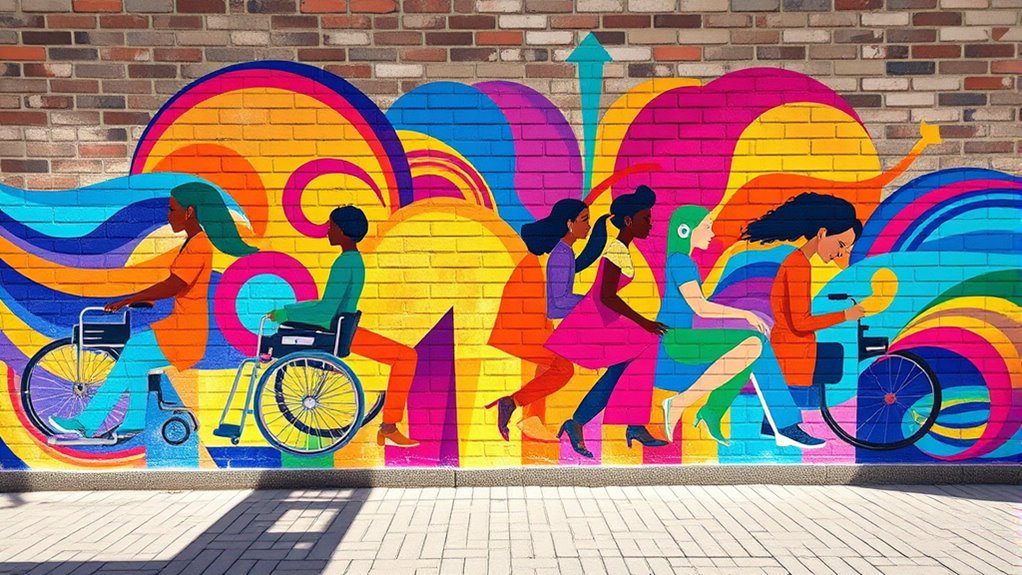
AI art is transforming how we create and experience visual content, making art more accessible to people with diverse abilities. This shift is powered by innovative technologies like adaptive interfaces and visual enhancement tools, which are breaking down barriers that once limited participation in the arts. When you engage with AI-generated art, you might notice how adaptive interfaces adjust seamlessly to your needs, providing personalized controls that cater to your specific abilities. For example, if you have visual impairments, these interfaces can offer larger controls, simplified navigation, or even switch to auditory descriptions, ensuring you’re not left out of the creative experience. This flexibility makes creating and appreciating art more inclusive, empowering everyone to participate regardless of physical or sensory limitations. Additionally, inclusive design principles are increasingly integrated into AI art platforms, further enhancing accessibility for diverse users. Visual enhancement is another game-changer in making art accessible. AI algorithms can analyze images and amplify details that might otherwise go unnoticed, such as subtle textures or faint color differences. For individuals with low vision, these enhancements can be integrated into digital art platforms, allowing you to zoom in on details or adjust contrast and brightness to better perceive the artwork’s nuances. These features don’t just improve aesthetic appreciation—they open doors for deeper engagement with visual content that might have been inaccessible before. When you explore AI art with these tools, you gain a richer, more immersive experience, feeling connected to the art in ways that align with your unique perceptual needs. Moreover, AI’s capacity to adapt interfaces in real-time ensures that accessibility isn’t a one-size-fits-all approach. Instead, it evolves based on your preferences, making the experience smoother and more intuitive. For instance, if you’re using a screen reader or voice commands, AI can optimize the interface to respond quickly and accurately, reducing frustration and improving interaction. This dynamic adaptation helps bridge gaps between creators and audiences, fostering a more inclusive environment where diverse voices and abilities are recognized and valued. As you explore AI art, you’ll see how these technologies democratize access, allowing you to both create and enjoy art without limitations. Adaptive interfaces and visual enhancement not only improve usability but also inspire more people to express their creativity. The integration of AI in art is about more than innovation; it’s about making sure everyone, regardless of ability, can experience the power of visual storytelling. The future of accessible AI art lies in these evolving tools that listen to your needs, enhance your perception, and invite you into a vibrant, inclusive artistic world.
Frequently Asked Questions
How Can AI Art Improve Accessibility for Visually Impaired Audiences?
AI art can improve accessibility for visually impaired audiences by offering sensory augmentation, turning visuals into detailed auditory descriptions or tactile experiences. You can also use AI to enhance emotional expression within the art, making it more relatable and engaging. This way, you’re helping visually impaired individuals better understand and connect with visuals, creating a more inclusive experience that bridges the gap between sight and perception.
What Tools Are Available for Creating Inclusive Ai-Generated Visuals?
Looking for tools to transform visuals into inclusive icons? Accessibility tools like Adobe’s Accessibility features, Microsoft’s Accessibility Insights, and Google’s Inclusive Design Toolkit help you craft engaging, inclusive visuals. These tools promote inclusive design by ensuring visuals are accessible to all, including those with visual impairments. With these resources, you can create compelling, clear, and inclusive AI-generated visuals that engage everyone effectively.
Are There Ethical Concerns in Using AI for Accessible Art?
Yes, there are ethical concerns when using AI for accessible art. You need to focus on bias mitigation to prevent perpetuating stereotypes or excluding groups. Additionally, consider maintaining artistic authenticity, ensuring the AI complements your creative vision without undermining human artistry. Being mindful of these issues helps create respectful, inclusive visuals, fostering genuine accessibility while avoiding unintentional harm or misrepresentation.
How Does AI Ensure Cultural Sensitivity in Inclusive Visuals?
You can guarantee cultural sensitivity in inclusive visuals by leveraging AI for better cultural representation and bias mitigation. AI tools are trained on diverse datasets, which helps prevent stereotypes and misrepresentations. By actively selecting inclusive data and monitoring outputs, you promote respectful, accurate portrayals of different cultures. This approach fosters authenticity, minimizes bias, and creates visuals that resonate positively across diverse communities, advancing true inclusivity in your visual content.
Can AI Art Replace Traditional Methods for Accessible Design?
AI art can supplement traditional craft but isn’t likely to fully replace it in accessible design. You benefit from AI’s speed and ability to generate diverse visuals quickly, making it a useful tool. However, traditional methods offer handcrafted nuances and cultural depth that AI may miss. Combining both approaches allows you to create more inclusive, meaningful visuals that resonate authentically with diverse audiences.
Conclusion
By harnessing AI art, you open doors to vibrant, inclusive visuals that break down barriers. While technology can create stunning images, it’s your intention and awareness that truly foster accessibility. Imagine a world where art connects everyone—regardless of ability—yet remember, without thoughtful design, even the most advanced tools can fall short. Embrace AI’s potential to unify, but stay mindful, ensuring your creations invite all to see, feel, and belong.