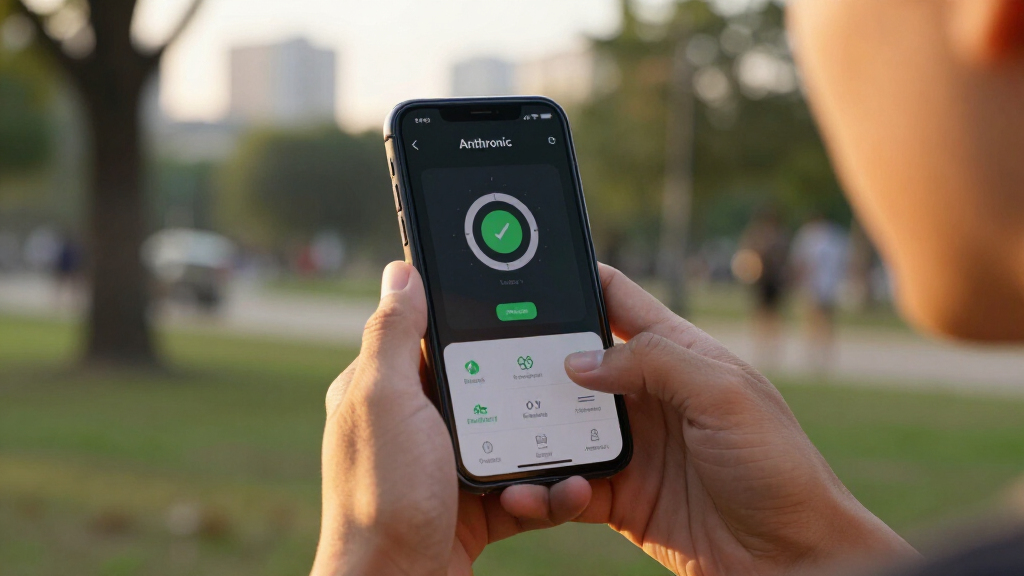

📊 Full opportunity report: Anthropic's New Watermark Feature Aims To Identify AI-Produced Content on ThorstenMeyerAI.com — validation score, market gap, and execution plan.
TL;DR
Anthropic has launched a new feature embedding imperceptible watermarks in text generated by its Claude AI models, alongside signed provenance data for files. This aims to improve AI attribution but does not provide conclusive proof of authorship. The change is driven by EU regulations and applies globally.
Anthropic has introduced a new watermarking system that embeds imperceptible, machine-readable patterns into text generated by its supported Claude models. This development aims to help identify AI-produced content in compliance with European Union transparency rules. The company also plans to attach digitally signed provenance data to certain files, such as images and vector graphics, using the C2PA Content Credentials standard. This move could impact users worldwide who rely on Claude for writing, editing, translation, coding, and document production.
According to Anthropic, the watermark is woven into the text during generation, without affecting readability or meaning. It is designed to be detectable even after copying or some editing, though its durability has limits. The system will support marking across Claude, the Claude API, Claude Code, Claude Cowork, and Claude Tag, including deployments through cloud partners. Models launched in the European Union on or after August 2, 2026, are expected to support this feature at launch, with plans to extend coverage to older models later.
In addition, Anthropic will embed signed provenance metadata into supported file formats, providing a record of origin and processing history. However, this metadata can be removed or altered if files are converted or resaved using unsupported software. The company emphasizes that while watermarks can aid attribution, they cannot conclusively prove authorship or how a document was created, and the absence of a watermark does not mean AI was not used.
Implications of Watermarking for AI Content Identification
This development is significant because it offers a technical method to distinguish AI-generated text from human writing, which is increasingly important for publishers, educators, and organizations concerned with authenticity. Unlike AI-text classifiers that analyze writing style, model-level watermarks provide a direct origin signal embedded during generation. However, because detection cannot definitively prove authorship or usage, organizations will need to interpret watermarks as one piece of evidence among others. The move also aligns with EU regulations requiring transparent identification of AI-generated content, potentially influencing global practices in AI attribution and compliance.
AI content watermark detection tools
As an affiliate, we earn on qualifying purchases.
As an affiliate, we earn on qualifying purchases.
EU Regulations Drive Global AI Marking Standards
The EU’s AI Act and the voluntary Code of Practice on Transparency of AI-Generated Content have mandated that providers mark synthetic content in a machine-readable way since August 2, 2026. These rules aim to improve transparency and accountability in AI use, especially in publishing, education, and workplace environments. Anthropic’s decision to implement marking globally reflects a broader industry shift driven by EU standards, which may influence other jurisdictions and providers to adopt similar practices. The policy grants a limited grace period for older models, with full compliance expected by December 2, 2026.
While the regulation is specific to the EU, its extraterritorial application means that non-European users of Claude may also be affected, depending on how Anthropic implements the policy across markets.
“Our goal is to provide a non-intrusive, verifiable way to identify AI-generated content that aligns with regulatory requirements and industry needs.”
— Anthropic spokesperson
digital provenance metadata software
As an affiliate, we earn on qualifying purchases.
As an affiliate, we earn on qualifying purchases.
Technical Limitations and Detection Reliability Unclear
Anthropic has not publicly shared detailed technical specifications of the watermarking system, leaving questions about its accuracy, false-positive rate, and resilience across different text types. It is unclear how well the watermark survives extensive editing, rewriting, or formatting changes, or whether detection tools will be publicly available for independent verification. Additionally, it remains uncertain which older Claude models will receive support first and how detection results will be interpreted in high-stakes environments.
AI-generated text verification tools
As an affiliate, we earn on qualifying purchases.
As an affiliate, we earn on qualifying purchases.
Upcoming Verification Tools and Policy Clarifications
In the coming months, industry observers expect Anthropic to release technical documentation, verification tools, and performance data to assess the watermark’s effectiveness. The industry will also monitor how organizations incorporate watermark detection into their workflows and compliance policies. By December 2, 2026, the industry should have a clearer understanding of how older models will be handled and how reliable the detection methods are for critical applications.
As an affiliate, we earn on qualifying purchases.
Key Questions
Will the watermark be visible in generated text?
No, the watermark is designed to be imperceptible to readers and embedded within the text during generation. It is meant for machine detection only.
No, detection of a watermark indicates the likelihood that the text was generated by Claude but does not provide definitive proof of authorship or how the text was used.
Will the watermarking affect the quality or readability of AI-generated text?
According to Anthropic, the watermark does not alter the meaning or readability of the text, as it is woven into the word choices during generation.
Is this watermarking system mandatory for all Claude models?
Support for watermarking is expected to be included in models launched in the EU after August 2, 2026, with plans to extend to earlier models later. It is not yet clear if all deployments will require it.
Will the signed provenance data be removable or tamper-proof?
The signed metadata travels with the file but can be removed if the file is converted or resaved using unsupported software. Its permanence depends on how files are handled.
Source: ThorstenMeyerAI.com