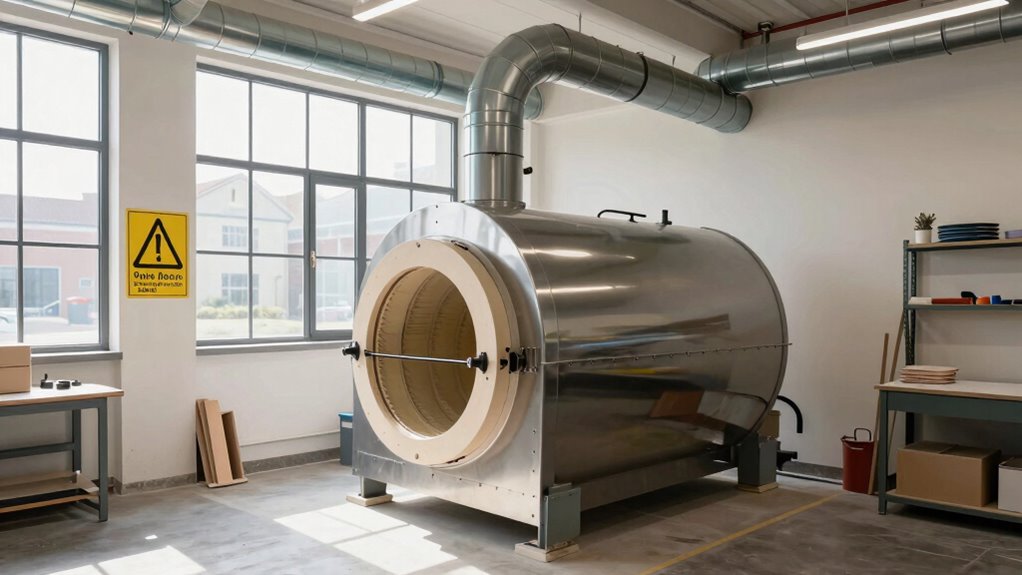

To keep your studio safe, make certain your kiln is properly vented to exhaust fumes outside, preventing hazardous buildup. Place the kiln on stable, non-combustible surfaces away from flammable materials and clear of clutter. Position it in a well-ventilated area with easy access to exhaust systems and emergency shut-offs. Maintaining proper placement and ventilation reduces fire risks and exposure to toxic gases. Discover essential strategies to make your workspace both safe and efficient.
Key Takeaways
- Install a proper exhaust system to vent harmful fumes outdoors and prevent indoor buildup.
- Place the kiln on stable, non-combustible surfaces away from flammable materials and obstructions.
- Ensure sufficient clearance around the kiln for safe operation and effective ventilation.
- Position the kiln in a well-ventilated area with easy access to emergency shut-offs and maintenance points.
- Follow manufacturer guidelines and local safety regulations for venting and placement to minimize fire and health hazards.
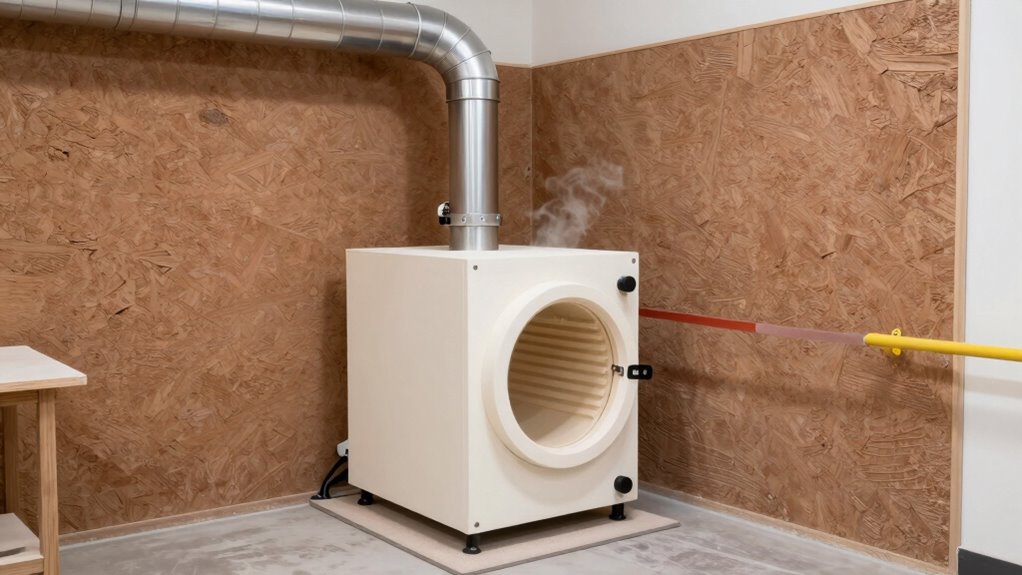
Using a studio kiln safely is essential to prevent accidents and guarantee a secure working environment. One of the most critical aspects of kiln safety involves understanding and adhering to ventilation requirements. Proper ventilation is necessary because firing ceramics releases fumes and gases that can be hazardous if they accumulate indoors. You need to make sure your workspace has adequate airflow to remove these harmful emissions effectively. This often means installing a venting system that directs fumes outside, preventing them from lingering in your studio. Without proper ventilation, you risk inhaling toxic substances, which can lead to health issues over time. Always check local safety regulations and manufacturer guidelines to determine the specific ventilation requirements for your kiln model. Installing an effective exhaust system isn’t just a good idea; it’s a necessity for safe operation. Proper ventilation is especially important in smaller or enclosed spaces to ensure all fumes are safely vented away.
Equally important is following kiln placement guidelines to reduce fire hazards and maintain a safe studio environment. When choosing a location for your kiln, consider factors like clearance space, proximity to combustible materials, and accessibility. Place the kiln on a stable, non-combustible surface, such as concrete or firebrick, to prevent accidental tipping or heat transfer to surrounding materials. Keep the area around the kiln clear of clutter, furniture, and any flammable substances, like paper or textiles. Make sure there’s enough space around the kiln for proper air circulation and maintenance, which also helps prevent overheating. Avoid placing your kiln near windows, curtains, or other items that could catch fire or obstruct ventilation. Additionally, position the kiln in a well-ventilated area with easy access to exhaust vents or chimneys, ensuring fumes can escape efficiently during firing. Remember, the goal is to minimize fire risks and make sure you can operate the kiln safely and comfortably.
Frequently Asked Questions
Can Studio Kilns Be Installed Outdoors Safely?
Yes, you can install studio kilns outdoors safely if you follow proper ventilation requirements. Make sure the kiln is placed in a well-ventilated area with unobstructed airflow to prevent buildup of harmful fumes. You should also consider weather protection and secure placement to avoid accidents. Always check local safety codes and manufacturer guidelines to ensure your outdoor installation meets all safety standards for venting and placement.
What Are the Signs of Improper Kiln Venting?
If you notice strange odors, excessive smoke, or persistent fumes around your kiln, these are signs of improper venting. Ventilation hazards can lead to dangerous buildup of harmful gases and pose safety risks. You should take immediate safety precautions by checking your venting system, ensuring it’s unobstructed, and maintaining proper airflow. Addressing these issues promptly helps prevent accidents and keeps your workspace safe.
How Often Should Kiln Vents Be Inspected or Cleaned?
You should inspect and clean your kiln vents at least once every three to six months, depending on usage. Regular ventilation maintenance guarantees proper airflow and prevents buildup of dust or debris. Follow your kiln manufacturer’s cleaning schedules and check vents after every firing cycle for signs of blockages. Keeping vents clean helps maintain safe operation, reduces fire risks, and prolongs the life of your kiln.
Are There Specific Building Codes for Kiln Placement?
Yes, there are specific building codes and kiln regulations you must follow when placing your kiln. These codes ensure safe distance from combustible materials, proper ventilation, and structural support. You should consult local building authorities and fire departments to verify your kiln’s placement complies with all relevant regulations. Ignoring these rules can lead to safety hazards, fines, or even fire risks, so always prioritize adherence to building codes for safe kiln installation.
What Safety Gear Is Recommended When Operating a Kiln?
You can’t afford to take chances when operating a kiln. Always wear personal protective equipment like heat-resistant gloves, safety glasses, and a respirator if needed. Keep a fire extinguisher nearby and know your emergency response plan. These precautions help prevent accidents and injuries, ensuring you’re prepared for any mishaps. Remember, safety gear isn’t just a suggestion—it’s your best defense in the heat of the moment.
Conclusion
By now, you understand the vital importance of proper venting and strategic placement for your studio kiln. Ignoring these safety rules can lead to serious hazards, so don’t take shortcuts. Are you willing to risk your safety or that of others just to save a little time? Prioritize correct setup and maintenance, because a safe studio isn’t just a good idea — it’s a necessity. Stay vigilant, and keep your creative space both inspiring and secure.