
You can reduce waste in the art world by choosing eco-friendly packaging materials like biodegradable and recyclable options. Opt for minimalist designs, reusable boxes, and natural elements to cut down on excess materials. Incorporate innovative solutions such as flat-pack or modular packaging that can be reused or repurposed. Partner with sustainable shipping services and explore industry certifications. Keep exploring to discover effective strategies that make your art packaging both stylish and eco-conscious.
Key Takeaways
- Use biodegradable, recyclable, or reusable materials like eco-friendly cardboard, plant-based adhesives, and natural inks to minimize environmental impact.
- Design minimalist, modular, and flat-pack packaging that reduces material use and facilitates easy recycling or repurposing.
- Implement reusable shipping and display solutions such as lightweight frames and magnetic mounting systems to cut waste and improve sustainability.
- Collaborate with eco-conscious partners and obtain certifications (FSC, B Corp) to ensure sustainable practices and build trust in the art community.
- Adopt digital preservation and eco-friendly shipping methods, including biodegradable fillers and optimized routes, to lower carbon footprint and waste.
The Importance of Eco-Friendly Materials in Art Packaging
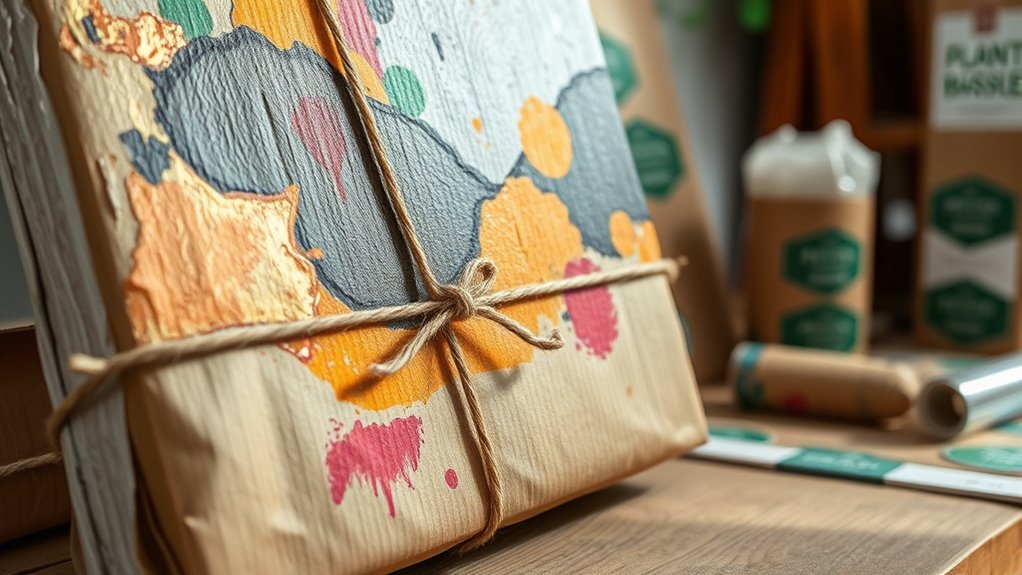
Using eco-friendly materials in art packaging is essential because it helps reduce environmental impact and promotes sustainability. When you choose biodegradable, recyclable, or reusable materials, you minimize waste that would otherwise end up in landfills or pollute ecosystems. These materials often require less energy to produce, lowering carbon emissions associated with manufacturing. By opting for sustainable packaging, you also encourage responsible consumption and set a positive example within the art community. This shift not only benefits the planet but can also enhance your reputation among environmentally conscious clients and collectors. Moving to eco-friendly options is a simple yet impactful step you can take to align your practices with global efforts to protect our environment. Additionally, understanding cookie categories can help you make informed decisions about data privacy and website performance, further supporting your commitment to responsible practices. Ultimately, it’s about making smarter choices for a greener future.
Innovative Design Strategies for Sustainable Packaging
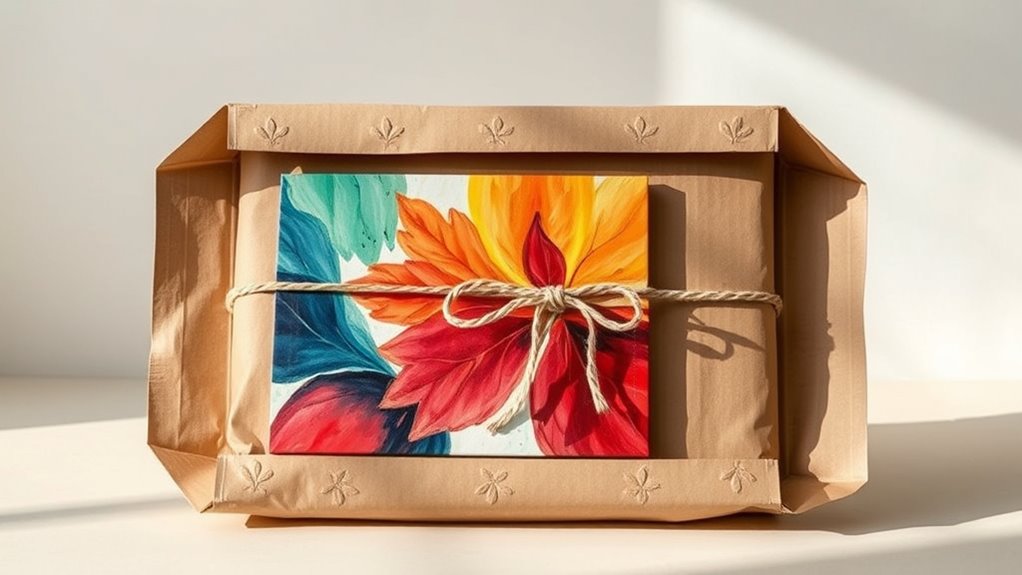
Have you considered how innovative design strategies can make your art packaging more sustainable? By thinking creatively, you can reduce waste and enhance functionality at the same time. Focus on minimalism—use fewer materials without compromising protection. Incorporate foldable or collapsible designs to save space during shipping and storage. Use modular packaging that can be reused or repurposed by clients. Embrace flat-pack designs to cut down on excess material and transportation emissions. Consider incorporating natural elements like biodegradable inks or plant-based adhesives to improve environmental compatibility. These strategies not only lessen your environmental impact but also set your brand apart as forward-thinking and eco-conscious. Understanding the Vortex can inspire innovative packaging ideas that align with your sustainability goals, fostering a deeper connection to your purpose and audience. Implementing such designs helps you deliver art safely while actively contributing to sustainability efforts.
Reusable and Recyclable Packaging Solutions

Are you making the most of reusable and recyclable packaging options for your art shipments? Using durable materials like corrugated cardboard, plastic crates, or fabric wraps allows you to send artworks safely while reducing waste. Reusable packaging can be sent back, cleaned, and used again, cutting down on single-use materials. Recyclable options, such as biodegradable bubble wrap or paper fillers, also lessen environmental impact when properly disposed of. Start by choosing versatile containers that can be reused multiple times, and clearly label packaging as recyclable to guide your clients. Collaborate with shipping partners who support eco-friendly practices. Incorporating cultural and regional packaging influences can also enhance the aesthetic appeal and uniqueness of your shipments. By integrating these solutions, you not only protect your artwork but also contribute to a more sustainable art world.
The Role of Minimalism in Reducing Waste

By simplifying packaging materials, you can cut down on excess waste and make disposal easier. Focusing on artful design guarantees that minimalism remains attractive and functional. This approach encourages both creators and consumers to prioritize sustainability without sacrificing aesthetic appeal. Incorporating vibrational energy awareness into packaging choices can further enhance the positive impact of your sustainable efforts.
Simplifying Packaging Materials
Simplifying packaging materials through minimalism can substantially cut down on waste and environmental impact. By choosing fewer components and streamlined designs, you reduce material use and simplify disposal. This approach encourages you to select versatile, durable supplies that serve multiple purposes, avoiding excess or unnecessary layers. Minimalist packaging also makes recycling easier, ensuring materials aren’t contaminated or mixed with incompatible elements. You can focus on clean lines, essential features, and a straightforward presentation that highlights the artwork without overwhelming it. Embracing simplicity not only cuts costs but also aligns with sustainable values. Incorporating recyclable materials supports waste reduction and promotes eco-friendly practices.
Emphasizing Artful Design
Artful design elevates minimalism from a practical choice to a powerful statement that enhances your viewer’s experience. When you focus on clean lines, simple forms, and thoughtful space, your packaging becomes more than just protection—it becomes an aesthetic statement. Minimalist designs reduce unnecessary materials, cutting waste without sacrificing beauty or meaning. By emphasizing artful simplicity, you draw attention to the artwork itself, not the packaging. This approach encourages you to use materials sparingly and intentionally, making each element purposeful. Your goal is to create packaging that’s elegant yet sustainable, demonstrating that less can truly be more. Incorporating sustainable art packaging strategies can significantly decrease environmental impact while maintaining visual appeal. In doing so, you not only minimize waste but also inspire others in the art world to adopt smarter, more mindful packaging practices.
Case Studies of Eco-Conscious Art Institutions

Many art institutions are leading the way with green packaging initiatives and reusable display solutions that cut down on waste. They also adopt eco-friendly shipping methods to minimize environmental impact. These case studies show how intentional choices can make a real difference in sustainable art practices. Incorporating positive thinking strategies can further enhance the adoption of environmentally conscious initiatives within the art community.
Green Packaging Initiatives
Some art institutions are leading the way in eco-conscious packaging by adopting innovative green initiatives. These institutions prioritize sustainable materials and smarter design choices to minimize waste. You’ll find examples like museums using biodegradable wrapping, recycled cardboard crates, and plant-based inks for labels. They also implement minimal packaging policies, reducing excess materials and waste. Many institutions collaborate with suppliers to source eco-friendly products, ensuring their entire supply chain supports sustainability. Additionally, some adopt digital documentation to cut down on paper use. These efforts demonstrate that eco-conscious packaging is achievable at scale and can set industry standards. By embracing these initiatives, you contribute to reducing waste, conserving resources, and fostering a greener art world. Incorporating holistic approaches can further enhance the sustainability of packaging practices across the art industry.
Reusable Display Solutions
When art institutions adopt reusable display solutions, they demonstrate a strong commitment to reducing waste and promoting sustainability. By choosing modular, durable display panels and fixtures, you minimize single-use materials that often end up in landfills. For example, some galleries use lightweight, easily assembled frames that can be reused for multiple exhibitions, saving resources over time. Others incorporate magnetic or clip-on mounting systems, which allow for quick changes without damaging walls or creating debris. These practices not only cut down on packaging waste but also streamline installation processes. Additionally, integrating sustainable materials into display design further enhances environmental benefits and aligns with eco-conscious values. Case studies show that institutions implementing these solutions see cost savings and environmental benefits, reinforcing their dedication to eco-conscious operations. Reusable displays prove that sustainability and effective presentation can go hand-in-hand in the art world.
Eco-Friendly Shipping Methods
Building on the adoption of reusable display solutions, art institutions are increasingly turning to eco-friendly shipping methods to further reduce their environmental impact. These initiatives often include using biodegradable packing materials, optimizing shipping routes to minimize carbon footprints, and partnering with carriers committed to sustainability. Some institutions even utilize electric vehicles or cargo bikes for local deliveries. Implementing these practices not only decreases waste but also sets a positive example within the art community. Incorporating good lighting solutions in packaging design can also enhance visibility during handling and delivery, reducing errors and damage.
Challenges and Opportunities in Sustainable Packaging
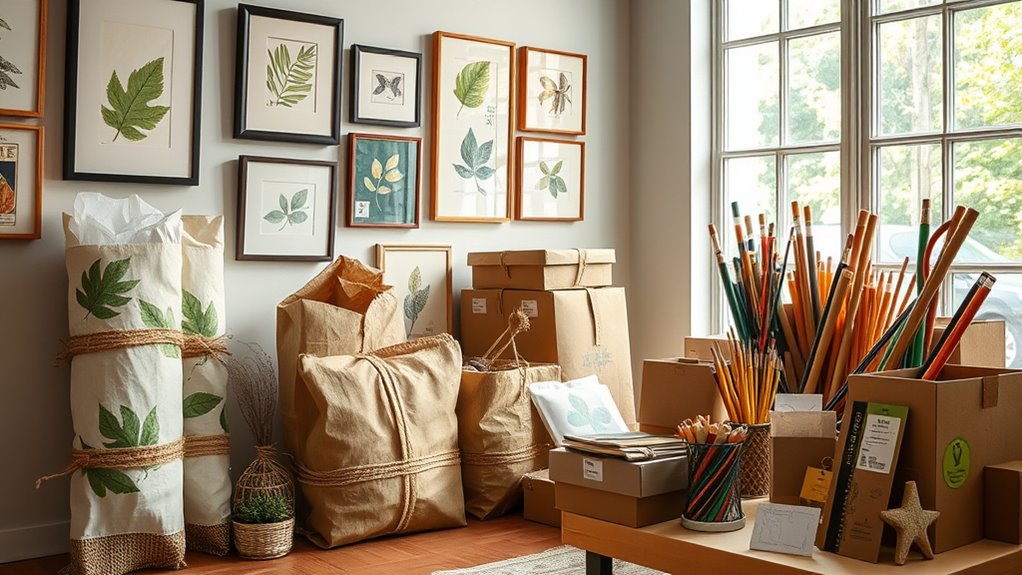
While sustainable packaging offers a promising path to reduce waste, it also presents significant challenges that companies must navigate. You face hurdles like higher costs, limited eco-friendly materials, and maintaining artwork safety. Balancing environmental goals with durability and aesthetics can be complex but rewarding. To better understand, consider the following:
| Challenge | Opportunity |
|---|---|
| Cost of eco-friendly materials | Differentiates your brand in a competitive market |
| Material availability | Drives innovation in packaging solutions |
| Ensuring artwork safety | Builds trust with clients and collectors |
Collaborations and Certifications Promoting Green Practices
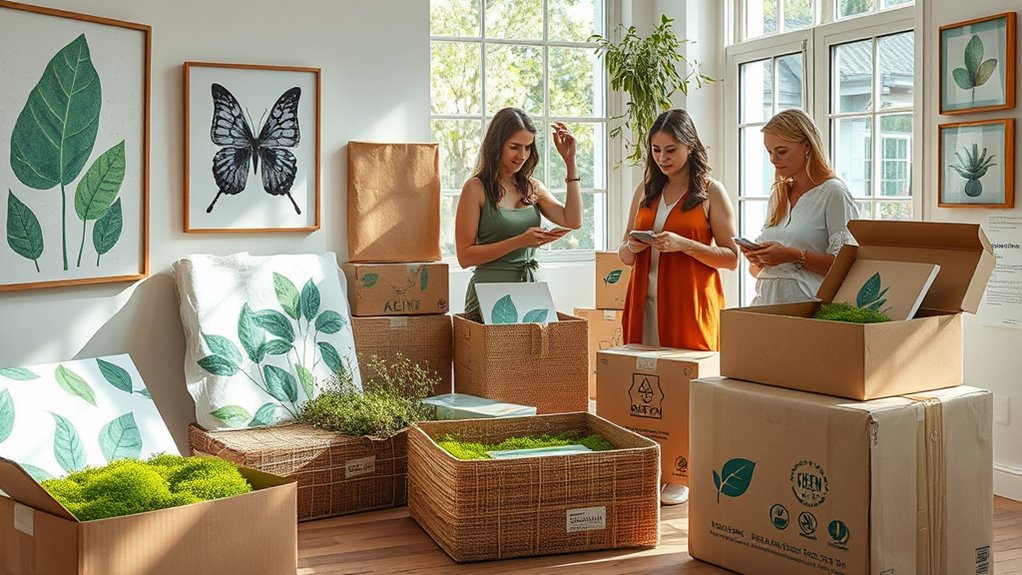
Collaborations and certifications play a vital role in advancing green practices within the packaging industry. They foster innovation, build trust, and set standards that encourage environmentally responsible choices. By partnering with eco-conscious organizations, you can gain access to sustainable materials and share best practices. Certifications like FSC, Green Seal, and B Corp demonstrate your commitment to sustainability, attracting eco-minded clients and collectors. These alliances and recognitions also push suppliers and manufacturers toward greener options, creating a ripple effect across the industry.
- Partnering with eco-label organizations to validate sustainability efforts
- Participating in industry-wide green initiatives and networks
- Securing certifications that verify environmentally friendly practices
- Collaborating with artists and galleries committed to sustainability
- Sharing sustainability successes to inspire wider adoption
Future Trends in Eco-Friendly Art Preservation
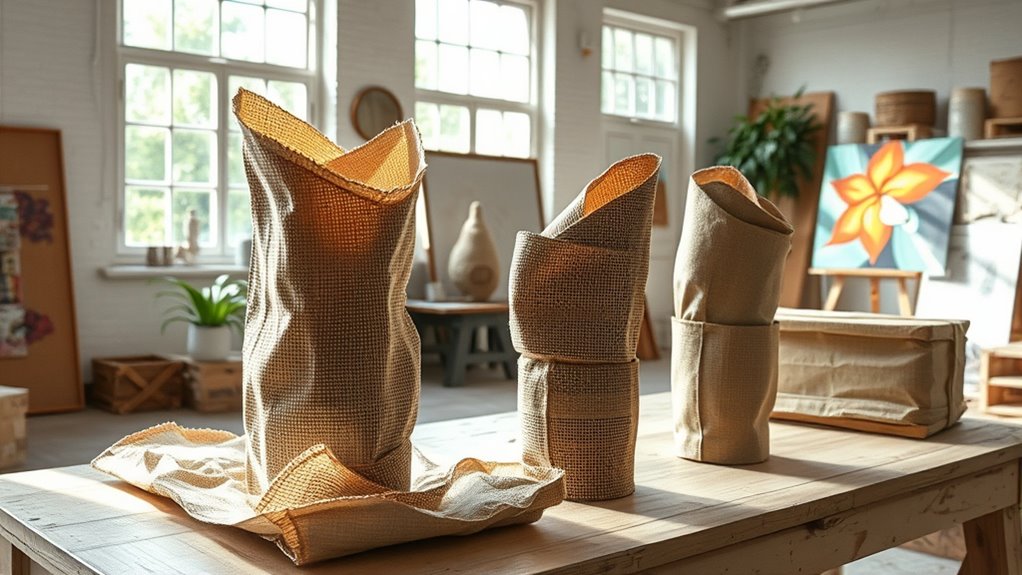
As awareness of environmental impact grows, the art preservation industry is increasingly adopting innovative, eco-friendly methods to protect artworks. Future trends focus on sustainable materials, such as biodegradable plastics and recycled papers, to reduce waste. You’ll see more digital preservation techniques, like 3D scanning and virtual exhibitions, minimizing physical handling. Additionally, smart packaging with embedded sensors can monitor conditions without excess materials. To help you understand these trends better, here’s a quick comparison:
| Traditional Methods | Eco-Friendly Innovations |
|---|---|
| Plastic wraps | Biodegradable wraps |
| Acidic paper | Recycled, pH-neutral paper |
| Physical storage | Digital archives |
| Manual monitoring | Sensor-equipped packaging |
Frequently Asked Questions
How Can Artists Balance Packaging Aesthetics With Sustainability?
You can balance packaging aesthetics with sustainability by choosing eco-friendly materials that still look appealing, like recycled paper or biodegradable plastics. Incorporate design elements that highlight sustainability, such as minimalist styles or natural textures. Get creative with packaging that’s both beautiful and functional, and consider reusable options. Communicate your eco-conscious efforts to your audience, making your packaging a reflection of your artistic values while reducing waste effectively.
What Are the Cost Implications of Switching to Eco-Friendly Packaging?
Switching to eco-friendly packaging might seem like opening a can of worms, but it’s often more affordable than you think. While initial costs can be higher, you save in the long run through reduced waste disposal fees and enhanced brand reputation. Plus, many sustainable materials are now competitively priced. You’ll find that investing in greener options can actually boost your image and appeal to eco-conscious collectors, making it a win-win situation.
How Do Recycling Programs Impact the Value of Art Pieces?
Recycling programs can increase the perceived value of your art pieces by demonstrating your commitment to sustainability. When you incorporate eco-friendly materials and promote recycling efforts, collectors and galleries view your work as more environmentally conscious, which can enhance its appeal. Additionally, showcasing your dedication to reducing waste can differentiate your art in a competitive market, potentially leading to higher demand and appreciation for your environmentally responsible practices.
Can Traditional Packaging Methods Be Adapted for Eco-Conscious Practices?
Think of traditional packaging methods as a sturdy ship—adaptable but often weighed down by old habits. You can rework these methods into eco-friendly designs by using biodegradable materials, reducing excess, and embracing minimalist aesthetics. You’ll preserve the integrity of your art while sailing smoothly toward sustainability. With thoughtful adjustments, you turn a familiar vessel into a greener, more responsible way to protect and present your work.
What Training or Resources Are Available for Artists and Institutions?
You can access workshops, online courses, and guides focused on eco-friendly packaging from organizations like the Green Art Initiative and the Sustainable Arts Foundation. Many art supply stores also offer sustainable packaging products and tutorials. Additionally, attending industry conferences or webinars can keep you updated on new materials and methods. These resources empower you to adopt greener practices confidently, reducing waste while maintaining the integrity of your artwork.
Conclusion
By choosing eco-friendly materials and innovative designs, you can substantially reduce waste in the art world. Did you know that the art industry generates over 400 million pounds of packaging waste annually? Embracing minimalism, reusable solutions, and green certifications not only benefits the environment but also enhances your reputation. Together, you can lead the way toward a more sustainable future in art preservation, making a lasting impact for generations to come.