
📊 Full opportunity report: Inside SpaceXAI’s Grok 4.6: The Next-Gen AI Set To Challenge Leading Models on ThorstenMeyerAI.com — validation score, market gap, and execution plan.

Get the latest gadgets delivered free with Prime
- Fast, free delivery on millions of items
- Prime Video, Amazon Music and more included
- Member-only deals all year
TL;DR
SpaceXAI has introduced Grok 4.6, a next-generation AI model designed for coding and autonomous workflows, claiming improved performance and cost efficiency. The release aims to compete with OpenAI’s GPT-5.6 and Anthropic’s Fable 5, with real-world testing underway.
SpaceXAI has unveiled Grok 4.6, its latest AI model aimed at coding, knowledge work, and autonomous agent tasks. The release positions Grok 4.6 as a direct competitor to OpenAI’s GPT-5.6 and Anthropic’s Fable 5, claiming performance improvements and cost advantages that could impact enterprise automation and software development workflows.
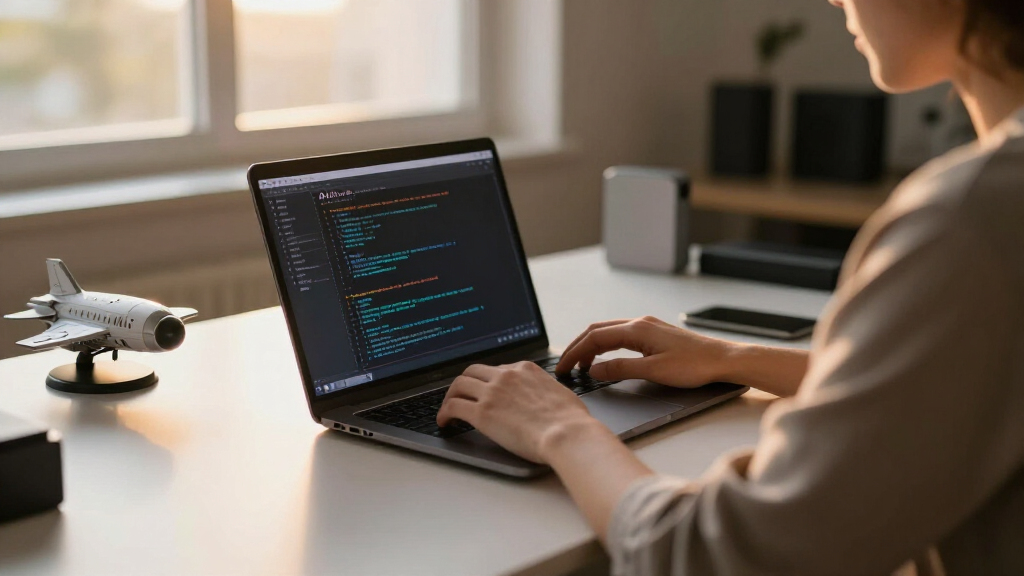
Grok 4.6 is an incremental upgrade over Grok 4.5, introduced only weeks earlier. According to xAI, the model underwent a longer supplemental training phase, emphasizing reasoning, engineering data, and reinforcement learning across tasks such as coding, web development, and computer-aided design. The model is designed to handle extended, multi-step assignments, including self-checking and error recovery, making it suitable for long-running agent applications.
In benchmark tests published by xAI, Grok 4.6 scored 65.9% on DeepSWE 1.1 and 61.3% on FrontierCode 1.1 Extended. It achieved a score of 1,753 on GDPVal-AA v2, surpassing Grok 4.5’s 1,526 and slightly edging out GPT-5.6 Sol and Fable 5. Scores are based on developer-provided data and are not definitive across all workloads. The model’s performance is said to be competitive, but not universally superior, depending on the task and environment.
xAI is offering Grok 4.6 at a price of $2 per million input tokens and $6 per million output tokens, aiming to reduce costs for large-scale agent workflows. The model’s efficiency could enable companies to run complex automation at lower costs, though reliability remains a critical factor for enterprise adoption.
Implications of Grok 4.6 for AI-Driven Automation
The release of Grok 4.6 signals a shift toward more cost-effective and capable autonomous AI agents, particularly in software engineering and research. If the model performs as claimed, it could lower operational costs for companies deploying AI-driven workflows, increasing adoption in industries like software development, engineering, and data analysis. However, the true impact depends on its performance in real-world environments, where issues like reliability and safety are paramount.
As an affiliate, we earn on qualifying purchases.
Background of SpaceXAI’s AI Model Development
SpaceXAI’s Grok series has been steadily evolving, with Grok 4.5 introduced weeks prior to 4.6, emphasizing extended reasoning and autonomous capabilities. The company has focused on agent-based AI for tasks such as coding automation through tools like Grok Build, which supports planning, file modifications, and testing. The broader competitive landscape includes models like GPT-5.6 Sol and Fable 5, which are designed for prolonged reasoning and multi-tool integration. Benchmark results for these models vary depending on task and setup, making direct comparisons complex.
Previous releases from xAI have highlighted performance improvements, but independent verification remains limited. The company has not disclosed detailed information about training data, model size, or energy consumption, leaving some questions about scalability and safety unaddressed.
“Grok 4.6 received extended training across coding, knowledge work, web development, and CAD, aiming to improve multi-step reasoning and autonomous execution.”
— an anonymous researcher
As an affiliate, we earn on qualifying purchases.
Verification of Performance and Real-World Effectiveness
It is not yet confirmed whether Grok 4.6’s claimed performance gains will translate into consistent results across diverse, real-world applications. Benchmark scores are based on developer-provided data, and independent testing is pending. The model’s reliability, safety, and energy efficiency remain unverified outside controlled evaluations, and its performance relative to GPT-5.6 and Fable 5 in various workloads is still uncertain.
AI development and testing platforms
As an affiliate, we earn on qualifying purchases.
As an affiliate, we earn on qualifying purchases.
Upcoming Testing and Industry Adoption of Grok 4.6
Developers and enterprises will now deploy Grok 4.6 in production environments, where metrics such as completion rates, latency, and error recovery will be closely monitored. Independent leaderboard updates and further benchmarking are expected to clarify whether the model’s performance and cost advantages hold in practice. Continued evaluation will determine its competitiveness and influence on the AI automation landscape.
As an affiliate, we earn on qualifying purchases.
Key Questions
What is Grok 4.6 and what are its main features?
Grok 4.6 is SpaceXAI’s latest AI model designed for coding, knowledge work, and autonomous agent tasks. It features extended training, improved reasoning, and self-checking capabilities to handle multi-step workflows.
How does Grok 4.6 compare to GPT-5.6 and Fable 5?
According to xAI, Grok 4.6 has shown competitive benchmark scores, but it does not outperform all configurations of GPT-5.6 or Fable 5 across every workload. Performance varies depending on task and environment.
What is the cost of using Grok 4.6?
The standard API pricing is $2 per million input tokens and $6 per million output tokens. Total costs depend on context length, reasoning steps, and task complexity.
Will Grok 4.6 be reliable for enterprise use?
Reliability and safety are still unconfirmed in real-world settings. Its effectiveness will depend on ongoing testing, error recovery, and safety evaluations as it is adopted in production environments.
Source: ThorstenMeyerAI.com
Halloween Picks
halloween
As an affiliate, we earn on qualifying purchases.