
📊 Full opportunity report: The Role Of AI In Securing Critical Digital Infrastructure on ThorstenMeyerAI.com — validation score, market gap, and execution plan.

Get the latest gadgets delivered free — and shop member deals
- Fast, free delivery on millions of items
- Access to Prime Big Deal Days deals on October 6–7
- Prime Video, Amazon Music and more included
TL;DR
A major hardware wallet vulnerability exposed a flaw in firmware that allowed a theft of over $70 million. While AI was not confirmed as directly involved, experts believe it will play a key role in future digital security solutions. This highlights the urgent need for AI-driven defenses in critical infrastructure.
On July 30, over $70 million worth of Bitcoin was stolen from nearly 1,200 wallets through a vulnerability in hardware wallet firmware. This incident, involving a trusted security device, underscores the growing importance of AI in safeguarding critical digital infrastructure, even as the direct involvement of AI in the attack remains unconfirmed.
The breach stemmed from a firmware update in March 2021, which replaced the device’s hardware-based random number generator with a deterministic software fallback. This change reduced the entropy of generated private keys from over 128 bits to approximately 40-72 bits, making the keys vulnerable to online brute-force attacks. Attackers, after understanding this flaw, used automated scripts to generate all possible keys within the reduced entropy space, checked the associated addresses against the blockchain, and quickly drained funds from the targeted wallets.
Coinkite, the maker of the affected hardware wallet, acknowledged the error, attributing it to an engineering mistake. CEO Rodolfo Novak highlighted that even an AI-assisted firmware review failed to detect the flaw prior to the breach, illustrating both the potential and current limitations of AI in security audits. While there is no public evidence that AI directly facilitated the attack, experts suggest that AI tools likely played a role in discovering the vulnerability or automating the attack process, given the speed and scale involved.
A firmware error shrank the pool that “random” keys were drawn from. A searchable pool is a drainable one. Here is the mechanism, conceptually — no operational detail.
A March 2021 firmware update rerouted key generation from the device’s hardware random-number generator to a deterministic software fallback — drawing seeds from a dramatically smaller universe.
Once the flaw is understood, the whole attack runs on an ordinary machine — no internet needed until the final move.
The Implications for Digital Security and Infrastructure
This incident exemplifies how AI is becoming integral to detecting, analyzing, and defending against emerging vulnerabilities in digital systems. As attackers leverage AI for rapid exploitation, defenders must adopt AI-driven security measures to protect critical infrastructure, financial systems, and data assets. The breach also signals a shift toward an era where AI’s role in both offense and defense will intensify, necessitating new standards and oversight.
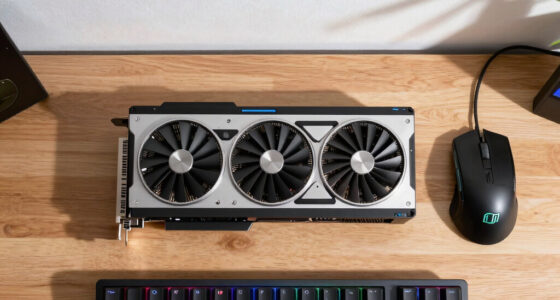
hardware wallet with secure firmware
As an affiliate, we earn on qualifying purchases.
As an affiliate, we earn on qualifying purchases.
Recent Developments in Hardware Security and AI's Evolving Role
For years, hardware wallets have been regarded as highly secure for storing cryptocurrencies, relying on the assumption of robust, hardware-based randomness. The March 2021 firmware update, which introduced the vulnerability, marks a significant lapse in this trust. The incident follows broader concerns about hardware security, firmware integrity, and the potential for AI-assisted tools to identify and exploit weaknesses. Recent advances in AI, including models like Anthropic's Fable, are believed to accelerate security testing and vulnerability discovery, though direct links to this specific breach remain unconfirmed.
"This is the sober reality of a new AI paradigm, where AI-assisted code review can surface latent bugs faster than the industry's most seasoned experts."
— Rodolfo Novak, CEO of Coinkite
As an affiliate, we earn on qualifying purchases.
Unconfirmed Aspects of AI’s Exact Role in the Breach
There is no public proof that AI directly discovered or executed the attack. Experts attribute the breach primarily to engineering error, with speculation that AI tools may have facilitated the rapid generation and testing of keys. The precise involvement of AI remains unconfirmed, and details about whether AI-assisted tools were used in the discovery or exploitation process are still emerging.
As an affiliate, we earn on qualifying purchases.
Next Steps for Securing Digital Infrastructure Against AI-Enabled Threats
Security researchers and industry leaders are expected to enhance AI-driven vulnerability detection and response capabilities. Regulatory bodies may also develop standards for firmware and hardware security, emphasizing AI’s role in both attack and defense. In the short term, users of hardware wallets and critical digital systems should review security practices, including firmware updates and multi-layered protections, to mitigate future risks.
As an affiliate, we earn on qualifying purchases.
Key Questions
Could AI have prevented this breach?
While AI-assisted reviews might have identified the firmware flaw earlier, there is no definitive evidence that AI prevented or caused this specific breach. The incident underscores the need for improved AI tools in security audits.
How vulnerable are other hardware wallets to similar issues?
Any hardware device relying on deterministic or software-based randomness could be vulnerable if similar flaws exist. Regular updates and rigorous security testing, potentially aided by AI, are essential.
Will AI become a standard part of hardware security testing?
Yes, experts anticipate AI will play an increasing role in security testing, vulnerability scanning, and real-time threat detection, helping to identify flaws faster than traditional methods.
What can individual users do to protect their digital assets?
Users should stay current with firmware updates, enable multi-factor authentication, and consider using hardware wallets from reputable providers with rigorous security practices.
Source: ThorstenMeyerAI.com
Fall Picks
fall essentials
As an affiliate, we earn on qualifying purchases.