

The Sony WF-1000XM5 and Bose QuietComfort Ultra Earbuds both target travelers who want to shut out engine rumble, listen comfortably on long journeys and carry a compact charging case. The decision is less about whether either pair can handle a flight and more about which compromise suits your trips: Bose generally blocks more noise, while Sony lasts longer per charge and makes it easier to switch between devices. Both are premium products, so the useful question is whether Bose’s stronger noise cancellation earns its price for your travel routine.

Soundcore by Anker P20i True Wireless Earbuds
- ✔ Driver size: 10 mm
- ✔ Playback per charge: Up to 10 hours
- ✔ Total playback with case: Up to 30 hours
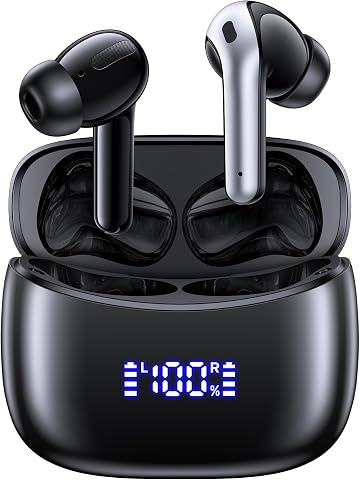
OKEEFE Wireless Bluetooth Earbuds with Real-Time Translation
- ✔ Bluetooth: 5.4
- ✔ Translation: Two-way, real-time
- ✔ Translation languages: 164

Kurdene Wireless Earbuds with Bluetooth 5.3
- ✔ Bluetooth: 5.3
- ✔ Driver size: 8 mm
- ✔ Compatibility: iOS and Android
Choose the Bose pair if cabin noise is your main frustration and you want the most effective quiet these two offer. Choose Sony if you value battery life, multipoint connections and broad sound customization, or if the Bose price is hard to justify. Fit is personal with either model, so comfort during a long session may outweigh small differences in specifications.
At a Glance
| Criteria | Sony WF-1000XM5 | Bose QuietComfort Ultra Earbuds | Winner |
|---|---|---|---|
| Noise cancellation | Very effective overall; less forceful than Bose against some persistent cabin noise | Class-leading noise reduction, particularly appealing for aircraft and other steady low-frequency noise | B |
| Battery life | Up to 8 hours per charge with noise cancellation; up to 24 hours with the case | Up to 6 hours per charge with noise cancellation; case adds up to 18 hours; immersive audio reduces earbud runtime | A |
| Comfort and fit | Compact earbuds with foam-style tips; fit depends on ear shape and tip preference | Stability bands and multiple tip sizes help secure the fit, though the earbuds are relatively substantial | Depends |
| Sound and customization | Detailed sound with app equalizer and support for Sony’s LDAC codec on compatible devices | Engaging sound with adjustable modes; Immersive Audio offers a spatial listening option | Depends |
| Device connections | Multipoint connection supports two devices at once | No standard multipoint connection; switching between devices is less convenient | A |
| Calls and travel controls | Strong app controls and useful adaptive features; call quality can vary with wind and surroundings | Physical button controls are easy to use; call quality is serviceable but not a standout | Depends |
| Value | Often the better all-round value, especially when discounted | Worth the premium mainly for travelers who put noise reduction first | A |
Soundcore by Anker P20i True Wireless Earbuds
For most trips, the Soundcore P20i is the easiest of these three to plan around. Its stated up to 10 hours per charge exceeds OKEEFE’s six-hour figure and gives us a clearer sense of how long a listening stretch may last before the earbuds need the case. The case brings the stated total to 30 hours, which is less than OKEEFE’s 70-hour claim, but Soundcore pairs that capacity with a practical 10-minute quick charge that adds up to two hours of playback.Travel usefulness also comes from the smaller details: the compact case has an attached lanyard, and the app provides customizable controls, EQ presets, and Find My Earbuds. Those features can make it easier to adjust sound or keep track of the earbuds while moving through a station or airport. The 10 mm drivers are described as bass-boosted, so listeners who prefer a less emphatic low end may want to adjust the sound with one of the 22 EQ presets.Compared with OKEEFE, Soundcore is the stronger general-purpose choice when reliable planning information and quick top-ups matter more than translation or maximum case capacity. Compared with Kurdene, it supplies substantially more battery and charging detail. The limits are relevant: active noise cancellation and water resistance are not specified, and the description does not establish how well the fit will hold up for every traveler. Choose it for adaptable listening and useful trip features, not as a confirmed solution for aircraft noise.
Pros:
- Up to 10 hours of playback per charge and up to 30 hours with the case
- A 10-minute charge adds up to two hours of playback
- App includes 22 EQ presets, customizable controls, and Find My Earbuds
- Compact case includes an attached lanyard
Cons:
- Active noise cancellation is not specified
- Water resistance is not specified
- Bass-boosted tuning may not suit listeners who prefer a more neutral sound
Best for: Travelers who want clearly stated per-charge playback, a quick top-up, app customization, and a compact case that is easy to carry.
Not ideal for: Travelers who require confirmed active noise cancellation, documented water resistance, or more than the stated 30 hours of total playback.
Bottom line: We rank Soundcore first for travel because it combines the clearest per-charge endurance with quick charging and practical app features.
“We rank Soundcore first for travel because it combines the clearest per-charge endurance with quick charging and practical app features.”
OKEEFE Wireless Bluetooth Earbuds with Real-Time Translation
OKEEFE is the most specialized travel pick in this lineup. Its headline feature is two-way, real-time translation across 164 languages, which may be useful when a trip involves conversations across language barriers. That makes it more purpose-built for certain international itineraries than the Soundcore P20i, whose listed strengths are battery planning, quick charging, and app customization.The case is another draw: OKEEFE states up to 70 hours of total playback, the largest figure provided here, and its LED display gives a visible battery indication. USB-C charging and Bluetooth 5.4 add useful connectivity and charging details for packing. However, the earbuds themselves are rated for up to six hours per charge, four hours less than Soundcore’s stated maximum. For long listening sessions, we may need to return them to the case sooner even if the case offers a larger overall reserve.We should also keep expectations grounded. The product description does not explain translation accuracy, which languages or functions work offline, or whether the translation experience depends on a companion app or connection. Kurdene is a simpler fit-oriented alternative, but it provides no battery figures; Soundcore is the safer choice when known per-charge playback and general listening matter more. OKEEFE is best for travelers who will actively use translation and value the case display, provided they are comfortable with limited detail about how that feature performs.
Pros:
- Two-way real-time translation is stated to support 164 languages
- Up to 70 hours of total playback with the charging case
- LED case battery display and USB-C charging
- Bluetooth 5.4 with a stated 10 m wireless range
Cons:
- Up to 6 hours of playback per charge, less than Soundcore’s stated 10 hours
- Translation accuracy and feature availability are not detailed
- Active noise cancellation and water resistance are not specified
Best for: International travelers who expect to use two-way translation and want a case with a stated high total playback capacity and battery display.
Not ideal for: Listeners who need longer stated playback per charge, verified translation behavior, or confirmed active noise cancellation.
Bottom line: We recommend OKEEFE for travelers who have a concrete use for translation and value its large stated case reserve over longer playback between charges.
“We recommend OKEEFE for travelers who have a concrete use for translation and value its large stated case reserve over longer playback between charges.”
Kurdene Wireless Earbuds with Bluetooth 5.3
Kurdene focuses on a different travel concern: getting a lightweight earbud fit that feels secure across everyday movement. The set includes three sizes of silicone ear tips, giving us more room to match the fit than the supplied Soundcore and OKEEFE details describe. That flexibility may be helpful when one-size tips tend to loosen or feel uncomfortable, though the product information does not provide a specific weight or a fit guarantee.Bluetooth 5.3 supports automatic pairing with compatible iOS and Android devices, and the 8 mm drivers are described as bass-boosted. Its AI-assisted microphones are intended to support clearer calls, which could be useful for travel coordination. In comparison, Soundcore is much easier to evaluate for a long itinerary because it specifies both per-charge and case playback along with quick charging. OKEEFE likewise gives battery figures and adds a case display; Kurdene offers neither of those planning details in the supplied description.That omission is the central tradeoff. No battery life or case capacity is provided, so we cannot tell whether Kurdene will cover a long flight or how much backup the case supplies. The listing recommends a 5V, 1A charger and advises against fast chargers, another detail to consider when packing. Choose Kurdene when lightweight design and tip-size options lead your priorities, but choose Soundcore or OKEEFE if documented battery endurance is essential to your travel routine.
Pros:
- Includes three sizes of silicone ear tips
- Lightweight ergonomic design is described for everyday use and workouts
- Bluetooth 5.3 supports automatic pairing with compatible iOS and Android devices
- AI-assisted microphones are intended to support clearer calls
Cons:
- Battery life per charge and case capacity are not provided
- Fast chargers are not recommended
- Active noise cancellation and water resistance are not specified
Best for: Travelers who prioritize a lightweight design, three tip-size options, and compatibility with iOS and Android.
Not ideal for: Travelers who need documented battery life, a stated charging-case reserve, quick-charge information, or confirmed active noise cancellation.
Bottom line: We place Kurdene third because its flexible fit details are appealing, but its missing battery figures make it harder to recommend for long-distance travel.
“We place Kurdene third because its flexible fit details are appealing, but its missing battery figures make it harder to recommend for long-distance travel.”
As an Amazon Associate we earn from qualifying purchases.
Key Differences
The biggest practical difference is the balance between quiet and convenience. Bose has the edge in noise cancellation, which makes it the more compelling choice for frequent flyers who want to reduce persistent cabin rumble as much as possible. Sony also performs well, but it pairs that performance with longer stated battery life and multipoint, so it fits better when a trip includes laptop work, calls and entertainment across more than one device.
Fit and listening preferences can change the result. Sony’s foam-style tips create a close seal, while Bose includes stability bands to help keep its larger earbuds secure. The right choice depends on what your ears find comfortable over time. Sony is more appealing if you want an equalizer and LDAC support on a compatible device; Bose offers Immersive Audio, which may appeal to listeners who like a spatial presentation but reduces listening time. For typical streaming, both are capable premium options.
That leaves price as the deciding factor for many occasional travelers. Sony is usually the stronger all-round value, particularly when discounted. Bose earns its premium when you travel often enough to value its noise reduction on every flight. If excellent call quality, a very small case or the lowest possible price matters more than these models’ strengths, skip both and compare less expensive or travel-headset alternatives.
Detailed Comparison
Noise cancellation (Bose QuietComfort Ultra Earbuds wins — moderate)
Bose wins by a moderate margin for the travel use that matters most: reducing the low, steady sound of an aircraft cabin. Sony is also highly capable and can make a flight much quieter, but Bose is the better pick if you want the strongest possible hush between these two. In a busy terminal, either pair helps; the Bose advantage is most useful once the engine noise settles into the background for hours.
Battery life (Sony WF-1000XM5 wins — moderate)
Sony wins by a moderate margin: its advertised eight hours with noise cancellation is two hours more than Bose’s six. Actual runtime varies with volume, settings and other conditions, but that extra headroom can matter on long flights or when you forget to top up before leaving. The cases bring both pairs to about 24 hours of stated total listening time, so Sony’s advantage is mainly fewer interruptions between case charges.
Comfort and fit (moderate difference)
This is a tie in practical terms because comfort depends heavily on ear shape. Sony’s compact design and foam-style tips suit listeners who like a close seal, while Bose supplies stability bands and multiple tip sizes to help the earbuds stay in place. Bose’s earbuds feel more substantial; Sony’s tips may take more adjustment for listeners who dislike pressure or foam. If you will wear earbuds through several hours of travel, buy from somewhere with a return window and test the fit at home.
Sound and customization (minor difference)
There is no universal winner. Sony gives listeners an equalizer and LDAC support for compatible devices, which can appeal to people who like to adjust their sound or use high-resolution audio sources. Bose offers an engaging sound profile and Immersive Audio modes for a spatial effect, although that feature uses more battery. For ordinary streaming during travel, both sound capable; prioritize Sony for codec flexibility and tuning, or Bose if its spatial mode appeals to you.
Device connections (Sony WF-1000XM5 wins — moderate)
Sony wins clearly for travelers who use a phone and laptop, or switch between a personal and work device. Its multipoint support keeps two devices connected, making it simpler to move from a video on a laptop to a call on a phone. Bose does not offer standard multipoint on this model, so changing sources can take extra steps. The gap is minor if you use one device at a time, but meaningful if you work while traveling.
Calls and travel controls (minor difference)
Neither pair is an automatic winner for calls in noisy public places. Both provide app-based settings and call features, but neither should be treated as a substitute for a dedicated headset when microphone performance is the top priority. Bose uses physical button controls that can be easier to operate without accidental taps; Sony offers a wide range of touch and app controls. The practical difference is modest: choose the control style you prefer and expect wind or nearby conversation to affect calls on either pair.
Value (Sony WF-1000XM5 wins — moderate)
Sony wins for most buyers because it combines effective noise cancellation with longer earbud runtime and multipoint, and it is often available at a lower sale price. Bose can still be better value for someone who flies often and regards the stronger noise reduction as a meaningful quality-of-life improvement. Paying extra for Bose makes sense when you will use that advantage regularly; for occasional flights, Sony covers the core travel needs for less.
Sony WF-1000XM5: Pros and Cons
Pros:
- Longer stated listening time per charge with noise cancellation enabled
- Multipoint makes phone and laptop use more convenient
- Customizable sound and LDAC support for compatible devices
- Often the better price-to-feature balance
Cons:
- Noise cancellation is not as strong as Bose’s in steady aircraft noise
- Foam-style tips may not suit every listener
- Touch controls and app settings can take adjustment
Bose QuietComfort Ultra Earbuds: Pros and Cons
Pros:
- Stronger noise reduction for frequent flights and other steady background sounds
- Stability bands and several tip sizes help tailor the fit
- Physical buttons provide a distinct alternative to touch controls
- Immersive Audio gives listeners a spatial listening option
Cons:
- Shorter stated runtime per charge than Sony, especially with Immersive Audio
- No standard multipoint connection for two devices at once
- Larger earbuds may feel substantial in smaller ears
- Premium price is harder to justify for occasional travel
Who Should Choose What
Choose Sony WF-1000XM5 if:
- You want longer listening sessions before returning the earbuds to their case.
- You switch between a phone and laptop and want both connected at once.
- You want strong travel noise cancellation without paying extra for Bose’s advantage.
- You like adjusting sound settings or use a compatible device that supports LDAC.
Choose Bose QuietComfort Ultra Earbuds if:
- You fly often and put the strongest noise reduction ahead of battery life or device switching.
- Steady cabin noise is the main problem you want your earbuds to address.
- The stability bands give you a more secure fit than Sony’s tips.
- You prefer Bose’s sound presentation or plan to use its Immersive Audio modes.
Skip both if: Skip both if your first priorities are a low price, a very small earbud fit or consistently clear calls in noisy environments; compare more affordable models or a dedicated travel headset.
Value for Money
Sony is the better value for most travelers because its noise cancellation is strong, its battery lasts longer per charge and multipoint makes it more useful beyond flights. That combination is especially persuasive when Sony is on sale. Bose costs more, and the premium is justified mainly for frequent flyers who notice and value its extra reduction of cabin noise on every trip. If you fly only a few times a year, paying more for Bose is unlikely to improve your routine as much as keeping the difference or spending it on another travel need.
Final Verdict
For most travelers, choose the Sony WF-1000XM5. It delivers very effective noise cancellation while adding longer stated battery life, easier switching between two devices and a stronger value proposition. Choose the Bose QuietComfort Ultra Earbuds if you fly frequently and reducing aircraft noise is worth more to you than runtime, multipoint or the higher price. The biggest deciding factor is how often you will benefit from Bose’s stronger noise cancellation: if the answer is most weeks, Bose can earn the premium; if it is a handful of trips each year, Sony is the more sensible buy.
Frequently Asked Questions
Which earbuds are better for airplane noise, Sony WF-1000XM5 or Bose QuietComfort Ultra?
Bose has the advantage for reducing steady aircraft cabin noise. Sony remains highly effective, so occasional flyers may find it quiet enough while gaining longer runtime and multipoint support.
Do the Sony WF-1000XM5 last longer than the Bose QuietComfort Ultra Earbuds?
Yes, based on advertised earbud runtime with noise cancellation enabled: Sony lists up to eight hours, while Bose lists up to six. Volume, settings and use affect actual battery life.
Which is better for using a phone and laptop while traveling?
Sony is the easier choice because it supports multipoint connections to two devices at once. Bose lacks standard multipoint on this model, so switching sources is less convenient.
Are the Bose earbuds worth paying more for?
They can be worth the premium if you fly often and Bose’s stronger noise cancellation is your top priority. For occasional trips, Sony offers a better balance of price, battery life and features.