📊 Full opportunity report: Track GLP-1 Medication Access With Pharmacy Stock Data on IdeaNavigator AI — validation score, market gap, and execution plan.
TL;DR
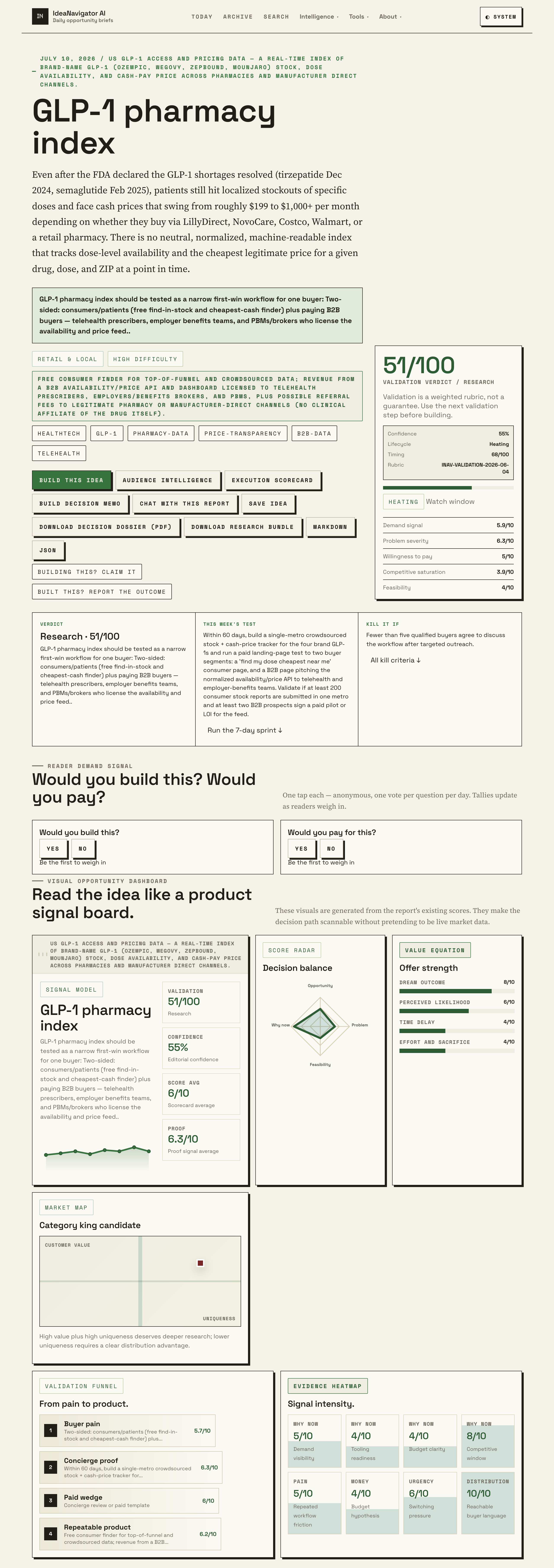
IdeaNavigator AI has proposed a pharmacy index to help patients compare brand-name GLP-1 availability by dose and ZIP code, alongside cash prices. The concept is not described as a launched service: it would first need to validate patient reports and paid interest from business buyers.
IdeaNavigator AI has proposed a pharmacy index for brand-name GLP-1 medicines that would let patients search reported availability and cash prices by drug, dose and ZIP code. The concept pairs a free consumer search tool with a paid data feed for telehealth prescribers, employers and pharmacy benefit intermediaries; no operating service or buyer pilot is confirmed in the proposal.
The proposed consumer tool would cover Ozempic, Wegovy, Zepbound and Mounjaro, collecting patient-submitted stock reports and combining them with public prices from manufacturer-direct programs, Costco, Walmart and pharmacy price listings. Users could look for a particular dose and compare cash prices in their area. The plan also calls for alerts when a requested dose becomes available.
For business customers, the proposal would package normalized availability and price information as an API or dashboard. Potential licensees include telehealth prescribers, employer benefits teams, pharmacy benefit managers and brokers. The proposal also mentions referral fees from legitimate pharmacy or manufacturer-direct channels as a possible revenue stream, while distinguishing those referrals from clinical promotion of the medicines.
The suggested first test is limited to one metropolitan area and a 60-day period. Its stated benchmarks are at least 200 consumer stock reports and paid pilots or letters of intent from at least two business prospects. These are proposed validation targets; the material does not report that the tracker has been built, that the targets have been met, or that any customer has signed on.
Why Dose-Level Search Could Help
A dose-specific index could address a practical gap between broad supply updates and what a patient encounters at an individual pharmacy. A medicine may be generally available while a particular strength or formulation is difficult to find nearby. A tool that records drug, dose, location and time could give patients and prescribers more localized information, if reports are current and reliable.
Price comparisons could also matter for people paying cash, since the proposal says prices may vary from roughly $199 to more than $1,000 per month across direct and retail channels. That range is presented without a defined collection date, product-specific breakdown or consistent comparison method. It should not be read as a verified price quote for a particular patient or dose. For employers and benefit intermediaries, the proposed feed could support purchasing and coverage decisions; the proposal says GLP-1 medicines account for roughly 20% of pharmacy spending for employers, but supplies no survey, timeframe or methodology for that figure.
The potential value depends on data quality. Stock reports can become stale quickly, and cash prices may depend on eligibility, coupons, quantity, location or other terms. A directory would need to show when information was checked and what conditions apply before readers or buyers could rely on its comparisons.
From Shortage Listings to Local Gaps
The proposal describes a market that has shifted from broad shortage concerns toward fragmented local availability and pricing. It says the FDA declared shortages of tirzepatide resolved in December 2024 and semaglutide in February 2025. Those dates are part of the proposal’s account; the material does not provide FDA citations or explain how a shortage-list status relates to stock at a specific pharmacy.
It also points to manufacturer cash-pay programs and retail options, including LillyDirect, NovoCare, Costco and Walmart, as channels that contribute to varying prices. The proposal names the TrumpRx portal as another development in February 2026. It does not provide launch details or price data for that portal. Together, these examples form the rationale for a service that would compare channels in one place, rather than evidence that a comprehensive comparison currently exists.
The suggested product is deliberately narrow: four brand medicines, a single metro area and a small set of data sources. The initial version would combine crowdsourced reports with public price information, then test whether patients use it and whether business customers will pay for the feed. That sequence frames the index as an unvalidated business proposal rather than a report of a new market service already available to consumers.
Data Quality and Buyer Demand
The proposal does not identify a launch team, operating pharmacy partners, a live dataset, or any customers. It also does not specify how reports would be verified, how old a report could be before being removed, or how discrepancies between patient submissions and pharmacy listings would be handled. Those details would shape whether the index could offer dependable availability information.
Price comparisons also remain underspecified. The proposal does not set out whether listed amounts would include shipping, discounts, membership requirements or other eligibility conditions, nor how it would compare different package sizes. Its price range and employer-spending estimate lack stated dates and methodologies. It is also unclear whether business buyers would pay for the feed, what data fields they would need, and how frequently information would have to update.
Finally, the proposal does not give evidence that the planned channels can supply comparable, timely data for every listed drug and dose. It identifies a possible product and test, but reports no completed trial or outcomes.
A 60-Day Market Test
The next step described in the proposal is to build a one-metro tracker for the four brand medicines and test separate offers for patients and business buyers. The consumer page would focus on finding a dose and comparing nearby cash prices; the business page would present the availability and price feed to telehealth and employer-benefits prospects.
Evidence of progress would include submitted stock reports and signed paid pilots or letters of intent. The proposal sets minimum goals of 200 reports and two business prospects, but does not state when the 60-day period would begin or name a location. Until results are reported, whether the tracker can gather dependable data or attract paying customers remains open.
Source: IdeaNavigator AI
Key Questions
Has the GLP-1 pharmacy index launched?
No launch is reported. IdeaNavigator AI describes a proposed product and validation plan, not an available search service.
Which medicines would it cover?
The proposed first version would track Ozempic, Wegovy, Zepbound and Mounjaro by dose and ZIP code.
Would patients have to pay to use it?
The proposal envisions a free consumer finder. It would seek revenue from licensing data and dashboards to business buyers, with possible referral fees from pharmacy or manufacturer-direct channels.
Are the proposed price comparisons verified?
No results or comparison methodology are provided. The proposal gives an approximate range of $199 to more than $1,000 per month, but does not state a collection date or fully define the products and purchase terms behind those figures.
How would the concept be tested?
The proposed test would run in one metropolitan area for 60 days, aiming for at least 200 patient stock reports and two paid business pilots or letters of intent. The proposal does not say that this test has begun.
Source: IdeaNavigator AI