📊 Full opportunity report: Scanning And Auto-Filing For Small Offices With Limited Space on IdeaNavigator AI — validation score, market gap, and execution plan.
TL;DR
A proposal for small nonprofits, clinics and law offices would use a phone-based scanner to classify documents, suggest filenames and save searchable PDFs to a shared folder. The concept has not been presented as a launched product; a one-week pilot at five offices is proposed to test classification accuracy and willingness to pay.
IdeaNavigator AI proposes a phone-based document scanner that would classify paper records, suggest useful filenames and file searchable PDFs for small nonprofits, clinics and law offices. The concept is framed as a workflow to test, not a launched service. IdeaNavigator AI suggests a one-week pilot at five offices to measure classification accuracy and customer willingness to pay.
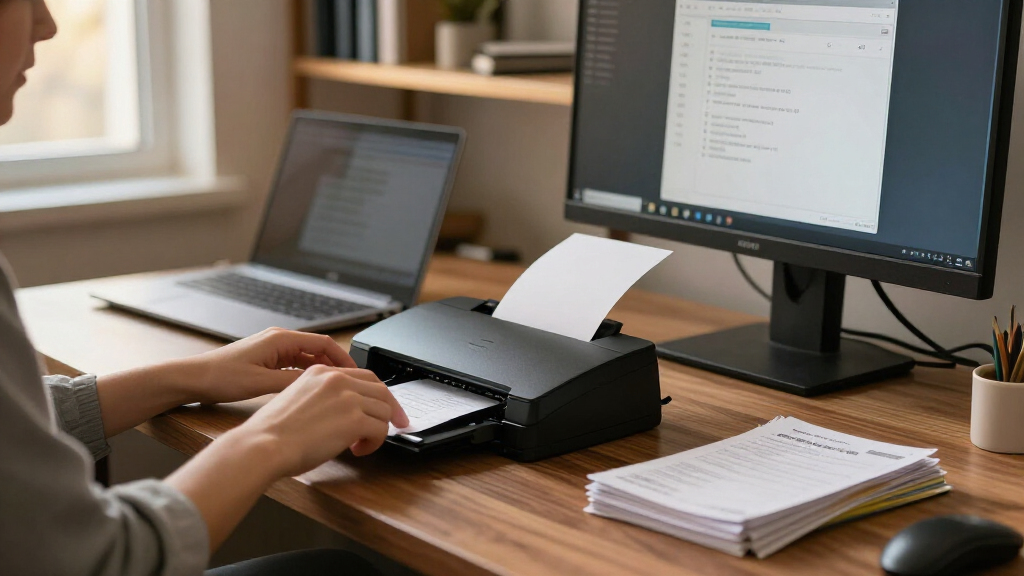
According to IdeaNavigator AI’s proposal, an office worker would photograph a stack of documents with a phone. Optical character recognition (OCR) would read the text, while document classification and layout analysis would suggest a type and filename. An invoice, for example, could be labeled with its document type, date and vendor, then saved as a searchable PDF in a shared folder.
IdeaNavigator AI identifies office managers in small nonprofits, clinics and law offices as the intended users, particularly teams that handle paper intake forms, invoices and records but may lack dedicated IT staff. The proposal says generic scanner apps can leave users with unsorted images rather than searchable files with consistent names. It points to on-device and API-based OCR and layout-aware models as technologies that may make automated sorting practical at lower cost, but reports no product test results or accuracy figures.
For validation, IdeaNavigator AI proposes that five small offices run a week-long trial, scanning a real backlog of 200 documents per office. The suggested measures are correct auto-classification rates and willingness to pay per seat. The proposal also describes a possible monthly per-seat subscription with a page-volume cap and charges for additional pages; it specifies no price, service provider or commercial launch.
Less Filing Work for Small Teams
If the workflow performs reliably, it could reduce the time office staff spend naming, sorting and retrieving routine paper records. Searchable PDFs organized by document type and relevant fields may also make records easier to locate than image files stored with generic names. That could matter in offices where administrative work competes with service delivery and staff have limited technical support.
The proposal’s value, however, depends on more than producing readable scans. A wrong classification or filename can make a record harder to find, and sensitive documents require careful access controls and handling. The suggested trial focuses on classification accuracy and willingness to pay, but does not specify how privacy, security, error correction or retention would be evaluated. Those questions affect whether small organizations could safely rely on automated filing.
document scanner app for small offices
As an affiliate, we earn on qualifying purchases.
As an affiliate, we earn on qualifying purchases.
From Paper Backlogs to Searchable Files
The concept addresses a practical gap between scanning a page and managing a record. A basic scan captures an image or PDF; the proposed workflow would add text recognition, classification and naming so files can be searched and stored consistently. Its focus is narrow: offices with accumulated paper and no dedicated IT team, rather than a broad replacement for records-management systems.
IdeaNavigator AI presents the idea as an opportunity for a minimum viable product and recommends testing it against real documents before building further. The proposed sample—five offices and 200 documents each—would offer an initial operational test, not proof of performance across the full market. IdeaNavigator AI identifies no participating organizations, test dates, completed results or independent evaluations.
As an affiliate, we earn on qualifying purchases.
Accuracy, Privacy and Pricing
IdeaNavigator AI reports no product launch or pilot results. It remains unknown how often the software would correctly identify document types, extract fields or generate usable filenames across varied forms, handwriting, image quality and office-specific terminology. The proposal gives no measured accuracy rate or baseline for comparison.
Other open questions include where documents would be processed and stored, how access to sensitive records would be controlled, and how users could review or correct mistakes. The proposed subscription model has no stated price or page allowance. IdeaNavigator AI also does not say whether the proposed approach would connect to existing shared folders and office systems or operate as a separate filing destination.
automatic document classification software
As an affiliate, we earn on qualifying purchases.
As an affiliate, we earn on qualifying purchases.
A Five-Office Pilot Is Proposed
IdeaNavigator AI’s proposed next step is a one-week pilot in five small offices, with each office scanning 200 documents from its backlog. The trial would track correct auto-classification and whether staff would pay per seat. The proposal gives no schedule or participating offices, so it is not clear when testing might begin.
For the concept to advance, pilot findings would need to show not only that documents can be processed, but that staff can verify and correct results without adding more work. Further details on privacy safeguards, integrations, subscription pricing and the handling of classification errors would help organizations judge whether the tool is suitable for real records.
Source: IdeaNavigator AI proposal
searchable PDF creator for small business
As an affiliate, we earn on qualifying purchases.
As an affiliate, we earn on qualifying purchases.
Key Questions
Is the document-scanning app available now?
No launch is reported. IdeaNavigator AI describes it as a proposed workflow and minimum viable product to test.
Who is the proposed tool for?
IdeaNavigator AI’s proposal targets office managers in small nonprofits, clinics and law offices that handle paper records and may not have dedicated IT staff.
How would the auto-filing process work?
Under the proposed workflow, a user would photograph documents with a phone. OCR and document classification would identify text and suggest a type and filename, then the app would save a searchable PDF in a shared folder.
How would the proposal be tested?
IdeaNavigator AI suggests a pilot involving five offices over one week, with each scanning 200 backlog documents. The proposed measures are classification accuracy and willingness to pay per seat.
What is not yet known?
IdeaNavigator AI reports no accuracy results, pilot dates, prices or named participants. Its proposal also does not provide details about privacy protections, integrations or error correction.
Source: IdeaNavigator AI