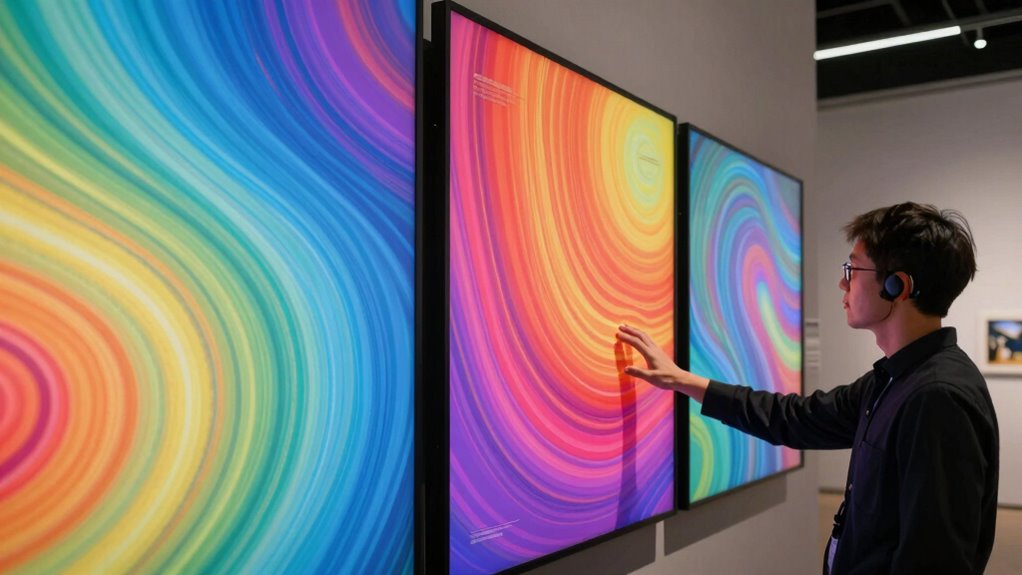

You should prioritize accessibility from the start because it broadens your audience and guarantees everyone can enjoy your interactive art. Incorporating inclusive design principles early prevents costly retrofits and shows genuine consideration for diverse abilities. By integrating multiple sensory channels and simple interfaces, you create more intuitive and innovative experiences. Ethical and cultural commitments also boost participation, making your work more impactful. Keep exploring how addressing accessibility from the beginning enhances your artistic practice and audience connection.

Get the latest gadgets delivered free — and shop member deals
- Fast, free delivery on millions of items
- Access to Prime Big Deal Days deals on October 6–7
- Prime Video, Amazon Music and more included
Key Takeaways
- Designing for accessibility early prevents costly retrofits and ensures inclusive engagement for diverse audiences.
- Incorporating multiple sensory channels enhances user experience and accommodates different abilities and sensitivities.
- Simple, adjustable interfaces from the start create intuitive interactions and reduce frustration for all users.
- Inclusive design fosters ethical responsibility, promoting equity and participation in cultural and artistic spaces.
- Early accessibility considerations lead to innovative, flexible, and socially responsible interactive art experiences.
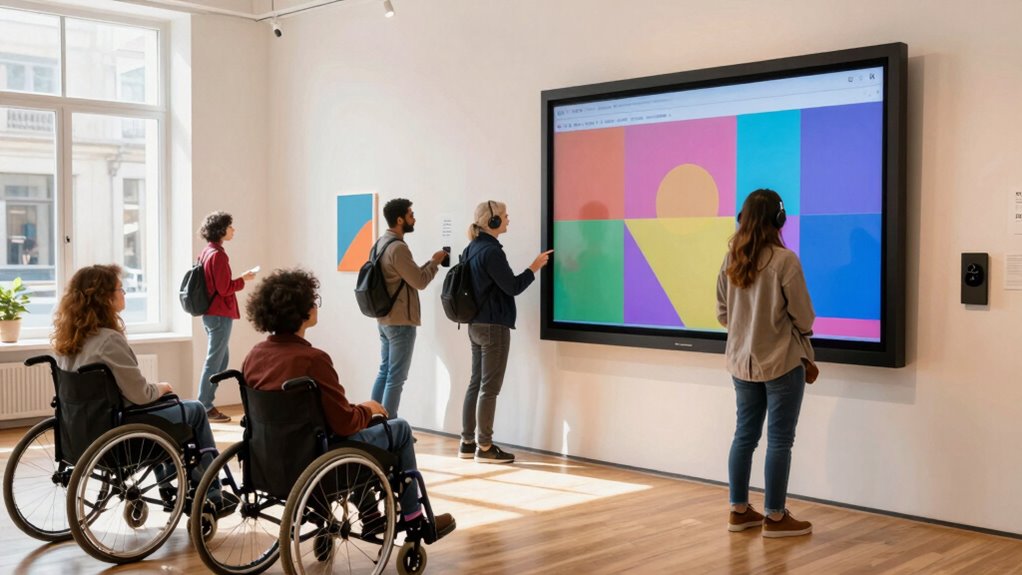
Have you ever considered how approachable your interactive art creations truly are? When you design with accessibility in mind from the start, you open your work to a much broader audience, guaranteeing everyone can engage and enjoy. Incorporating inclusive design principles isn’t just a trend—it’s a necessity. It means thinking about how people with diverse abilities and sensory experiences will interact with your art and making adjustments early on to accommodate them. This proactive approach prevents costly retrofits later and demonstrates genuine consideration for all users. Moreover, addressing accessibility from the outset fosters inclusive design that benefits everyone, not just those with disabilities.
Designing accessible interactive art from the start broadens engagement and fosters inclusivity for all audiences.
Sensory integration becomes an essential part of this process. Not everyone perceives stimuli the same way; some viewers might find certain sounds overwhelming, while others might rely heavily on tactile or visual cues. By integrating multiple sensory channels into your interactive pieces, you create an environment where people can choose how to engage based on their needs. For example, providing visual, auditory, and tactile feedback allows users to navigate your work comfortably, regardless of sensory sensitivities or disabilities. When you pay attention to sensory integration, you’re not just making your art more inclusive—you’re enriching the experience for everyone.
Starting with accessibility also influences the design of interfaces and interactions. Simple, clear navigation helps reduce frustration for users with cognitive disabilities, while adjustable settings can allow individuals to customize their experience. For instance, offering subtitles or alternative text for audio components ensures that people with hearing impairments can still access the information. Additionally, designing with contrast and font sizes that are easy to read benefits those with visual impairments. When you embed these considerations into your creative process from the outset, you avoid the pitfalls of an afterthought and instead craft a seamless, welcoming experience.
Thinking about accessibility early on also fosters innovation. It pushes you to explore new ways of interaction that can enhance engagement for all users—not just those with disabilities. Often, inclusive design leads to more intuitive and flexible experiences, which can surprise and delight a wider audience. Plus, it aligns your work with ethical standards and legal requirements, demonstrating social responsibility. When you prioritize accessibility from the start, you’re not just creating art; you’re shaping a more inclusive cultural space where everyone has the opportunity to participate fully.
Ultimately, designing accessible interactive art isn’t just a technical choice—it’s a reflection of your commitment to equity and empathy. By considering inclusive design and sensory integration from the beginning, you guarantee your art reaches and resonates with diverse audiences. It’s about making your creative vision open to all, fostering participation, and enriching the collective experience.
accessible interactive art tools
As an affiliate, we earn on qualifying purchases.
As an affiliate, we earn on qualifying purchases.
Frequently Asked Questions
How Can Accessibility Enhance the Overall Interactive Art Experience?
Accessibility enhances your interactive art experience by broadening sensory engagement and fostering deeper emotional connections. When you design with accessibility in mind, you allow more people to actively participate, creating inclusive environments that resonate on personal levels. This approach not only enriches your artwork but also makes it more meaningful for diverse audiences, encouraging shared experiences and emotional bonds that elevate the overall impact of your interactive art.
What Are Common Barriers Faced by Disabled Audiences in Interactive Art?
You’ll find that common barriers for disabled audiences include inadequate accommodations for sensory diversity and lack of universal design principles. Visual impairments may hinder access without screen readers, while sensory overload can overwhelm neurodiverse visitors. To improve inclusivity, incorporate universal design strategies, such as tactile elements and adjustable sensory input, ensuring everyone can fully engage. Addressing these barriers from the start creates a more welcoming, accessible interactive art experience for all audiences.
How Do Designers Balance Accessibility With Innovative Artistic Expression?
You need to remember that “the devil is in the details.” To balance accessibility with innovative artistic expression, focus on inclusive design and user-centered approaches. This means designing experiences that are flexible and adaptable, allowing all users to engage meaningfully. By prioritizing diverse needs from the start, you can create art that pushes boundaries without excluding anyone, ensuring your work remains both groundbreaking and accessible.
Are There Specific Technologies That Improve Accessibility in Interactive Art?
You can improve accessibility in interactive art with specific technologies like assistive technologies—screen readers, haptic feedback devices, and alternative input methods. Incorporating inclusive design principles guarantees your work is usable by diverse audiences, including those with disabilities. By integrating these tools from the start, you create more engaging, accessible experiences that respect everyone’s needs while still allowing for innovative artistic expression.
How Can Funding Be Allocated Effectively for Accessible Interactive Art Projects?
Think of funding as watering a garden—you need a variety of sources to thrive. You can allocate funds effectively by exploring diverse funding models and implementing strategic grant strategies tailored to accessible interactive art projects. Prioritize grants focused on inclusion, collaborate with community organizations, and demonstrate how accessibility enhances engagement. By diversifying your funding approach, you guarantee your project blossoms into an inclusive experience for all audiences.
sensory feedback devices for art installations
As an affiliate, we earn on qualifying purchases.
As an affiliate, we earn on qualifying purchases.
Conclusion
By considering accessibility from the beginning, you create interactive art that truly welcomes everyone. Don’t you want your work to inspire and connect with the widest audience possible? When you prioritize inclusivity early on, you not only enhance the experience for people with disabilities but also enrich the art for all. So, why wait to make your interactive creations more accessible? Embrace inclusive design now and watch your art reach new heights of engagement and meaning.
adjustable interface for interactive exhibits
As an affiliate, we earn on qualifying purchases.
As an affiliate, we earn on qualifying purchases.
visual and auditory feedback devices
As an affiliate, we earn on qualifying purchases.
As an affiliate, we earn on qualifying purchases.
Evergreen bestsellers Picks
bestsellers
As an affiliate, we earn on qualifying purchases.