Ambient light rejecting screens aren’t a magic fix for bright rooms, but their effectiveness relies heavily on proper calibration and controlling ambient light sources. They help reduce glare and enhance image quality, yet they don’t eliminate the need for environment management like dimming lights or closing curtains. Relying solely on the screen won’t guarantee perfect results—calibration and lighting adjustments are key. Keep exploring to discover how to maximize your setup’s potential and truly enjoy high-quality visuals.
Key Takeaways
- Ambient light rejecting screens improve visibility in bright rooms but are not a complete solution for all lighting conditions.
- Proper projector calibration and environment control are essential to maximize the screen’s effectiveness.
- Reducing ambient light through curtains or dimming enhances image quality, even with specialized screens.
- These screens significantly reduce glare but cannot fully eliminate reflections in extremely bright environments.
- Combining calibration, environment management, and quality equipment yields the best results, dispelling the “bright room” myth.
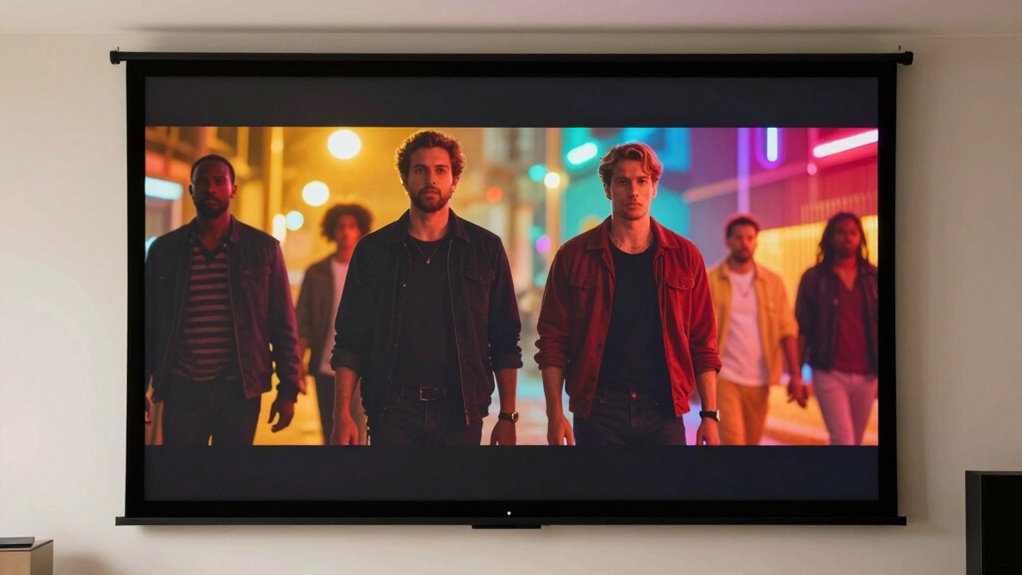
Ambient light rejecting screens are designed to improve your viewing experience by reducing glare and reflections from surrounding light sources. These screens are particularly effective in bright rooms, where ambient light can wash out images and diminish picture quality. However, it’s important to understand that their performance isn’t a magic solution for all lighting conditions. To get the most out of an ambient light rejecting screen, you need to pay attention to your projector calibration and optimize your viewing environment.
Ambient light rejecting screens improve visibility but require proper projector calibration and environment optimization.
First, consider that projector calibration plays a vital role in achieving the best image quality. Proper calibration ensures that the projector’s brightness, contrast, and color settings are adjusted to match the specific characteristics of your room and screen. When you calibrate your projector correctly, you maximize contrast and color accuracy, which are essential for enjoying sharp, vibrant images on an ambient light rejecting screen. Without calibration, even the best screen can’t compensate for poor projector settings or misaligned images, resulting in less-than-ideal picture quality.
Next, your viewing environment substantially impacts the effectiveness of the screen. Ambient light rejecting screens are designed to reflect and absorb ambient light in a way that minimizes glare and reflections, but they aren’t invincible. If your room has excessively bright lighting, such as large windows or multiple light fixtures, it can still challenge the screen’s performance. To truly benefit from an ambient light rejecting screen, you may need to control your environment by dimming lights, using blackout curtains, or repositioning light sources. This doesn’t mean you must turn your room into a dark cinema, but reducing ambient light can make a noticeable difference.
Understanding the myth of the “bright room” is essential here. Many assume that these screens can handle any level of ambient light without any compromise. While they do considerably improve visibility in bright environments, they aren’t a cure-all. Their effectiveness depends on both the quality of calibration and the lighting conditions in your viewing environment. Relying solely on the screen’s technology without adjusting your projector settings or controlling ambient light won’t produce the best results. Moreover, the contrast ratio of your projector and screen combination significantly influences how well images appear in various lighting conditions.
Frequently Asked Questions
How Do Ambient Light Rejecting Screens Compare to Traditional Screens?
Ambient light rejecting screens outperform traditional screens by effectively minimizing ambient light interference, thanks to advanced screen technology. When you use an ambient light rejecting screen, you’ll notice brighter images and better contrast even in well-lit rooms. These screens are designed to absorb or reflect ambient light, making your viewing experience clearer and more vibrant compared to traditional screens, which often struggle with glare and washed-out images in bright environments.
Can Ambient Light Rejecting Screens Be Used Outdoors Effectively?
Yes, ambient light rejecting screens can be used outdoors effectively, but with some limitations. You’ll enjoy improved outdoor visibility because these screens reduce ambient light challenges, making content clearer even in bright sunlight. Keep in mind, though, they’re not a perfect solution for all outdoor conditions, especially in direct, harsh sunlight. For best results, use them in shaded areas or during times when sunlight is less intense.
Do These Screens Impact Color Accuracy or Image Quality?
Ambient light rejecting screens can slightly impact color fidelity and image sharpness, but they’re designed to minimize these effects. You might notice subtle differences in color accuracy, especially with highly saturated colors, and some loss in image sharpness compared to standard screens. However, the benefits of better contrast and reduced glare often outweigh these drawbacks, making them ideal for bright environments where clarity and vividness are essential.
Are Ambient Light Rejecting Screens Compatible With All Projector Types?
Sure, ambient light rejecting screens are the ultimate chameleon—compatible with nearly all projectors! Whether you favor LCD, DLP, or LED projectors, these screens adapt effortlessly. Just remember, your screen’s material options might vary, so check if your setup aligns with the specific projection compatibility. Don’t worry, with a little research, you’ll find the perfect match and enjoy bright, vivid images even in well-lit rooms.
What Maintenance Is Required for Ambient Light Rejecting Screens?
You should regularly perform cleaning routines on your ambient light rejecting screen to maintain ideal performance. Use a soft, lint-free cloth and avoid harsh chemicals that could damage the coating. Check the manufacturer’s instructions for specific cleaning guidelines. The coating durability varies, but gentle maintenance helps preserve it longer, ensuring your screen continues to reject ambient light effectively and provides a clear, vibrant image over time.
Conclusion
So, next time you’re told that ambient light rejecting screens are your ticket to perfect picture in a bright room, just smile and nod. In reality, they’re about as magical as a unicorn in your backyard—great in theory, but often disappointing in practice. Don’t fall for the hype. Instead, embrace your environment, invest in good lighting, and remember: no screen can turn a daylight disaster into a cinematic paradise. Happy viewing!