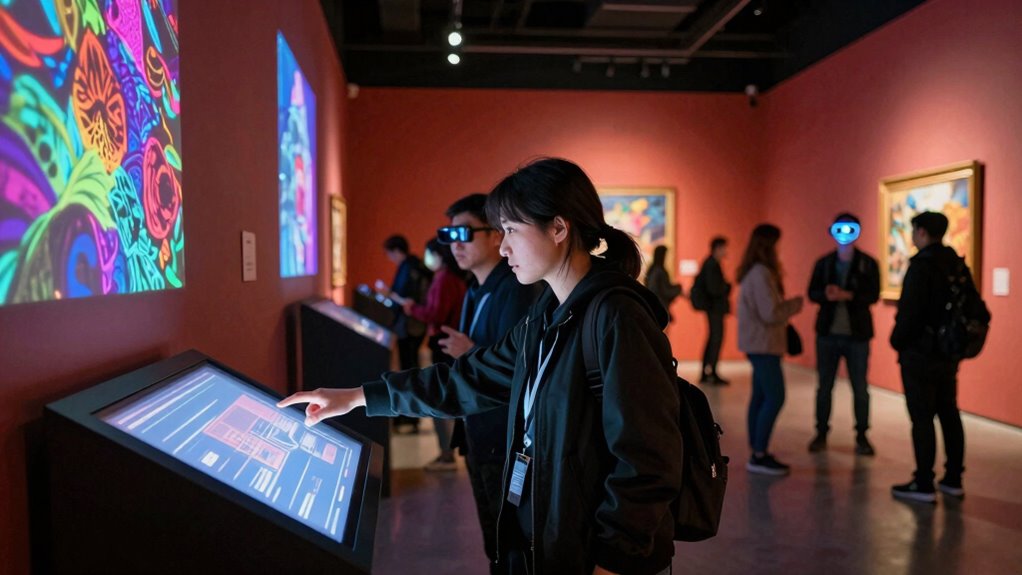

Interactive exhibitions use cool technologies to enhance your experience. Augmented reality merges digital visuals with the real world, while touch sensors react to your gestures, adding layers of information. Gesture recognition lets you navigate without touching screens, making exploration smoother. Projection mapping turns surfaces into dynamic displays, drawing your attention. Finally, interactive displays respond to your movements, creating personalized experiences. There’s so much more to discover about these innovative tools that reshape how you engage with art and exhibitions.
Key Takeaways
- Augmented Reality (AR) integrates digital content with the real world, enhancing viewer engagement through immersive storytelling and interactive experiences.
- Touch Sensors enable users to interact physically, triggering visual changes and additional information, making learning playful and engaging.
- Gesture Recognition allows navigation and control through hand movements, facilitating exploration without physical touch and enhancing user experience.
- Projection Mapping transforms surfaces into dynamic displays, utilizing projectors for stunning visuals and immersive narratives that captivate audiences.
- Interactive Displays respond to user actions, fostering personalized and participatory experiences that enhance storytelling within exhibitions.
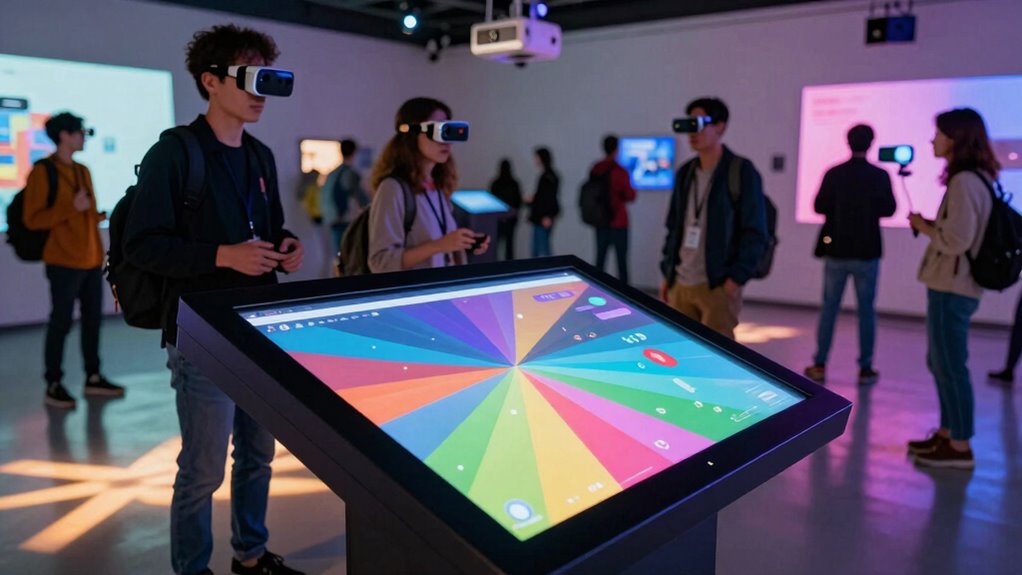
As you step into an interactive exhibition, you might not realize just how much technology powers your experience. Every visual, sound, and tactile sensation is carefully crafted using cutting-edge tools that transform static displays into engaging environments. One of the most exciting technologies at work is Augmented Reality (AR). With AR, digital elements blend seamlessly with the real world, allowing you to interact with objects in ways you never thought possible. Imagine pointing your phone at a painting and seeing it come to life with animations or additional information overlaying the original art. It makes the experience not only informative but also incredibly immersive.
Step into an interactive exhibition where Augmented Reality brings art to life, creating an immersive and engaging experience.
Touch sensors are another essential component of these exhibitions. These sensors respond to your physical interactions, such as tapping, swiping, or even holding your hand over a surface. When you touch a screen or an object, the technology takes note of your gestures and triggers specific actions, like displaying more information or changing the visuals. This tactile engagement fosters a deeper connection between you and the content, making learning feel more like play.
Gesture recognition adds another layer of interactivity. Instead of relying solely on touch, this technology allows you to control elements with simple hand movements. You could wave your hand to navigate through a virtual gallery or use specific gestures to manipulate 3D models. The freedom that gesture recognition provides not only enhances your experience but also simplifies navigation, letting you explore at your own pace without needing to touch a screen.
Projection mapping is equally intriguing, transforming ordinary surfaces into dynamic canvases. This technology uses projectors to display images and videos that fit perfectly onto irregularly shaped objects, creating a visually stunning experience. As you walk through an exhibition, you might see a 3D animation that seems to dance across a wall, capturing your attention and drawing you further into the narrative being told. Additionally, many immersive exhibitions incorporate interactive displays that respond to your movements and choices, heightening the sense of immersion and engagement.
As an affiliate, we earn on qualifying purchases.
Frequently Asked Questions
How Do Interactive Exhibitions Enhance Visitor Engagement?
Interactive exhibitions enhance visitor engagement by encouraging active participation. When you get involved, whether through touchscreens, immersive environments, or hands-on displays, you create a deeper emotional connection to the content. This participation transforms your experience, making it memorable and impactful. You’re not just observing; you’re part of the story. By fostering curiosity and interaction, these exhibitions guarantee that you leave with a stronger understanding and appreciation of the subject matter.
What Are Some Examples of Successful Interactive Exhibitions?
Imagine stepping into a vibrant world where every corner invites you to play. Successful interactive exhibitions like “The Museum of Ice Cream” and “TeamLab Borderless” use stunning digital installations to create immersive experiences that captivate your senses. You explore, touch, and interact, transforming passive observation into active participation. These exhibitions don’t just tell stories; they let you live them, making memories that stick like sweet frosting on your fingertips.
How Are Interactive Technologies Selected for an Exhibition?
You select interactive technologies for an exhibition by considering current technology trends and audience preferences. Start by researching what’s popular and effective, then think about your target audience’s interests and behaviors. Engage with potential visitors to gather insights on what excites them. Finally, test different technologies to see which ones enhance the experience and encourage interaction, ensuring that the chosen tech aligns with your exhibition’s goals and themes.
What Is the Cost of Creating an Interactive Exhibition?
Creating an interactive exhibition’s like crafting a masterpiece; every brushstroke matters. Your costs will depend on budget considerations, with material costs and technology investments playing pivotal roles. High-quality tech can be pricey, but it enhances the experience. Staffing expenses also add up, especially if you need skilled personnel. Plan meticulously to balance creativity and finances, ensuring you deliver an engaging exhibition without breaking the bank.
How Do You Measure the Success of an Interactive Exhibition?
You can measure the success of an interactive exhibition by analyzing visitor feedback and engagement metrics. Start by collecting surveys or comments from attendees to gauge their experiences. Next, track engagement metrics like time spent at exhibits and interaction rates with displays. These insights will help you understand what worked and what didn’t, allowing you to refine future exhibitions for even better visitor experiences.
As an affiliate, we earn on qualifying purchases.
Conclusion
In the world of interactive exhibitions, technology truly transforms the experience. Did you know that 70% of visitors remember exhibits with interactive elements long after their visit? By harnessing tools like augmented reality, gesture recognition, and immersive audio, you can create unforgettable moments that engage all the senses. So, whether you’re designing an exhibit or just exploring one, keep these core technologies in mind—they’re the key to enchanting your audience and leaving a lasting impression!
As an affiliate, we earn on qualifying purchases.
As an affiliate, we earn on qualifying purchases.