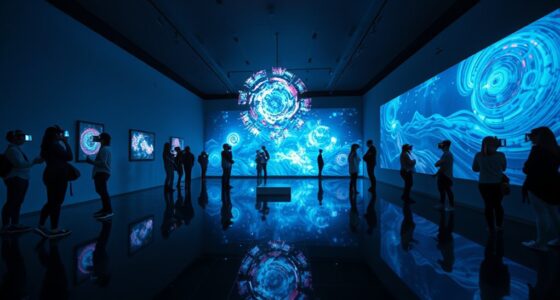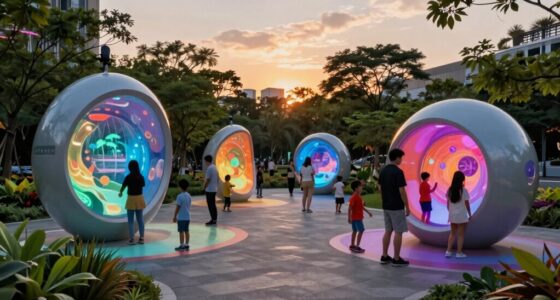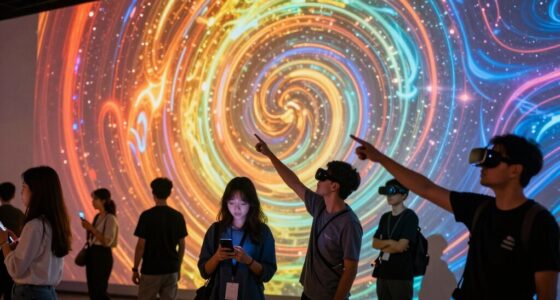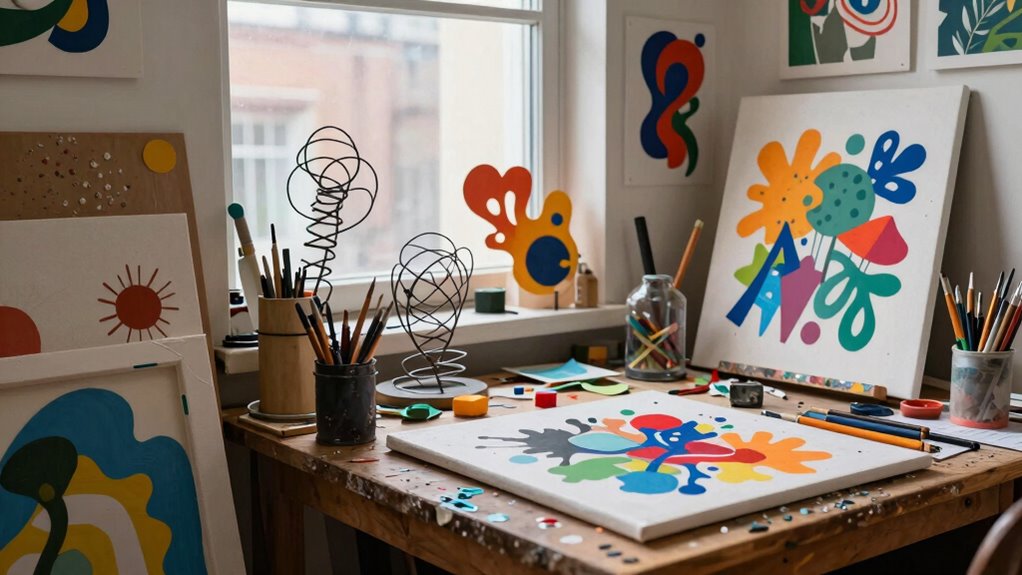

Artists design for curiosity by creating spaces that invite exploration rather than control how viewers experience them. They leave hints of mystery, use visual cues, and layer information to provoke questions and engagement. By crafting open-ended environments, they turn passive viewers into active explorers, encouraging repeated interactions. This approach makes the experience feel like an adventure, deepening emotional connection. If you keep exploring, you’ll discover how to transform ordinary spaces into enthralling journeys of curiosity.

Get the latest gadgets delivered free with Prime
- Fast, free delivery on millions of items
- Prime Video, Amazon Music and more included
- Member-only deals all year
Key Takeaways
- Artists incorporate gaps, ambiguities, and layered details to invite viewers to explore and interpret beyond surface meaning.
- They use visual cues, subtle movements, and storytelling techniques that reward curiosity and foster active engagement.
- Artists create open-ended environments that stimulate imagination and provoke questions about what lies beyond.
- They design experiences that allow multiple discovery paths, adapting to individual pace and interests.
- Artists focus on transforming passive observation into an active, participatory journey that evokes wonder and emotional connection.
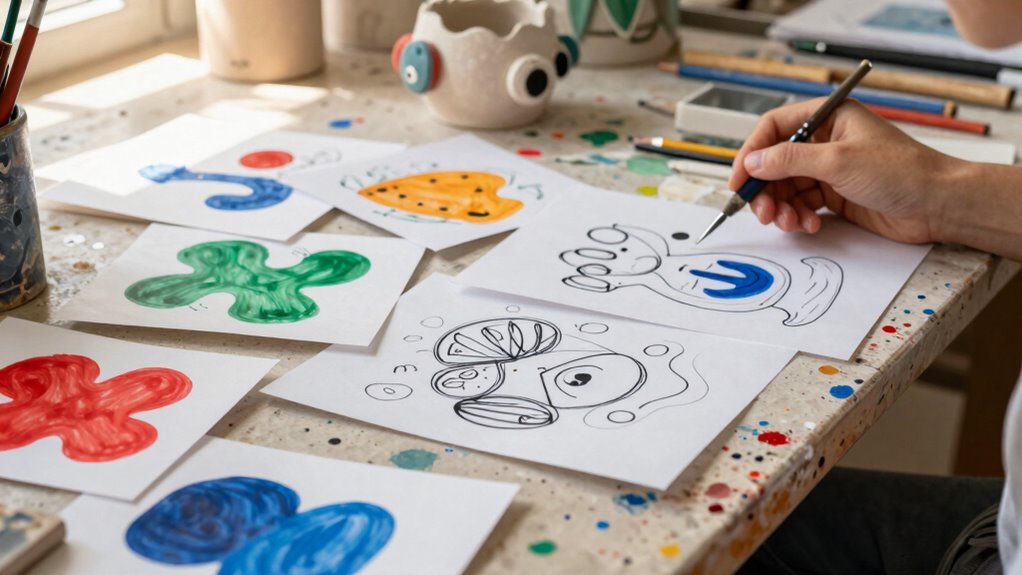
Have you ever wondered why some designs instantly draw you in while others leave you indifferent? It’s because great artists understand that fostering curiosity is more compelling than simply exerting control over the viewer’s experience. Instead of laying everything out clearly, they create spaces that invite user engagement through hints of mystery, surprise, and discovery. When you approach design this way, you encourage people to explore, to question, and to interact more deeply, transforming passive observation into active participation. This approach taps into your natural desire for creative exploration, making the experience feel less like a presentation and more like an adventure.
Artists who design for curiosity intentionally leave gaps and ambiguities, letting your mind fill in the blanks. They know that when you’re curious, you’re more likely to spend time engaging with the work. This isn’t about control but about creating an open-ended environment that sparks your imagination. Instead of telling you exactly what to think or do, these designers craft elements that provoke questions—what’s behind that door? What happens if I click here? What could this detail mean? By doing so, they foster a sense of discovery that keeps you hooked, encouraging repeated interaction and deeper engagement.
In this kind of design, the focus shifts from trying to control your experience to nurturing your innate curiosity. Artists intentionally craft visual cues, subtle movements, or layered information that reward exploration. When you encounter these elements, you’re motivated to dig further, to uncover more, to understand the underlying story or purpose. This process transforms the experience from a passive viewing into an active journey, making you more invested. As a result, the design becomes memorable and meaningful, because it aligns with your natural inclination to explore and learn. Additionally, visual storytelling is a powerful method that enhances curiosity by presenting narratives that unfold gradually, encouraging viewers to piece together the larger picture.
Moreover, designing for curiosity allows for a dynamic interaction that adapts to each individual’s pace and interest level. Instead of forcing a single narrative or outcome, it offers multiple pathways for discovery. This flexibility enhances user engagement because it respects your unique way of exploring. You’re encouraged to follow your instincts, which makes the interaction feel personal and authentic. The beauty of this approach is that it turns the act of viewing or interacting into a creative exploration—an experience that’s engaging, playful, and deeply satisfying.
Ultimately, artists who harness curiosity over control understand that the most powerful designs ignite your desire to explore, learn, and connect. They create spaces that feel alive, inviting you to participate rather than passively consume. This shift from control to curiosity transforms the way we experience art and design, making every encounter richer, more engaging, and more memorable. Fostering engagement and exploration is essential for creating meaningful and memorable experiences that resonate long after the interaction ends.
As an affiliate, we earn on qualifying purchases.
Frequently Asked Questions
How Can Artists Measure Curiosity in Their Work?
You can measure curiosity in your work by observing emotional engagement and visual intrigue. When viewers linger, explore details, or ask questions, it shows their curiosity is sparked. Pay attention to their reactions—smiles, gasps, or thoughtful pauses—and note if they revisit your piece. These signs indicate your artwork successfully ignites curiosity, encouraging viewers to explore more deeply and emotionally connect, which is the core of designing for curiosity.
What Are Common Challenges When Designing for Curiosity?
Imagine a knight facing visual ambiguity and interactive elements that challenge your expectations. The common challenges you’ll encounter include balancing mystery and clarity, ensuring engagement without frustration, and maintaining a cohesive narrative. When designing for curiosity, you risk overwhelming your audience with too many interactive elements or confusing visual cues, which may hinder exploration rather than inspire it. Striking this delicate balance demands thoughtful planning and a keen understanding of your audience’s curiosity thresholds.
How Does Cultural Context Influence Curiosity-Driven Design?
Cultural context shapes your curiosity-driven design by shaping how audiences interpret symbols and artistic influence. You must consider cultural symbolism, which can evoke specific emotions or associations, guiding users’ exploration. Artistic influence from different traditions or movements influences your creative choices, sparking curiosity in unique ways. By understanding these cultural nuances, you can craft designs that resonate deeply, encouraging viewers to explore beyond conventional boundaries and satisfy their innate curiosity.
Can Curiosity Be Intentionally Suppressed or Enhanced?
Yes, curiosity can be intentionally suppressed or enhanced by manipulating emotional triggers and visual stimulation. If you want to suppress curiosity, you might remove intriguing details or create predictable patterns that reduce emotional engagement. Conversely, enhancing curiosity involves adding mystery, unexpected elements, or stimulating visuals that trigger emotional responses. By carefully controlling these factors, you shape how your audience feels and whether they’re motivated to explore further.
How Do Audience Demographics Impact Curiosity-Based Design Choices?
Audience demographics profoundly influence curiosity-based design choices. By conducting demographic analysis, you can tailor experiences that resonate deeply, boosting audience engagement. For example, younger audiences might prefer interactive, dynamic content, while older groups may appreciate more detailed, contemplative elements. Understanding your audience’s preferences enables you to craft curiosity-driven art that sparks exploration and emotional connection, ensuring your work captivates diverse groups effectively.
As an affiliate, we earn on qualifying purchases.
Conclusion
By embracing curiosity over control, you open the door to authentic creativity and unexpected discoveries. Let your work invite exploration, sparking wonder in those who experience it. Remember, “Curiosity killed the cat, but satisfaction brought it back”—sometimes, the risk is worth the reward. Keep pushing boundaries and nurturing your innate curiosity, for it’s through exploration that true innovation happens. Trust in the process, and watch your art inspire and delight in ways you never imagined.
As an affiliate, we earn on qualifying purchases.
As an affiliate, we earn on qualifying purchases.
Columbus Day / Indigenous Peoples' Day Picks
long weekend sales
As an affiliate, we earn on qualifying purchases.