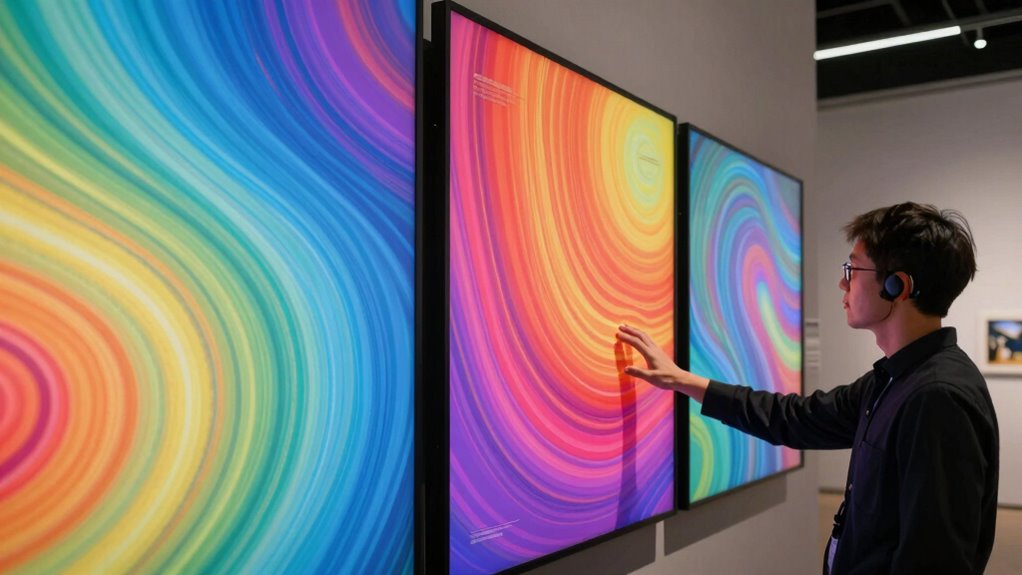
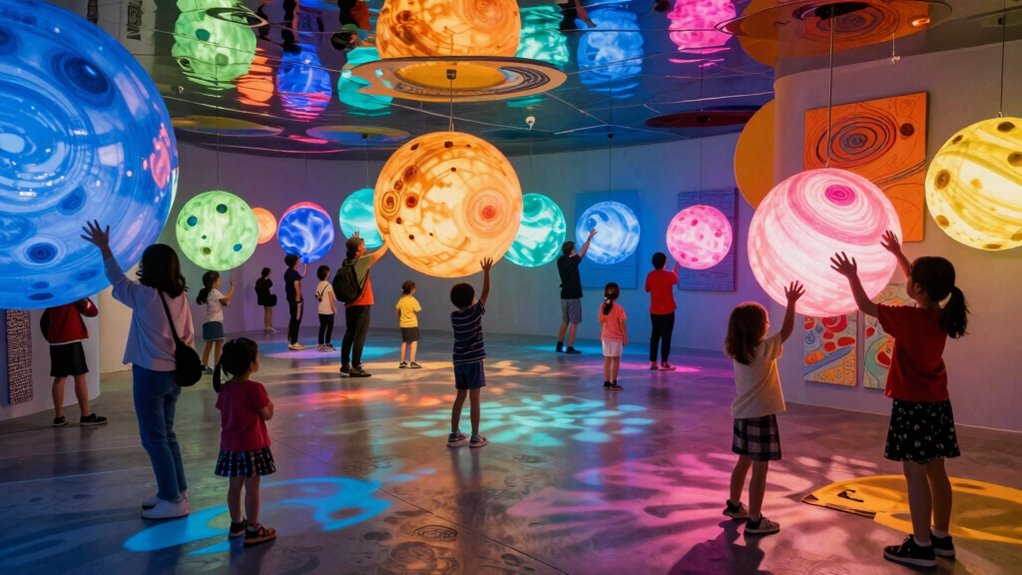
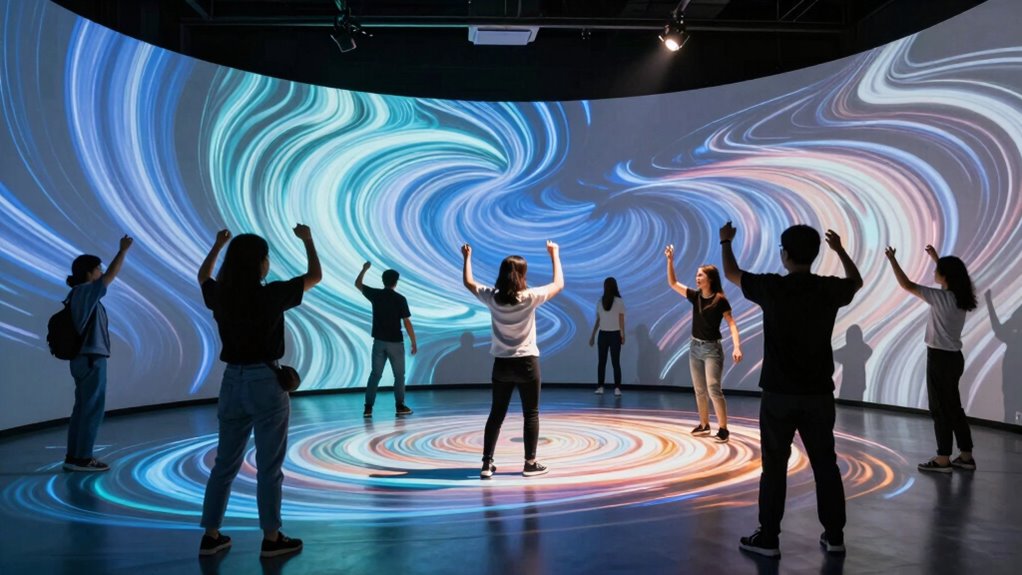
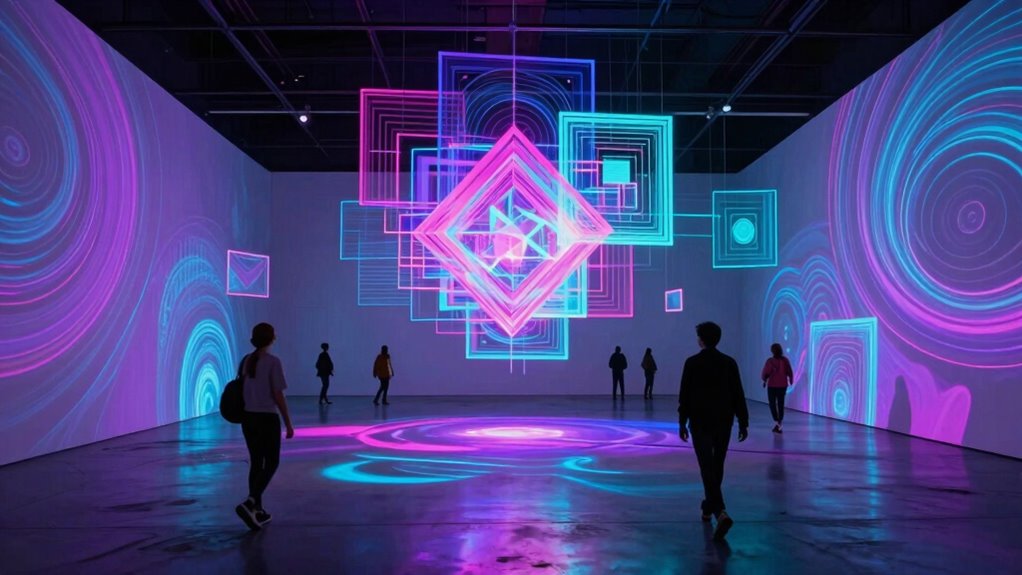
Learning how play transforms passive viewing into active co-creation reveals the true power of serious interactive art experiences.
Browsing Category
Immersive & Interactive Art
105 posts
How Motion Tracking Is Changing Audience Participation
Lifting audience engagement to new heights, motion tracking transforms passive viewers into active participants, promising an exciting evolution in experiences that you’ll want to explore further.
Why Digital Interactivity Can Feel Human When It Is Designed Well
Ongoing thoughtful design can make digital interactions feel human, fostering genuine connections and trust that keep users engaged and coming back.
How Spatial Design Influences Interaction in Installation Art
Discover how spatial design shapes your interaction with installation art and unlocks immersive, emotional experiences that will leave you eager to explore further.
Why Audiences Want to Feel Inside the Artwork, Not Outside It
An immersive connection with artwork fulfills a desire for genuine emotion and understanding, but the true transformation lies in…
The Rise of Temporary Immersive Spaces in Contemporary Culture
Guided by the blend of art, technology, and storytelling, temporary immersive spaces are reshaping culture—discover how they influence our society today.
How Artists Use Light to Sculpt Emotion in Real Time
Ongoing, artists manipulate light to evoke powerful emotions, revealing how luminous design shapes our perceptions and experiences—discover the secrets behind this captivating art.
Why Sound Is Often the Missing Ingredient in Immersive Installations
No matter how stunning your visuals are, neglecting sound can undermine immersion, but understanding why it’s often overlooked reveals the key to truly captivating installations.
How Projection Changes Architecture Into Storytelling Space
Just imagine how projection transforms architecture into immersive storytelling spaces, revealing hidden narratives and engaging emotions like never before.
Why Responsive Environments Create Stronger Viewer Engagement
Many believe responsive environments enhance engagement by creating immersive, adaptive experiences that foster deeper connections—discover how they truly transform interactions.