
Projection mapping allows you to transform ordinary surfaces into mesmerizing visuals without needing a tech degree. You can start with user-friendly software and step-by-step tutorials that guide you through capturing 3D surfaces and designing visuals tailored to their shapes. Experimentation is key, so you can tweak and refine your work to create immersive, dynamic stories. Keep exploring, and you’ll discover how to turn your artistic ideas into impactful visual installations that engage audiences.
Key Takeaways
- Use beginner-friendly software and tutorials to learn projection mapping without needing a technical background.
- Capture and create 3D models of surfaces to design visuals that fit unique shapes and textures.
- Experiment with different surfaces and visuals, refining your work through practice and real-time visualization.
- Explore interactive features like responding to movement or sound to enhance storytelling and audience engagement.
- Focus on creativity and curiosity, as projection mapping emphasizes artistic expression over technical expertise.
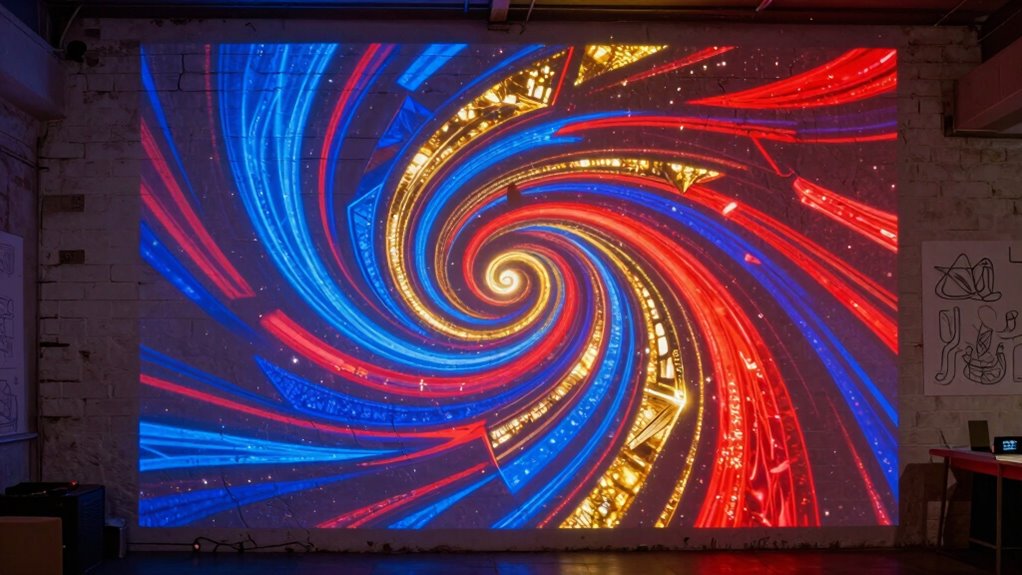
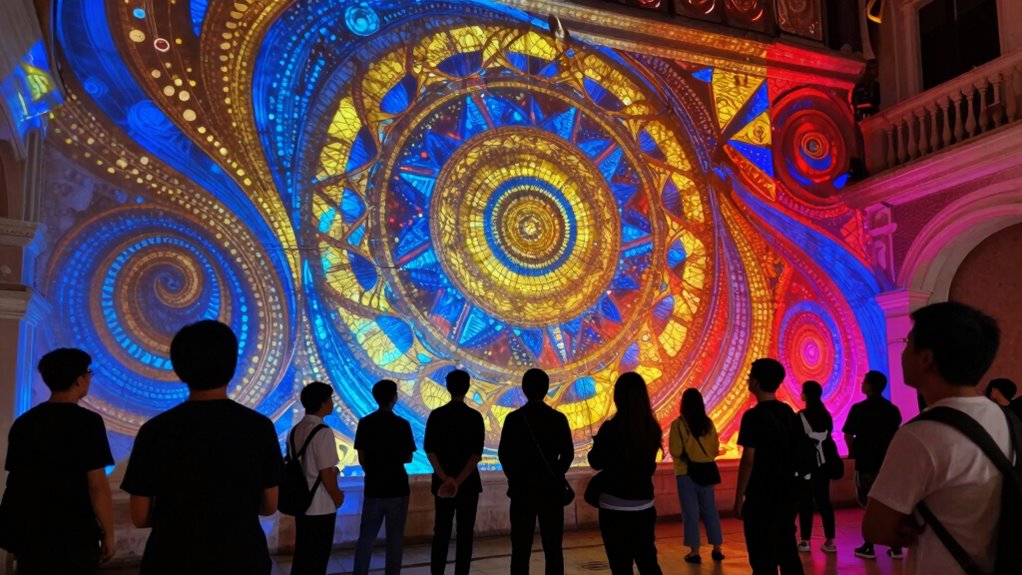
Have you ever wondered how artists transform ordinary surfaces into dynamic, immersive displays? The answer lies in projection mapping, a technique that turns buildings, sculptures, and even everyday objects into canvases for stunning visual stories. As an artist, you don’t need a tech degree to get started. You just need a creative spark and a willingness to learn. Projection mapping allows you to craft interactive installations that captivate audiences, making them part of your storytelling experience. Instead of static art, you create moving images that interact with the surface’s contours, textures, and shapes, adding depth and dimension to your work.
When you plunge into projection mapping, you open the door to visual storytelling like never before. You can use light and imagery to narrate a story, evoke emotions, or highlight specific features of a surface. Imagine transforming a plain wall into a storybook, where each frame unfolds a new chapter through vibrant visuals. Or consider turning a sculpture into a character in a narrative, with projections that animate its form and bring it to life. These installations aren’t just eye candy; they invite viewers to engage emotionally and intellectually with your art. By blending technology with creativity, you craft experiences that are both memorable and meaningful.
Getting started with projection mapping might seem intimidating at first, but it’s more accessible than you think. Many user-friendly software options are available, often with tutorials that guide you through the process step-by-step. You’ll start by capturing a 3D model of your surface or object, then design your visuals to fit its unique shape. When projecting, precise alignment is key—this is where the magic happens, as your visuals seamlessly conform to the surface’s features. The process involves experimentation and tweaking, but it’s rewarding to see your ideas come alive in real time.
As you gain confidence, you can experiment with interactive installations, where your projections respond to movement, sound, or user input. This interactivity amplifies the storytelling, making your audience an active participant. Whether you’re creating immersive exhibitions, live performances, or public art projects, projection mapping opens limitless possibilities. You don’t need a formal background in technology—just curiosity, patience, and a desire to push creative boundaries. With practice, you’ll discover how to craft visual stories that transform environments and captivate viewers, turning ordinary surfaces into extraordinary storytelling platforms.
Frequently Asked Questions
What Are the Basic Skills Needed to Start Projection Mapping?
To start projection mapping, you need basic skills in visual storytelling and creative experimentation. You should understand how to use software like MadMapper or Resolume, and have a good eye for design and timing. Basic knowledge of geometry helps align visuals to physical surfaces. Practice experimenting with different visuals and techniques, and don’t be afraid to explore new ideas—your creativity will make your projections stand out.
How Much Does Equipment for Projection Mapping Typically Cost?
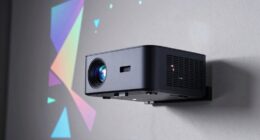
Equipment for projection mapping can range from a few hundred to several thousand dollars, depending on your project needs. You should consider budget considerations when choosing essentials like a projector, sturdy mounting hardware, and a laptop with good processing power. Entry-level setups may cost around $300-$800, while high-end professional equipment can exceed $5,000. Focus on quality essentials first, then expand as your skills and projects grow.
Can I Do Projection Mapping With a Laptop Only?
Yes, you can do projection mapping with just a laptop. You’ll need reliable projection software and good calibration techniques to guarantee your images align perfectly on surfaces. Make sure your laptop has a strong graphics card and enough processing power to handle the software smoothly. With the right setup, you can create impressive projections without needing advanced tech equipment, making it accessible for artists at any level.
What Are Common Mistakes Beginners Make in Projection Mapping?
You might think you’re an instant expert, but beginners often stumble over projection errors and setup oversights. Common mistakes include misaligning projections, ignoring surface textures, and neglecting calibration. You also might overlook power supply needs or forget to test in the actual environment. To avoid these pitfalls, double-check your setup, plan your mapping carefully, and always do a thorough test run before your final presentation.
How Do I Choose the Right Content for My Projection Mapping Project?
You should focus on visual content selection that complements your projection surface and audience. Use projection design principles like contrast, color harmony, and scale to create impactful visuals. Consider the mood or message you want to convey and choose images or animations that enhance that. Keep the content simple yet engaging, ensuring it aligns with your project’s theme and technical capabilities for a seamless and enthralling experience.
Conclusion
Think of projection mapping as your artistic compass, guiding you through uncharted creative waters. Just like a seasoned sailor uses the stars to navigate, you’ll chart your unique vision onto any surface, transforming ordinary into extraordinary. Embrace this tool as your vessel, steering your ideas with confidence and curiosity. With each projection, you’re not just decorating space—you’re crafting a luminous map of your imagination, inviting others to explore the depths of your artistic universe.