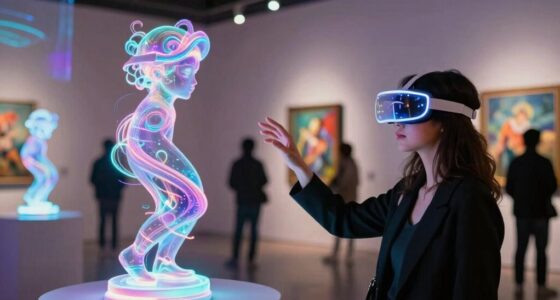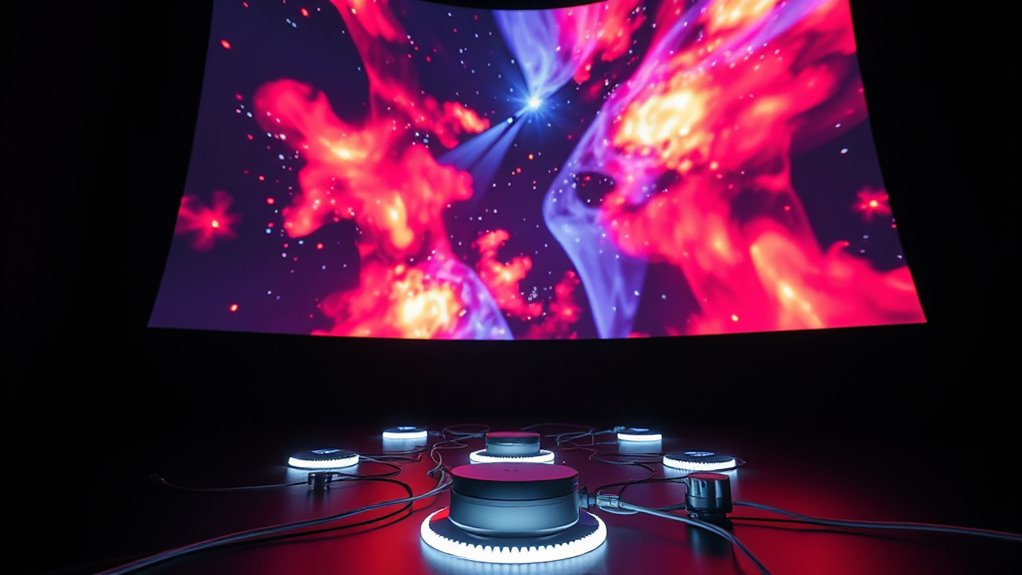

Immersive installations use a combination of advanced technologies like high-resolution projectors, sensors, and specialized hardware to create engaging environments. Motion detectors, depth cameras, and infrared sensors track your movements and responses in real time, allowing visuals, sound, and tactile effects to adapt seamlessly. Sophisticated software and AI coordinate these components, crafting dynamic experiences that respond to your presence and actions. If you continue exploring, you’ll discover how these technologies work together to produce stunning immersive worlds.
Key Takeaways
- Interactive projections and visuals respond dynamically to user movements, sounds, and gestures using high-resolution projectors and sensors.
- Sensors like motion detectors, depth cameras, and infrared sensors enable real-time spatial tracking and gesture recognition.
- Multisensory integration combines lighting, sound, tactile feedback, and scent to create immersive, emotionally resonant environments.
- Sophisticated software platforms coordinate hardware components and adapt content via AI and machine learning for unique experiences.
- Advanced hardware such as high-quality projectors, custom sensors, and sound systems work together to produce cohesive, immersive environments.
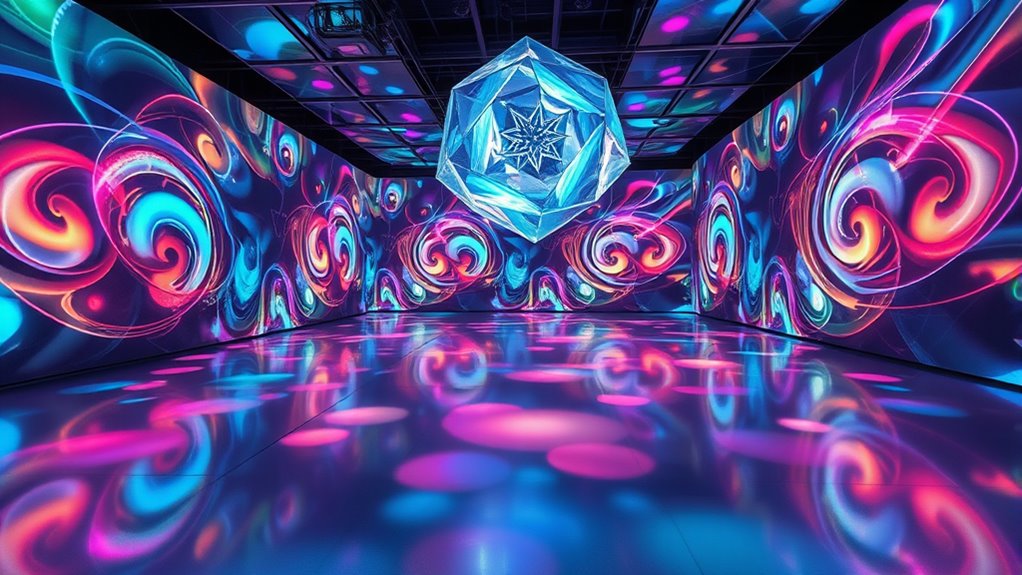
Immersive installations rely on a blend of cutting-edge technologies to transform physical spaces into mesmerizing experiences. At the core of many of these environments are interactive projections that respond to your movements, sounds, or even gestures. These projections create dynamic visuals that seem to breathe and evolve with your presence, blurring the line between the digital and physical worlds. When you step into an immersive installation, you’re not just a passive observer; you become an active participant. Interactive projections use advanced sensors like motion detectors, depth cameras, and infrared sensors to track your position and actions in real time. As you move, the visuals adapt seamlessly, making the experience feel personalized and alive. This real-time responsiveness heightens your engagement and deepens your immersion, making every visit unique.
Sensory integration plays an essential role in elevating these experiences. It’s not enough to just see captivating visuals; it’s about engaging multiple senses simultaneously. Through synchronized lighting, soundscapes, tactile feedback, and even scent delivery, installations create a multisensory environment that pulls you deeper into the narrative or theme. For example, as you walk through a virtual forest, the lighting might mimic sunlight filtering through leaves, while ambient sounds of rustling leaves and distant bird calls surround you. Tactile elements, like textured surfaces or gentle vibrations, further heighten the realism. Sensory integration ensures that each element complements the others, making the experience more convincing and emotionally resonant. This multisensory approach taps into your natural perception, making the environment feel tangible and immediate.
Additionally, understanding store hours can help visitors plan their visits more effectively, especially when these installations are located within larger shopping centers or malls that may have specific operating times. In many cases, sophisticated software platforms orchestrate these elements, blending visual projections, sound design, and physical effects to craft a cohesive experience. These systems often incorporate AI and machine learning algorithms to adapt content based on your interactions, ensuring that no two visits are exactly alike. The hardware involved ranges from high-resolution projectors and sound systems to custom-built sensors and controllers that translate physical actions into digital responses. It’s a complex dance of hardware and software working together to create environments that are both technically impressive and emotionally engaging. When you’re immersed in such an environment, you’re experiencing the culmination of these technological innovations working in harmony, all designed to enthrall your senses and transport you to another world.
Frequently Asked Questions
How Do Immersive Installations Adapt for Accessibility?
You can adapt immersive installations for accessibility by incorporating assistive technologies like audio descriptions, tactile interfaces, and sign language options. Emphasizing inclusive design guarantees everyone, regardless of ability, can experience the installation. You might add adjustable lighting, subtitles, or sensory-friendly zones to accommodate diverse needs. By actively integrating these features, you create an engaging, accessible environment that welcomes all visitors and enriches their experience.
What Are the Environmental Impacts of Immersive Technology?
You should consider the environmental impacts of immersive technology by focusing on sustainable materials and reducing energy consumption. Using eco-friendly materials minimizes waste and pollution, while optimizing energy use helps lower your carbon footprint. Be mindful of the power demands of high-tech components like projectors and sensors, and explore renewable energy options. Incorporating sustainable practices guarantees your immersive installations are environmentally responsible and contribute positively to the planet.
How Do Artists Customize Immersive Experiences for Different Audiences?
You customize immersive experiences by tailoring interactive storytelling and sensory engagement to your audience’s preferences. Studies show 78% of viewers respond better to personalized content, so you adjust elements like visuals, sounds, and narratives to resonate with different groups. By analyzing audience feedback and behaviors, you create unique, engaging environments that captivate diverse viewers, ensuring each experience feels meaningful and memorable for everyone.
What Is the Future of AI in Immersive Installations?
The future of AI in immersive installations looks exciting, as machine learning will enable you to create increasingly personalized experiences. You’ll see sensory integration improve, allowing the environment to adapt seamlessly to your reactions and preferences. AI will analyze your interactions in real-time, making installations more dynamic and engaging. This technology will empower artists to craft immersive worlds that respond uniquely to each visitor, enhancing emotional and sensory impact.
How Do Cost Considerations Influence Immersive Installation Design?
A penny saved is a penny earned, and this rings true in immersive installation design. You should carefully consider budget constraints and material selection, as they directly impact your project’s scope and quality. By prioritizing cost-effective materials and creative solutions, you can maximize impact without overspending. Thoughtful planning helps you balance innovation and affordability, ensuring your immersive experience is engaging while staying within your financial limits.
Conclusion
As you explore immersive installations, you’ll realize how cutting-edge technology transforms spaces into mesmerizing worlds. Did you know that the global market for immersive experiences is projected to reach over $250 billion by 2028? This rapid growth highlights how technological innovation continues to revolutionize art and entertainment. Embrace these advancements, and you’ll discover endless possibilities for creating unforgettable, sensory-rich environments that captivate audiences like never before.