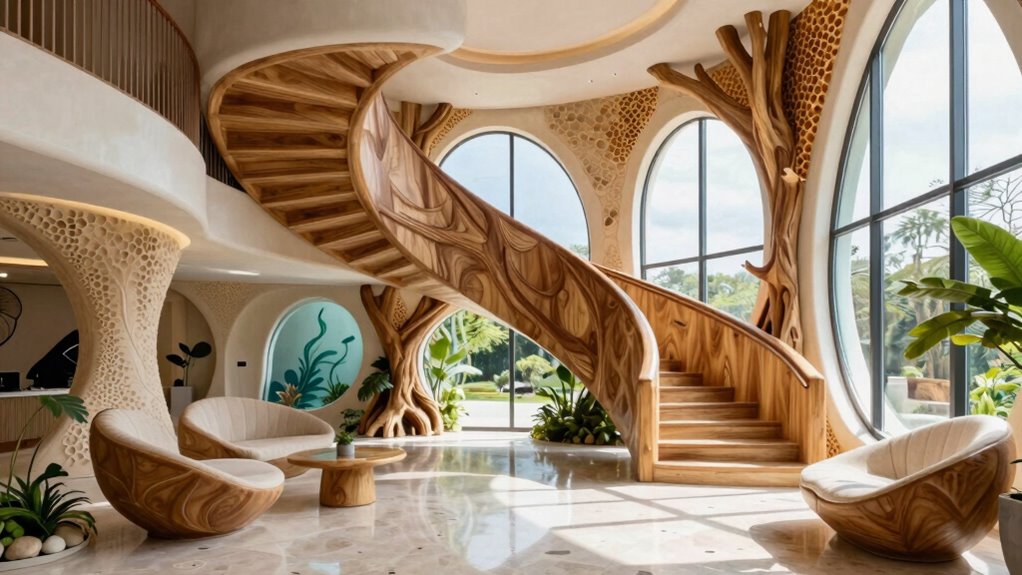

Bio-inspired design influences your interiors and objects by incorporating sustainable materials like bamboo and recycled wood, making spaces more eco-friendly. It introduces adaptive aesthetics, such as furniture that responds to your posture and lighting that mimics natural sunlight. Natural forms and patterns inspire innovative textures and shapes, creating environments that feel alive and harmonious. If you explore further, you’ll discover how these designs blend functionality with beauty, shaping the future of sustainable, responsive spaces.

Get the latest gadgets delivered free with Prime
- Fast, free delivery on millions of items
- Prime Video, Amazon Music and more included
- Member-only deals all year
Key Takeaways
- Incorporates sustainable, natural materials like bamboo and recycled wood to create eco-friendly interiors and objects.
- Uses adaptive aesthetics to design versatile, responsive environments that adjust to user needs and natural conditions.
- Mimics natural forms and functions, such as flower-shaped lighting or leaf-inspired textures, for aesthetic and practical benefits.
- Promotes environmental resilience and longevity through designs that emphasize circular reuse and durability.
- Creates immersive, dynamic spaces that evoke natural rhythms, enhancing user experience and fostering a connection to nature.
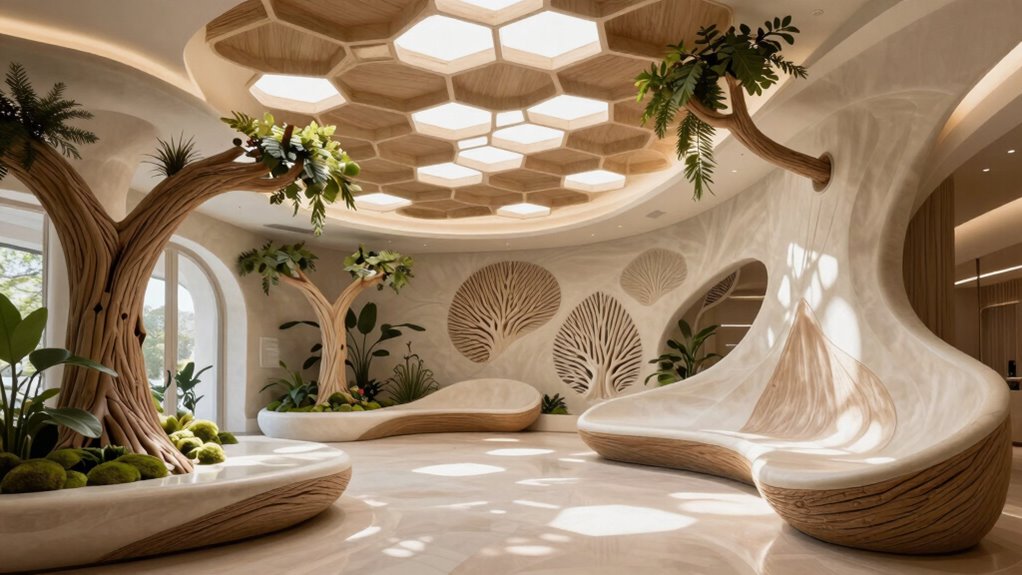
Nature has long been a source of inspiration for innovative design, offering solutions that are both functional and aesthetically pleasing. When you look at how designers incorporate bio-inspired principles into interiors and objects, you’ll notice a focus on sustainable materials and adaptive aesthetics. These elements aren’t just trendy — they’re vital for creating spaces and products that align with environmental values while also enhancing your daily experience.
Nature’s inspiration drives sustainable, adaptive design that enhances daily life and honors environmental values.
Sustainable materials play an essential role in bio-inspired design because they mimic natural processes and materials that have evolved for efficiency and durability. For example, you might see the use of bamboo, cork, or recycled wood in furniture, reflecting nature’s own resourcefulness. These materials aren’t just environmentally friendly; they often boast unique textures and visual qualities that make your space feel more organic and connected to nature. By choosing sustainable options, you’re not only reducing your carbon footprint but also supporting a circular approach to design, where materials are reused and repurposed rather than discarded. Incorporating eco-friendly materials can also inspire a deeper appreciation for the beauty and resilience of natural systems. Additionally, understanding how natural systems function can help designers create more efficient and resilient products that stand the test of time. Recognizing these principles can lead to more innovative design solutions that prioritize longevity and adaptability. Embracing natural principles in design encourages a holistic approach that benefits both the environment and the end user.
Adaptive aesthetics is another key concept that shapes bio-inspired interiors and objects. This approach emphasizes designs that can respond to changing needs or environments, much like how living organisms adapt to their surroundings. Imagine furniture that adjusts to your posture or lighting systems that mimic the changing patterns of sunlight. These adaptive features make your space more versatile and responsive, improving comfort and functionality. It’s about creating environments that feel alive, dynamic, and tailored to your lifestyle, rather than static and rigid. The integration of adaptive features also encourages a more sustainable approach, as it reduces the need for frequent replacements or major redesigns.
You’ll also notice how bio-inspired design often employs biomimicry — copying nature’s solutions to solve human challenges. Think of a ceiling light that resembles a blooming flower or a wall texture inspired by the intricate patterns of a leaf. These designs not only serve practical purposes but also evoke a sense of wonder and connection to the natural world. The integration of biomimicry in design encourages a deeper understanding of natural systems and principles, leading to more innovative and sustainable solutions. The result is a harmonious blend of form and function that feels both innovative and familiar.
In essence, bio-inspired design elevates your environment by integrating sustainable materials that honor the planet and adaptive aesthetics that respond to your needs. It encourages you to see everyday objects and spaces as part of a larger, living system — one that’s beautiful, efficient, and sustainable. This approach doesn’t just change how interiors look; it transforms how you experience and interact with your surroundings, making design more meaningful and aligned with the natural rhythms of life.
As an affiliate, we earn on qualifying purchases.
Frequently Asked Questions
How Does Bio-Inspired Design Impact Sustainability in Interior Spaces?
Bio-inspired design boosts sustainability in interior spaces by promoting natural aesthetics and material innovation. You’ll notice how these designs mimic nature’s efficient systems, reducing waste and energy use. By choosing sustainable materials inspired by natural processes, you minimize environmental impact. This approach encourages eco-friendly choices, making your space more sustainable while maintaining beauty and functionality. Ultimately, it helps create interiors that are both visually appealing and environmentally responsible.
What Are the Cost Implications of Implementing Bio-Inspired Materials?
Implementing bio-inspired materials can seem like planting a seed that takes time to grow. You’ll see higher initial manufacturing costs due to advanced techniques and specialized processes. However, their material durability often leads to longer-lasting products, reducing replacement costs over time. While upfront expenses are higher, the sustainability benefits and longevity can balance costs, making these innovative materials a wise investment in the long run.
How Do Bio-Inspired Designs Influence User Well-Being and Comfort?
Bio-inspired designs boost your well-being and comfort by aligning with biophilic psychology principles, which connect you to nature. You’ll notice improved mood and reduced stress in spaces that incorporate natural elements and organic forms. These designs promote ergonomic harmony, ensuring furniture and layouts support your body comfortably. By mimicking nature’s efficient patterns, your environment becomes more soothing and healthful, enhancing your overall sense of relaxation and energy.
Are There Any Limitations to Applying Biological Principles in Design?
You might find that applying biological principles faces material limitations, like replicating complex structures with current manufacturing tech. For example, mimicking a shark’s skin for antimicrobial surfaces is challenging due to material constraints. Aesthetic challenges also arise, as designs inspired by nature may not always match human taste or interior styles. These limitations can hinder the seamless integration of bio-inspired elements, requiring ongoing innovation and adaptation.
How Can Designers Stay Updated on the Latest Bio-Inspired Innovations?
You can stay updated on the latest bio-inspired innovations by attending biomimicry workshops and joining innovation networks. These platforms connect you with experts and showcase cutting-edge research, helping you incorporate new biological principles into your designs. Regularly following industry publications, participating in online forums, and engaging with academic institutions also keep you informed about emerging trends and breakthroughs in biomimicry.
adaptive lighting systems for home
As an affiliate, we earn on qualifying purchases.
As an affiliate, we earn on qualifying purchases.
Conclusion
As you see, bio-inspired design is transforming interiors and objects in ways that feel natural and innovative. By drawing from nature’s genius, you can create spaces and items that are both functional and inspiring. It’s like nature’s blueprint is right at your fingertips, ready to be turned into something extraordinary. Embracing these designs means you’re planting seeds for a future where beauty and sustainability grow side by side, proving that sometimes, the best ideas are rooted in the natural world.
natural pattern textured wallpaper
As an affiliate, we earn on qualifying purchases.
As an affiliate, we earn on qualifying purchases.
As an affiliate, we earn on qualifying purchases.
Fall Picks
fall essentials
As an affiliate, we earn on qualifying purchases.