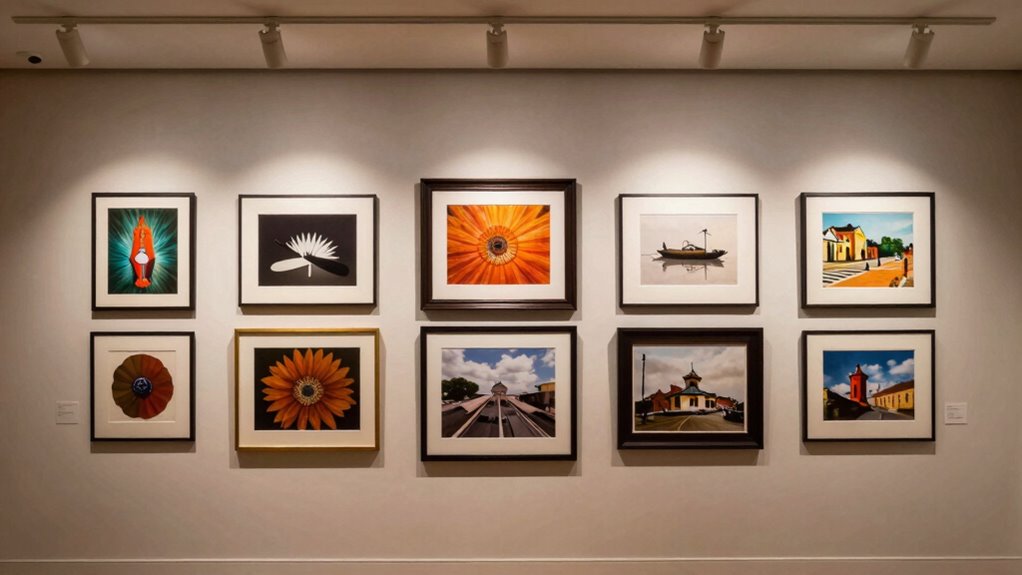
To light your gallery wall like a museum without renovations, start by installing LED strip lighting along the top or bottom edges for even, subtle illumination. Add adjustable spotlights focused directly on the artwork for highlights and depth. Use layered lighting with both options to create a balanced, inviting atmosphere. This simple setup dramatically enhances your display’s appearance and ambiance, and exploring these techniques further will help you achieve a professional, museum-quality look with ease.
Key Takeaways
- Install LED strip lighting along the top or bottom edges of the gallery wall for even, subtle illumination.
- Use small, adjustable spotlights mounted on ceilings or walls to focus light directly on artwork.
- Layer lighting by combining LED strips with spotlights to create depth, reduce shadows, and enhance details.
- Position lighting fixtures at appropriate heights and angles to prevent glare and highlight key pieces effectively.
- Keep installation simple with minimal tools to transform your wall into a museum-quality display without renovations.
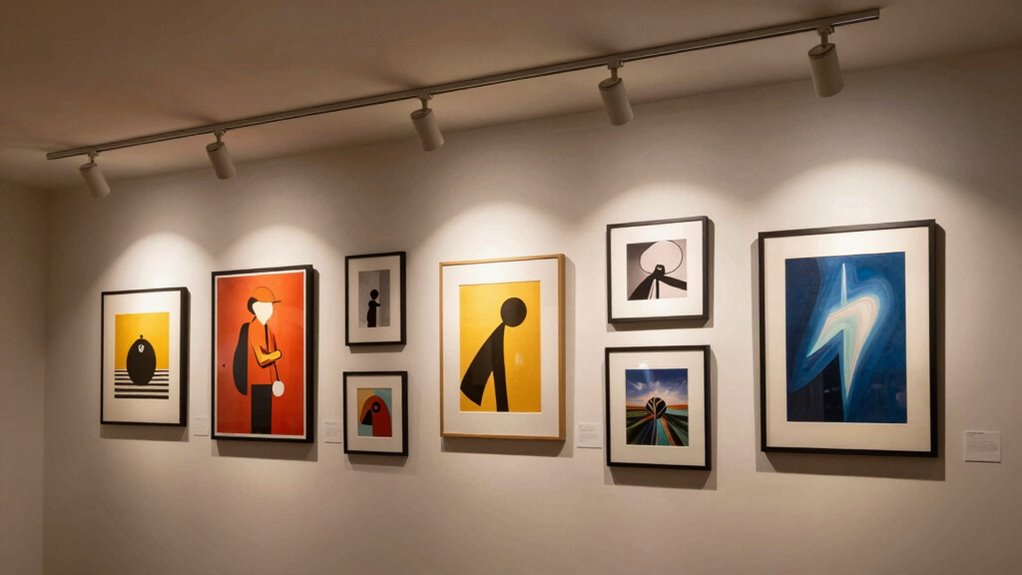
A well-lit gallery wall can transform a room from ordinary to extraordinary, highlighting your favorite artwork and photos. The key to achieving this effect lies in thoughtful lighting that emphasizes each piece without overwhelming the space. You don’t need a renovation to mimic museum-quality lighting—simple strategies can make a significant difference. One effective approach is to incorporate LED strip lighting along the top or bottom edges of your gallery wall. These flexible strips are easy to install, provide smooth, even illumination, and can be concealed behind frames or molding for a sleek look. They’re adjustable, so you can set the brightness to suit the ambiance you want to create. LED strip lighting not only highlights your artwork but also adds a modern, sophisticated touch to the room. Energy-efficient lighting options like LED strips are an environmentally friendly choice that supports sustainable design.
Enhance your gallery wall with LED strip lighting for a sleek, modern glow that highlights your artwork effortlessly.
Spotlight placement is equally vital. Instead of relying solely on ambient lighting, strategically position small, adjustable spotlights to cast focused beams on individual pieces. Aim the lights directly at each artwork, ensuring the illumination is even and free of glare. You might mount these spotlights on the ceiling or wall, angling them to highlight specific areas. Using adjustable fixtures allows you to change the focus as your collection evolves or as you rearrange your gallery wall. When positioning spotlights, consider the height and angle to prevent harsh shadows or reflections, especially on glass or glossy surfaces. Proper placement creates depth and dimension, making each piece stand out.
Combining LED strip lighting with spotlight placement offers a layered lighting effect that mimics gallery lighting. The strip provides soft, ambient illumination along the edges, while the spotlights deliver targeted highlights. This setup ensures your artwork is well-lit from multiple angles, reducing shadows and enhancing details. It also allows you to customize the lighting mood—brighter for viewing details or dimmer for a cozy, intimate feel. When planning your lighting, remember to test different angles and intensities to find what best showcases your collection.
In essence, effective lighting for a gallery wall involves a mix of subtle LED strip lighting and carefully positioned spotlights. These techniques are simple to implement and require minimal tools, yet they dramatically elevate the presentation of your artwork. With a little planning, you can create a striking display that rivals museum exhibits, all without any major renovations. The right lighting not only highlights your favorite pieces but also creates an inviting atmosphere that invites admiration and conversation.
Frequently Asked Questions
Can I Use Colored or Tinted Lights for My Gallery Wall?
Yes, you can definitely use colored lighting or tinted illumination for your gallery wall. It adds a creative touch and highlights specific pieces or moods. Just make certain the colors complement your artwork and don’t overpower it. Use LED lights with adjustable colors to easily switch between different hues. This way, you can create dynamic displays and enhance your gallery’s aesthetic without any major renovations, giving your wall a unique, museum-like vibe.
How Do I Prevent Light Damage to Delicate Artwork?
Protect your precious pieces by preventing light damage with proper precautions. Use UV protection to shield delicate artwork from harmful rays, and keep light intensity low to prevent fading and deterioration. Position lights carefully, avoiding direct hits, and opt for soft, diffused lighting. Regularly check and adjust to guarantee your artwork stays vibrant and undamaged, creating a enthralling, cared-for collection that stands the test of time.
What Is the Ideal Color Temperature for Gallery Wall Lighting?
You should aim for LED bulbs with a color temperature around 3000K to 3500K for your gallery wall. This range offers warm, natural light that enhances artwork without causing damage. Make sure your LED bulbs have high color rendering (CRI 90+), so colors appear true and vibrant. This combination creates a museum-like ambiance, highlighting your pieces beautifully while protecting delicate art from harsh, damaging light.
How Often Should I Replace or Upgrade My Gallery Lighting?
You should replace or upgrade your gallery lighting every 3 to 5 years to guarantee ideal art preservation and lighting maintenance. Over time, bulbs dim or change color temperature, diminishing the impact of your display. Regular checks reveal when fixtures no longer provide consistent illumination or start to flicker. Staying proactive keeps your gallery vibrant and preserves your artwork’s integrity, ensuring your space always feels fresh and inspiring.
Are There Wireless or Smart Lighting Options Available?
Yes, you can choose wireless or smart lighting options for your gallery wall. Smart bulbs work seamlessly with wireless controls like apps or voice assistants, allowing you to adjust brightness and color easily. These options give you flexibility without needing to rewire or renovate. You can create perfect lighting for your artwork, set schedules, or change moods effortlessly, making your gallery wall look professional and dynamic with minimal effort.
Conclusion
Lighting your gallery wall like a museum transforms your space and highlights your artwork beautifully. Did you know that proper lighting can increase the perceived value of art by up to 40%? By using adjustable spotlights or picture lights, you can create a professional, gallery-like ambiance without renovations. So go ahead, experiment with your lighting setup, and enjoy showcasing your favorites in the best possible light—your guests will be impressed!