To seamlessly integrate indoor and outdoor spaces, use consistent materials, colors, and design elements to create a unified look. Incorporate large doors or windows that open to extend your living area outdoors. Add outdoor lighting to highlight landscape features and create ambiance. Include functional elements like fire pits or kitchens that connect with indoor zones. With careful planning, your yard will feel like a natural extension of your home—more details await to inspire your perfect design.
Key Takeaways
- Use consistent materials, colors, and design elements to create visual harmony between indoor and outdoor spaces.
- Incorporate large doors or sliding windows to facilitate seamless transitions and open up indoor areas to the yard.
- Design outdoor areas with similar aesthetic themes and furnishings to extend the home’s style outside.
- Integrate outdoor lighting that highlights landscape features and ensures safety, creating a cohesive ambiance.
- Plan functional elements like outdoor kitchens or seating that connect smoothly with indoor living zones.
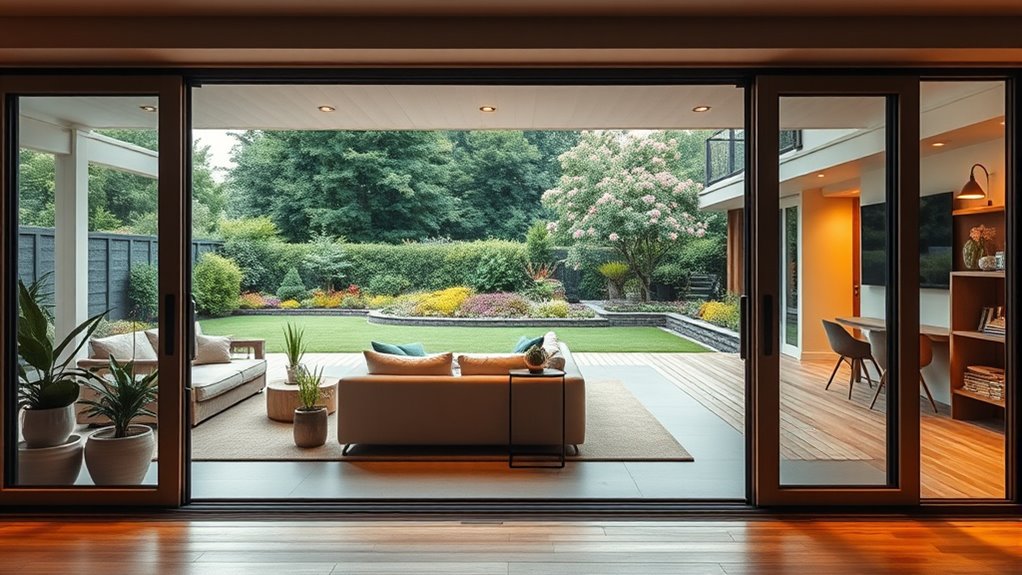
Creating a seamless connection between indoor and outdoor living spaces can greatly enhance your home’s functionality and aesthetic appeal. When you focus on effective landscape design, you transform your yard into an extension of your home, making it a versatile space where you can relax, entertain, and enjoy nature. To achieve this, start by considering how your outdoor area flows naturally from your interior. Use similar materials, colors, and design elements that complement your indoor decor, creating a cohesive look that blurs the boundaries between inside and out. Pathways, patios, and garden beds should integrate smoothly with your home’s architecture, encouraging easy movement and visual harmony.
Seamlessly connect indoor and outdoor spaces with cohesive design and thoughtful landscaping.
Incorporating outdoor lighting plays a vital role in this integration. Well-placed lighting not only boosts safety and visibility but also highlights your landscape features, creating inviting atmospheres after sunset. Use a mix of ambient, task, and accent lighting to define different zones within your outdoor space. String lights or lanterns can add warmth and charm to seating areas, while spotlights can accentuate trees, sculptures, or water features. Path lights lining walkways guide guests effortlessly from indoors to outdoors, making the transition seamless and inviting. Thoughtful outdoor lighting increases usability of your outdoor space during evening hours and enhances the overall ambiance, making your backyard feel like a natural extension of your living area. Additionally, selecting appropriate lighting fixtures can further unify indoor and outdoor environments.
Your landscape design should also incorporate functional elements that serve both aesthetic and practical purposes. Consider adding built-in seating, fire pits, or outdoor kitchens that connect with your indoor living areas through large sliding or folding doors. This setup encourages interaction and makes hosting gatherings more fluid. When planning your landscape, think about sightlines from inside your home, ensuring you can enjoy outdoor views from key vantage points. Incorporate plantings that complement your home’s architecture, using greenery and floral accents to soften transitions and add visual interest.
Finally, pay attention to scale and proportion. Your outdoor furniture, plantings, and lighting should be appropriately sized for the space to avoid clutter or awkwardness. Regularly maintaining your landscape design guarantees that all elements stay attractive and functional. When done thoughtfully, integrating your indoor and outdoor spaces creates a harmonious environment that extends your home’s livable area. It invites you to enjoy nature without sacrificing comfort, making every moment spent outside just as cozy and stylish as inside. By focusing on landscape design and outdoor lighting, you turn your yard into a natural extension of your home, enhancing both its beauty and practicality.
Frequently Asked Questions
What Are the Best Materials for Seamless Transitions?
You should choose flooring options like large-format tiles, natural stone, or smooth concrete that create a seamless progression. Opt for colors that coordinate well between indoor and outdoor spaces, such as neutral tones or earthy shades, to enhance flow. These materials and color choices help blend the areas effortlessly, making the transition feel natural and inviting. Focus on consistency in texture and hue to achieve a cohesive, integrated look.
How Can I Enhance Outdoor Privacy?
You can enhance outdoor privacy by using strategic landscaping and privacy screens. Plant tall shrubs, trees, or hedges to create natural barriers that block views without sacrificing beauty. Incorporate privacy screens made of wood, metal, or fabric to add a stylish touch and immediate seclusion. Combining these landscaping strategies with privacy screens guarantees your outdoor space feels intimate and protected, perfect for relaxing or entertaining without worry.
What Lighting Options Work Best for Outdoor Spaces?
Did you know that landscape lighting can extend your outdoor space by up to 50%? For your outdoor areas, solar-powered fixtures are a smart choice—they’re eco-friendly and cost-effective. Use string lights for ambiance, spotlights to highlight features, and pathway lights for safety. Combining these options creates a warm, inviting atmosphere and seamlessly connects your indoor and outdoor living spaces, making them perfect for relaxing evenings or entertaining guests.
How Do I Maintain Indoor-Outdoor Temperature Consistency?
To maintain indoor-outdoor temperature consistency, you should focus on effective climate control and insulation solutions. Use high-quality insulation in walls, floors, and ceilings to prevent heat loss or gain. Install weatherproof doors and windows that seal tightly, and consider adding retractable or sliding glass panels for flexibility. Incorporate ceiling fans or heaters as needed, ensuring your space stays comfortable year-round by blocking drafts and regulating temperatures efficiently.
Are There Design Styles That Integrate Both Areas Effectively?
You can achieve architectural harmony by choosing design styles like Mediterranean or modern farmhouse that blend indoor and outdoor spaces effortlessly. Use color coordination to create visual continuity, such as matching wall tones or complementary accents. Incorporate large glass doors or retractable walls to blur boundaries, ensuring both areas feel connected. These strategies help your design style integrate both spaces effectively, creating a seamless progression that feels natural and inviting.
Conclusion
By blending your indoor and outdoor spaces seamlessly, you create a haven where sunlight spills in and gentle breezes drift through open doors. Imagine lounging on your patio as the warm glow of sunset filters inside, casting a cozy glow on your living room. This harmony transforms your home into a sanctuary of comfort and nature, inviting you to enjoy every moment, whether indoors or out. It’s a space where the indoors and outdoors truly become one.