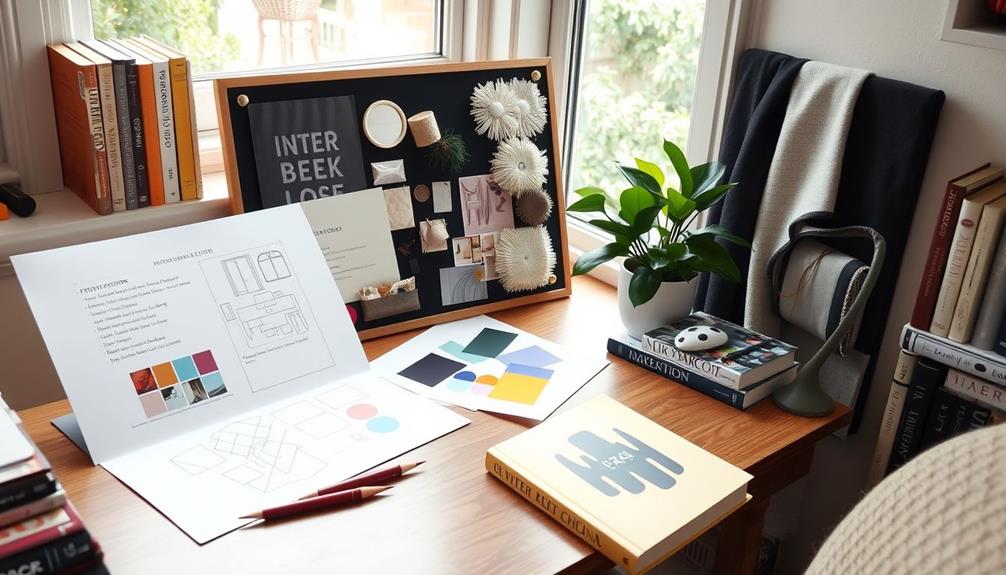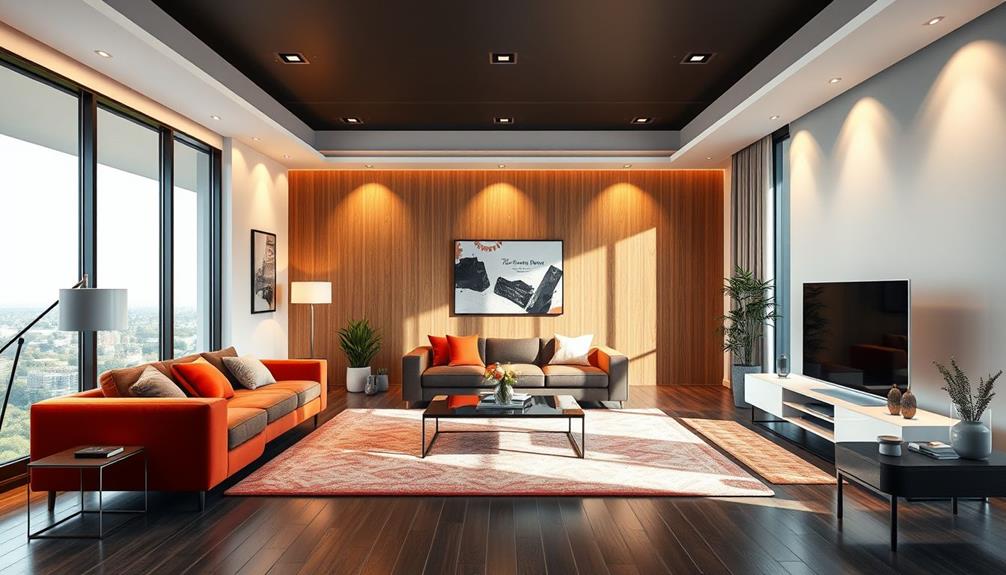

Layering materials in your interior creates a more sophisticated look by adding depth, texture, and visual interest. By combining smooth surfaces with tactile ones and balancing transparency with reflectivity, you craft a curated and inviting space. Using a cohesive color palette ties everything together, while thoughtful lighting highlights textures and enhances the layered effect. This careful interplay of materials transforms an ordinary room into a polished, refined environment—if you want to explore how this all works, there’s more to discover.

Get the latest gadgets delivered free — and shop member deals
- Fast, free delivery on millions of items
- Access to Prime Big Deal Days deals on October 6–7
- Prime Video, Amazon Music and more included
Key Takeaways
- Layering different textures adds visual depth and tactile interest, enhancing the sophistication of the space.
- Using a cohesive color palette across materials maintains harmony while highlighting individual textures.
- Combining transparency, reflectivity, and weight creates multi-dimensionality and a curated aesthetic.
- Thoughtful material interactions reflect light uniquely, enriching the overall ambiance and elegance.
- Strategic lighting accentuates layered textures and colors, completing a refined and inviting interior.
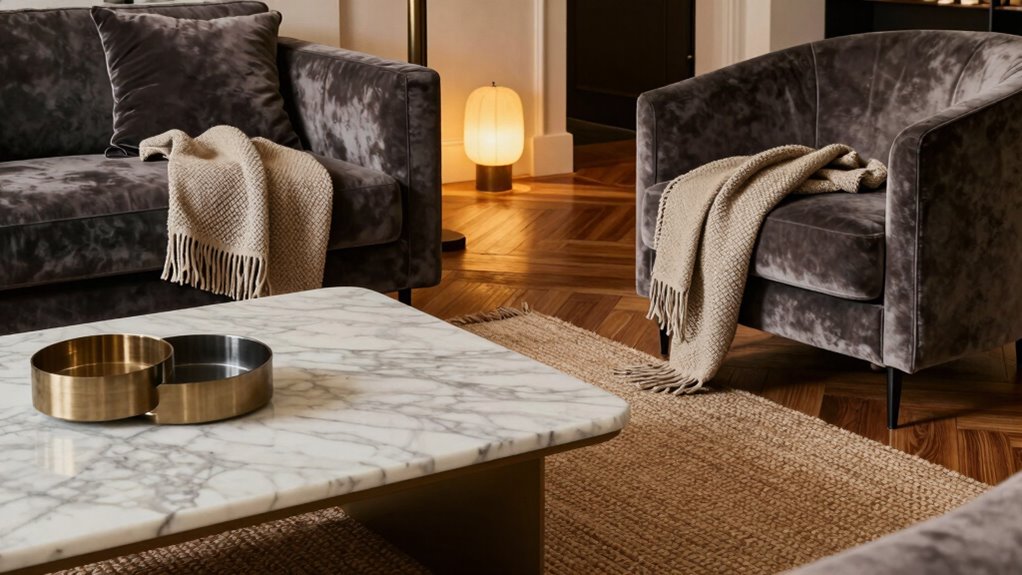
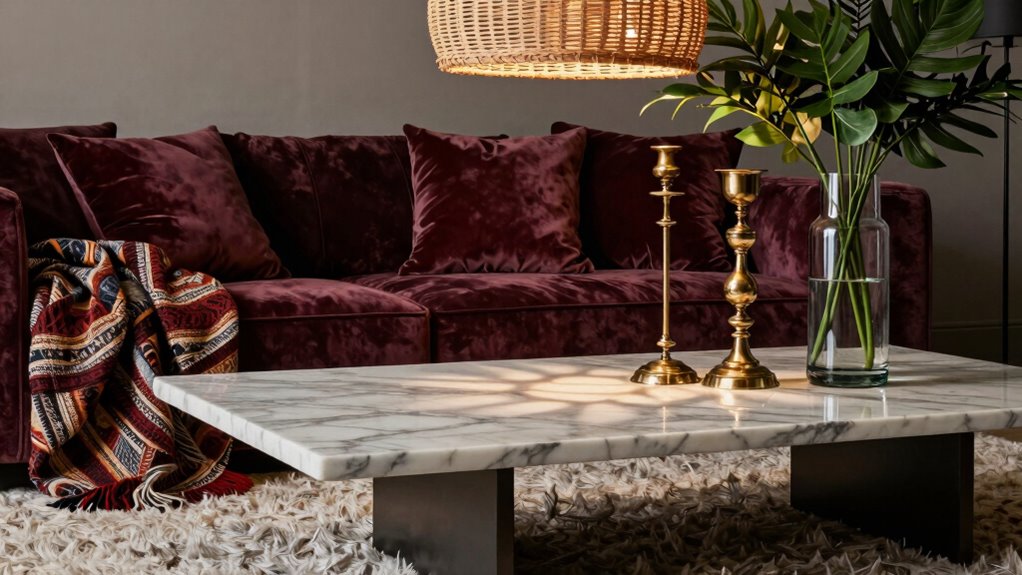
Have you ever wondered how designers create spaces that feel rich and inviting? The secret often lies in layering materials thoughtfully, which adds depth and sophistication to any interior. When you combine different textures and materials, you craft a space that engages the senses and exudes a curated, intentional vibe. One of the key elements in this process is achieving textural contrast. By mixing smooth surfaces with rough or tactile ones, you create visual interest and a dynamic atmosphere. For instance, pairing a sleek marble countertop with a rustic wooden accent wall immediately draws attention and invites touch, making the space more engaging. Textural contrast isn’t just about visual variety; it also adds a sense of balance. You can soften a hard, glossy surface with plush textiles or rougher finishes, creating a layered look that feels both polished and inviting. Incorporating visual interest through material contrast enhances the overall aesthetic and keeps the space lively. Color harmony plays an equally important role in this process. When you layer materials, you want the colors to work together seamlessly to prevent the space from feeling disjointed. Using a cohesive color palette across different textures ensures that each element complements the others, enhancing the overall sophistication. For example, choosing shades of beige and taupe for fabrics, wood, and ceramics creates a harmonious backdrop that feels warm and refined. Even when contrasting textures are present, sticking to a consistent color scheme keeps everything unified. This approach allows you to highlight individual materials without overwhelming the senses, resulting in a balanced, elegant environment. Layering materials also gives you the opportunity to play with transparency, reflectivity, and weight. Combining a glass pendant light with soft fabric curtains or a velvet sofa paired with matte metal accents creates a multi-dimensional space. These layers work together to add complexity and richness, making the interior feel thoughtfully curated rather than cluttered. Incorporating texture mixing can further elevate the design, as it encourages a thoughtful combination of different finishes and surfaces. Understanding how different materials interact and reflect light can help you create a cohesive look that feels intentional and harmonious. When you carefully select and layer materials, you’re fundamentally telling a visual story—each element contributes to the narrative of the space. You can evoke warmth, serenity, or modernity, depending on your choices. A keen eye for material selection is essential to achieve a cohesive and polished look. Additionally, paying attention to the lighting design ensures that the textures and colors are showcased in the best possible way, enhancing the layered effect. Ultimately, creating a sophisticated interior through layering materials requires a keen eye for detail and a balanced approach. It’s about blending textures that contrast yet complement each other, and choosing colors that unify the entire look. When done correctly, this layering transforms a simple room into an environment that feels both luxurious and comfortable, encouraging you to linger and enjoy its nuanced beauty.
As an affiliate, we earn on qualifying purchases.
Frequently Asked Questions
How Do I Choose the Right Materials to Layer Effectively?
To choose the right materials for effective layering, start by considering material texture—mix smooth with rough to add visual interest. Aim for design cohesion by selecting colors and styles that complement each other. Think about the overall aesthetic you want and balance different textures and materials accordingly. Trust your instincts, and don’t be afraid to experiment until you find a combination that feels both sophisticated and inviting.
What Are Common Mistakes to Avoid When Layering Materials?
Like a vintage typewriter, avoid overdoing texture contrast and clashing colors. You should stay away from mixing too many bold patterns or textures that compete rather than complement. Keep an eye on color harmony to make certain your layered materials work together seamlessly. Don’t ignore scale or proportion, as mismatched elements can look chaotic. Focus on balance, and you’ll prevent your interior from feeling cluttered or disjointed.
How Does Lighting Impact Layered Interior Designs?
Lighting plays a crucial role in layered interior designs by enhancing textures and materials. You should use ambient lighting to create a warm, inviting atmosphere, highlighting the depth of layered elements. Natural illumination also boosts the overall appeal, making the space feel more vibrant and dynamic. Proper lighting accentuates the sophistication of your layered materials, ensuring each element complements the others and adds to the overall aesthetic.
Can Layering Materials Improve Acoustic Comfort in a Space?
Yes, layering materials can considerably improve acoustic comfort in a space. By combining different textures like soft fabric panels, acoustic tiles, and textured wall coverings, you enhance sound absorption, reducing echo and noise. You actively control the acoustics by selecting materials with varied textures and densities, creating a more comfortable environment. This thoughtful layering not only dampens sound but also adds visual interest, making your space feel more sophisticated and inviting.
How Do I Balance Cost When Layering High-End and Affordable Materials?
To balance cost when layering high-end and affordable materials, you should focus on cost-effective strategies like mixing durable, budget-friendly options with select luxury elements. Prioritize using durable materials in high-traffic areas to guarantee longevity, while incorporating high-end accents in focal points for sophistication. This approach maximizes visual impact without overspending, allowing you to create layered, refined interiors that blend luxury and practicality seamlessly.
As an affiliate, we earn on qualifying purchases.
Conclusion
By layering materials thoughtfully, you can transform any space into a sophisticated haven. This technique adds depth, texture, and visual interest that instantly elevates your interior design. Did you know that homes with well-layered interiors tend to feel 30% more inviting and comfortable? So, don’t be afraid to experiment with different fabrics, finishes, and textures. With a little effort, you’ll create a stylish, inviting space that reflects your unique personality and taste.
As an affiliate, we earn on qualifying purchases.
As an affiliate, we earn on qualifying purchases.
Halloween Picks
halloween
As an affiliate, we earn on qualifying purchases.