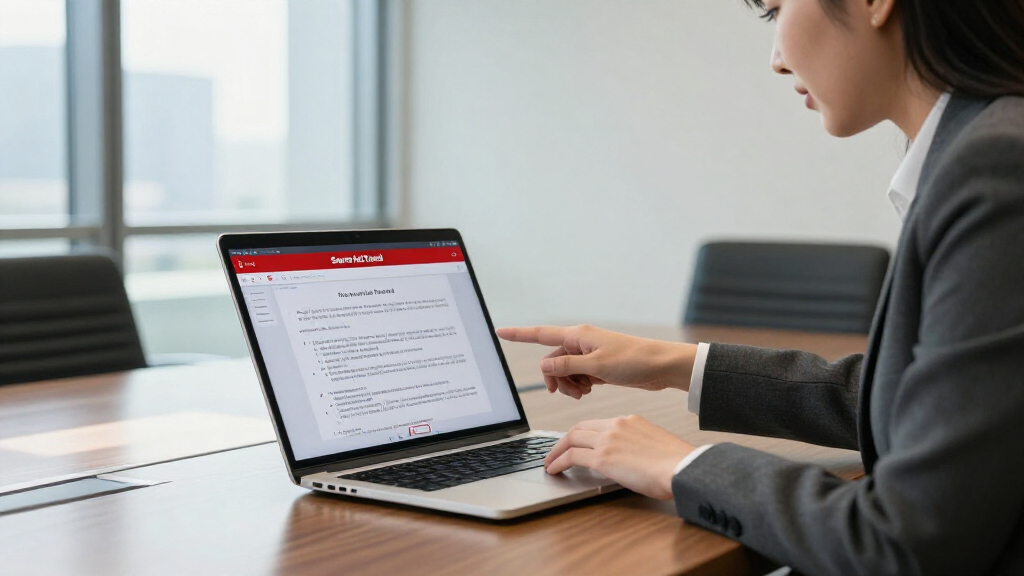

🔍 Read the full analysis: AI And Fake Legal Citations In Korea: Views From 360 Judges on ThorstenMeyerAI.com

Get the latest gadgets delivered free with Prime
- Fast, free delivery on millions of items
- Prime Video, Amazon Music and more included
- Member-only deals all year
TL;DR
South Korea’s National Court Administration published a survey in which 360 judges reported encountering fake or distorted legal citations in court filings. The results point to nonexistent cases, misrepresented real decisions and material submitted by both litigants and lawyers; the administration plans to propose procedural-law changes allowing fines.
South Korea’s National Court Administration said a survey of 360 judges found that false or distorted legal citations had appeared in court filings, prompting strong support for institutional safeguards. About 80% of responding judges handling civil, family and administrative cases said they had encountered such citations, and the administration plans to propose legal changes that would allow courts to impose fines.
The survey ran from October 6 to 16, 2026, and included judges from courts at all levels. The administration published the results on November 2. Among judges who reported seeing false citations, 196 (80.7%) identified precedents that did not exist, while 159 (65.4%) identified real precedents cited with false content. Respondents could select more than one type.
The headline figure needs its denominator. The roughly 80% finding applies to responding civil, family and administrative judges, not all 360 survey participants. The Korean daily Kyunghyang Shinmun reported that 243 of the 360 respondents, or 67.5%, had encountered fake citations. That overall figure is not printed in the administration’s release, though it matches the reported counts.
Judges said the material came from both litigants and legal representatives. 164 judges (69.5%) identified parties themselves, and 136 (57.6%) identified lawyers acting as representatives or defense counsel. Those figures reflect judges’ survey responses, not an independently verified count of filings or a finding of professional misconduct.
The administration’s examples include fabricated judgments formatted to resemble Supreme Court decisions, case numbers attached to rulings that could not be found, and real decisions whose holdings were altered or misrepresented. It also described filings containing AI conversation text or litigation-strategy notes left in the document, suggesting that some material may have been copied without careful review.
Why False Citations Burden Courts
False citations can make judges and opposing parties spend time checking authorities that do not exist or verifying whether a real ruling has been described accurately. The administration said such material creates an unnecessary verification burden and can interfere with the speedy progress of trials.
The results also raise questions about responsibility when a filing includes AI-generated material. The survey identifies lawyers as well as unrepresented parties among the reported sources, but does not establish why any particular citation was false, whether AI was used in each instance, or whether a mistake was deliberate. A policy response could affect courtroom practice well beyond AI tools if it creates new duties to check and disclose citations.
91.7% of respondents called for an institutional response, according to the court administration. The most popular proposed measures were a legal basis for fines, selected by 61.4%; a duty to verify cited precedents, selected by 61.1%; and a duty to disclose AI use, selected by 60.6%. These were multiple-choice responses, not enacted rules.
Products Worth Considering

Bose QuietComfort Headphones (2nd Gen), Wireless Over-Ear Noise-Cancelling Headphones, Hazelnut Taupe

DJI Osmo Mobile 8 3-Axis Gimbal Stabilizer for Phones

DJI Osmo Mobile 8 Smartphone Gimbal with Mic Mini Transmitter, Infinity Black
As an affiliate, we earn on qualifying purchases.
How Korea Counted the Reports
The National Court Administration is the administrative arm of South Korea’s Supreme Court. Its Judicial Support Office issued the four-page survey release, titled “Results of the survey on citations of AI-generated false precedents and similar material.” The release said AI hallucinations were producing false or nonexistent precedent citations and described the resulting burden on opposing parties and trial schedules.
The survey measures what judges said they had encountered; it does not measure the share of all court filings containing false citations. The administration did not state how many judges were invited, and the source material does not provide the survey’s full question wording. Those limits make the findings useful as a report of judicial experience, but not a population-wide audit of filings.
One published English account illustrates why source checking matters here. Yonhap’s English version, republished by The Korea Herald, said 164 judges had cited false precedents themselves. The Korean release instead says those judges identified the parties themselves as a source. The distinction changes who the sentence describes; the original wording does not say that judges admitted to citing false material.
The administration’s planned response follows scrutiny of similar problems in other jurisdictions. The source article says courts in New York and London have sanctioned lawyers or referred them to regulators, but does not give details of those cases. It reports that South Korea’s administration plans to propose changes to its Civil and Criminal Procedure Acts to permit fines.
What the Survey Cannot Establish
The survey does not establish how common false citations are across all Korean court filings. It records judges’ reports, and the administration did not say how many judges were invited or provide the full question wording in the available release. The reported percentages also use the respondents to each question as their basis, so figures should not be treated as directly interchangeable.
It is also unclear how many reported citations were generated by AI, how often errors were deliberate, and what consequences followed in individual cases. The examples show that AI-related text and fabricated or distorted authorities have appeared, but the release does not attribute every false citation to an AI system. The proposed fines and other safeguards remain policy proposals, not current requirements.
Proposed Changes to Court Procedure
The National Court Administration plans to propose amendments to South Korea’s Civil and Criminal Procedure Acts that would provide a legal basis for fines. The survey also records judicial support for citation-verification duties and disclosure of AI use, but the available material does not say whether those measures will appear in the proposed amendments.
Any proposal would still need to move through the legislative process before becoming law. The administration has not provided a timetable, draft text, or details on how any fine would be applied. Until those are available, the practical effect of the survey is to document judges’ reported experiences and set out the safeguards they favor, rather than change filing rules.
Key Questions
How many judges took part in the survey?
360 judges from courts at all levels responded between October 6 and 16, 2026. The National Court Administration published the results on November 2.
Does the survey say that 80% of all Korean judges saw fake citations?
No. The roughly 80% figure refers to responding judges in civil, family and administrative cases. Kyunghyang Shinmun reported that 243 of all 360 respondents, or 67.5%, had encountered fake citations.
Were lawyers reported as a source of false citations?
Yes. 136 judges (57.6%) identified lawyers acting as representatives or defense counsel, while 164 (69.5%) identified the parties themselves. Respondents could select more than one source.
Did the survey prove that AI created every false citation?
No. The release discusses AI-generated false precedents and gives examples of AI-related material, but it does not establish that AI produced every reported false or distorted citation.
What changes are being considered?
The National Court Administration plans to propose changes to the Civil and Criminal Procedure Acts to allow fines. Judges also supported citation-verification duties and disclosure of AI use, but whether those measures will be included is not yet clear.
Source: ThorstenMeyerAI.com