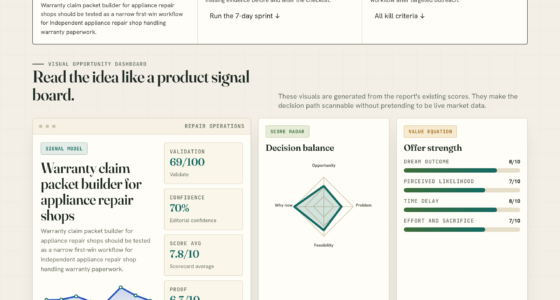
📊 Full opportunity report: A Tech-Savvy Way For Men To Follow Their Skincare Routine on IdeaNavigator AI — validation score, market gap, and execution plan.

Get the latest gadgets delivered free with Prime
- Fast, free delivery on millions of items
- Prime Video, Amazon Music and more included
- Member-only deals all year
TL;DR
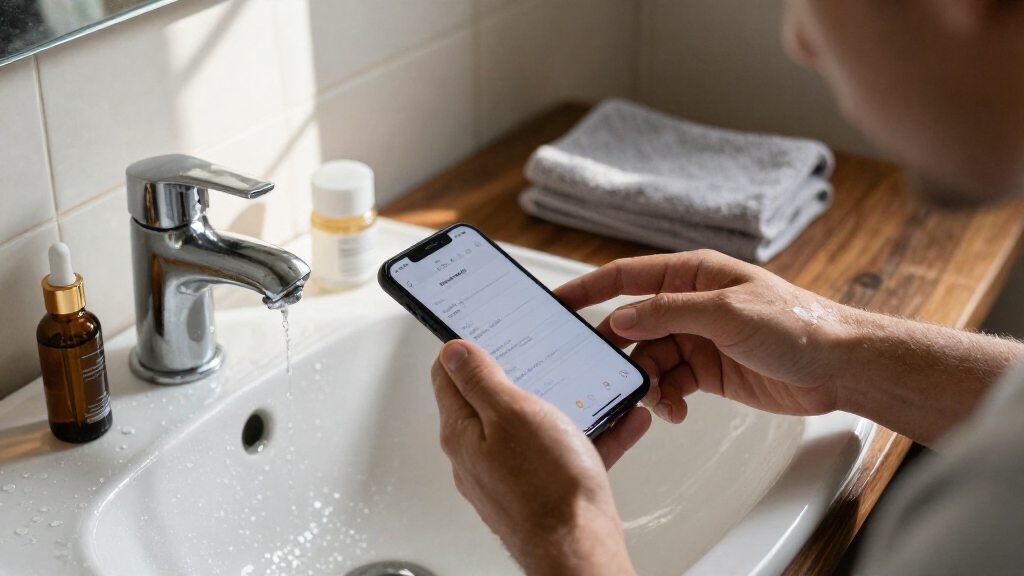
IdeaNavigator AI has outlined a product concept for men who want to track whether a new skincare routine is working. It proposes weekly guided selfies, routine logging and progress cards, but provides no evidence that an app has been built, tested or shown to improve skincare outcomes.
IdeaNavigator AI has proposed a skincare progress-tracking app for men, built around weekly guided selfies, routine logs and progress cards that frame changes as training metrics. The proposal targets men newly investing in skincare who want a way to judge whether their routines are working; it describes an idea to validate, not a launched or tested product.
The suggested minimum viable product would ask users to take weekly guided selfies and track three areas: skin clarity, texture and dark circles. It would pair those images with routine logging, streak mechanics and progress cards. The proposal recommends presenting the scores in a training-oriented style rather than using conventional beauty language.
For revenue, the concept suggests a subscription alongside affiliate product recommendations tied to gaps identified in a user’s measurements. The proposal does not specify subscription pricing, which products might be recommended, how recommendations would be selected, or whether image analysis would be automated or reviewed by people.
Its validation plan is to present the same image-capture technology with men’s-training branding and neutral branding, then compare conversion and retention across audience segments. No test data, user interviews, prototype results or market-size figures are included in the proposal. Its claims about demand and market momentum should therefore be treated as assumptions to investigate, not demonstrated results.
Testing a Different Skincare Entry Point
The proposal raises a product-design question: whether a familiar framing could encourage new users to continue a skincare routine. It suggests that users who are uncertain whether a cleanser or treatment is helping might use a consistent record, and that progress cards and streaks could encourage repeat app use. The proposal provides no evidence that these features would improve adherence or produce reliable assessments of skin changes.
IdeaNavigator AI argues that existing beauty apps may not feel welcoming to men entering skincare. The proposal suggests that a different tone and interface could help this audience engage with routine tracking, a claim that would require user testing. Branding would not necessarily address other barriers, including cost, product confusion or expectations about how quickly skin changes.
The proposed mix of paid subscriptions and affiliate links raises questions about transparency. Recommendations tied to measured “gaps” could influence users’ purchasing decisions. The proposal does not explain how recommendations would be selected or disclosed, or how the app would distinguish skin changes from variation in lighting, camera position or day-to-day condition.
men's skincare progress tracking app
As an affiliate, we earn on qualifying purchases.
As an affiliate, we earn on qualifying purchases.
From Grooming Trend to Product Test
The proposal places the idea in men’s grooming technology and cites looksmaxxing culture as a reason men may be receptive to measurements and gamified tracking. It describes men’s skincare as the fastest-growing grooming segment, but gives no underlying figures, time period or comparison baseline. That growth claim cannot be independently evaluated from the information provided.
Rather than proposing a broad beauty platform, the concept narrows its first audience to a man newly invested in skincare who wants proof of progress. The proposed test focuses on the presentation of one core function—capturing and tracking skin images—under two branding approaches. Conversion and retention would offer different signals: initial sign-ups could indicate interest, while continued use would show whether the idea holds attention beyond first contact.
guided selfie skincare app for men
As an affiliate, we earn on qualifying purchases.
As an affiliate, we earn on qualifying purchases.
Evidence Still Needed on Demand
No app launch, prototype, or user-testing results are reported. It remains unknown whether men in the target group want this product, whether training-oriented branding would improve sign-ups or retention, and whether weekly image tracking would be useful enough to sustain a subscription.
The proposal also leaves technical and practical questions open. It does not describe how selfies would be scored, how results would account for different lighting or camera conditions, or how images and routine data would be stored and protected. It provides no clinical validation for the suggested measures of clarity, texture or dark circles, and no evidence that the scores could show whether a product caused a change.
Pricing, affiliate disclosures, product-selection standards and the handling of sensitive facial images are also unspecified. Until those details and test results are available, the concept should be read as an early business hypothesis rather than evidence of a validated market or effective skincare tool.
men's skincare routine log journal
As an affiliate, we earn on qualifying purchases.
As an affiliate, we earn on qualifying purchases.
A Branding Test Would Come First
The next step proposed by IdeaNavigator AI is a positioning test comparing men’s-training branding with neutral branding while holding the image-capture technology constant. A useful report would need to state who took part, how conversion and retention were measured, how long the test ran and whether results differed across audience segments.
If early testing shows sustained interest, further work would be needed to evaluate the accuracy and consistency of image-based tracking, establish privacy practices and clarify how product recommendations relate to any measured changes. No timetable or test results have been announced, so whether the concept proceeds to a prototype remains unknown.
Source: IdeaNavigator AI
As an affiliate, we earn on qualifying purchases.
Key Questions
Has the men’s skincare tracking app launched?
No launch is reported. The proposal describes a product concept and a suggested way to test its appeal.
What would the app track?
The proposed MVP would use weekly guided selfies to track skin clarity, texture and dark circles, alongside routine logs, streaks and progress cards.
Would the app diagnose skin conditions?
The proposal does not describe a diagnostic function or provide clinical validation for its suggested measurements. It presents the app as a way to track apparent progress, not as a medical tool.
How would the idea be tested?
The proposed test would compare the same capture technology under men’s-training and neutral branding, measuring conversion and retention by audience segment. No test findings are available.
How might the app make money?
The concept suggests subscriptions and affiliate product recommendations linked to measured gaps. It does not provide pricing or explain how recommendations would be selected or disclosed.
Source: IdeaNavigator AI
Halloween Picks
halloween
As an affiliate, we earn on qualifying purchases.