
📊 Full opportunity report: Micro-agency Proposal Scope Checker on IdeaNavigator AI — validation score, market gap, and execution plan.
TL;DR
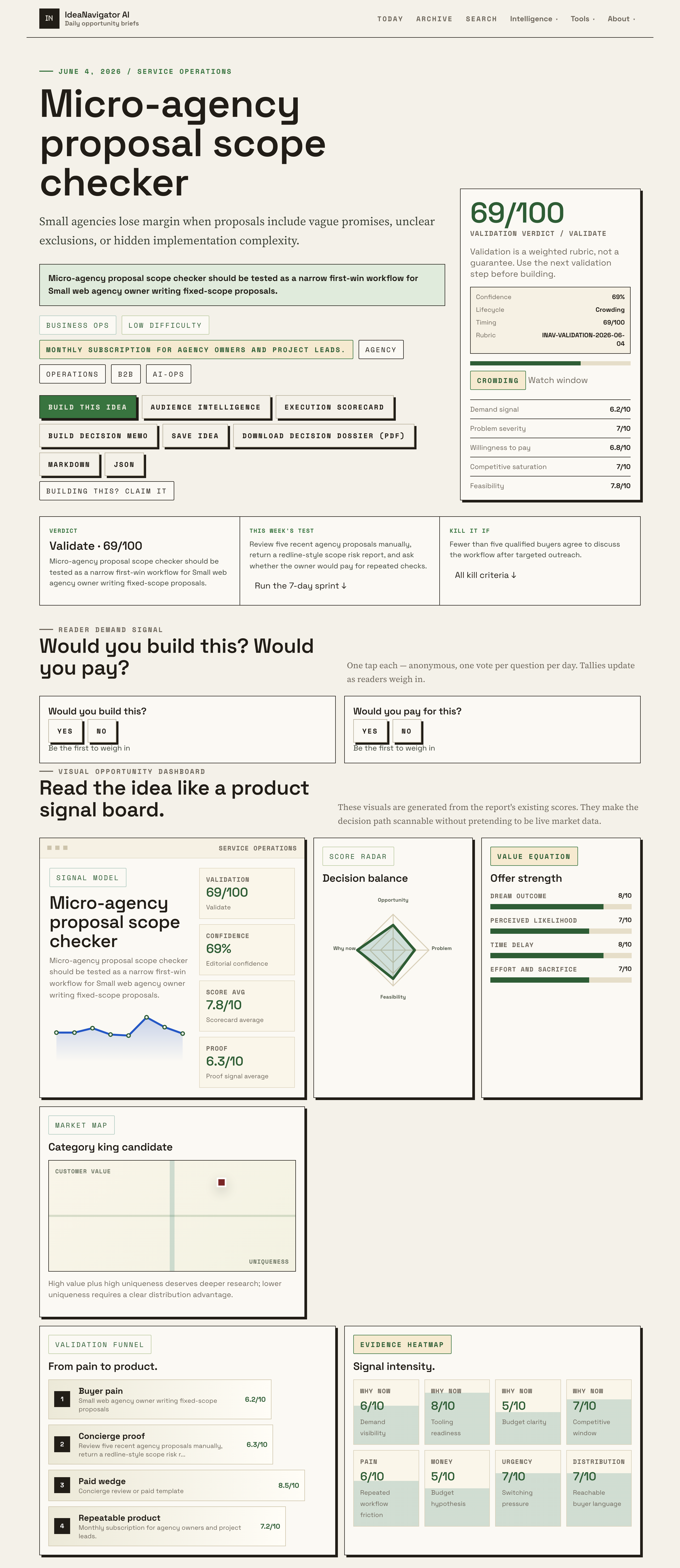
A prototype AI tool is being tested to help small web agencies identify scope risks in proposals before client review. This aims to improve margins and clarity in fixed-scope projects.
IdeaNavigator AI is currently testing a prototype scope checker tool aimed at small web agencies. The tool is designed to automatically review draft proposals, highlighting vague deliverables, missing assumptions, and risky integrations before client presentation. This development is significant because it addresses a common challenge for small agencies—losing margin due to unclear scope and hidden complexities in proposals.
The proposed micro-agency proposal scope checker is intended as a narrow, first-win workflow for small web agency owners who prepare fixed-scope proposals. The tool works by allowing users to upload a draft proposal, which the AI then compares against reusable delivery checklists. It flags potential scope risks, such as vague promises, missing assumptions, or risky integrations, and suggests language to clarify exclusions.
According to an anonymous researcher involved in the project, the MVP (minimum viable product) will focus on identifying vague deliverables and missing assumptions, with future updates potentially covering more complex risk factors. The testing phase involves manually reviewing five recent agency proposals, generating redline-style scope risk reports, and assessing whether agency owners would pay for repeated checks. The revenue model is based on a monthly subscription for agency owners and project leads.
Why Small Agencies Need Better Scope Management Tools
This development could significantly improve profit margins for small web agencies by reducing scope creep and project overruns. Clearer proposals help set client expectations and minimize misunderstandings that often lead to additional, unbillable work. As many small agencies rely on fixed-scope projects, the ability to preemptively flag scope risks can lead to more predictable outcomes and healthier margins.
Moreover, by automating part of the proposal review process, agencies can save time and improve proposal quality, which is critical in competitive markets. The tool’s success could also influence how small agencies approach project scoping and risk management in digital service operations.

Successful Proposal Strategies for Small Businesses
- Condition: Used Book in Good Condition
As an affiliate, we earn on qualifying purchases.
As an affiliate, we earn on qualifying purchases.
Background on Proposal Risks in Small Web Agencies
Small web agencies frequently face challenges in defining clear project scopes, often leading to scope creep, missed deadlines, and reduced profitability. Many rely on manual review of proposals, which can be inconsistent and time-consuming. Existing tools are generally tailored for larger organizations or complex enterprise projects, leaving a gap for small agencies that need simple, effective solutions.
The idea of automating scope risk detection has gained interest as AI technology matures, with prior efforts focusing on project management or more comprehensive scope analysis. The current initiative by IdeaNavigator AI aims to create a lightweight, easy-to-integrate tool specifically for small agencies handling fixed-scope proposals.
“The goal is to create a quick, reliable way for small agencies to identify potential scope issues before they reach the client, saving time and reducing risk.”
— an anonymous researcher
As an affiliate, we earn on qualifying purchases.
Unclear Aspects of the Scope Checker’s Effectiveness
It is not yet confirmed how accurately the AI will identify scope risks or how well it will integrate into existing proposal workflows. The effectiveness of the tool depends on the quality of the checklists and the AI’s ability to interpret complex project details. Additionally, user acceptance and willingness to rely on automated suggestions remain to be seen, especially in diverse agency contexts.
project proposal template with scope clarity
As an affiliate, we earn on qualifying purchases.
As an affiliate, we earn on qualifying purchases.
Next Steps in Testing and Deployment
The next phase involves completing the manual review of five recent agency proposals, refining the AI algorithms based on these tests, and gathering feedback from early users. If the prototype demonstrates clear value, IdeaNavigator AI plans to develop a full commercial version with broader features and begin marketing to small web agencies. Monitoring user adoption and measuring impact on proposal quality will be key milestones.

Monstrum Scope Leveling Tool
- Purpose: Ensures precise vertical scope alignment
- Kit Contents: Includes leveling base and two wedges
- Wedge Sizes: Small for 0.18-0.45 inch spacing, large for 0.45-1 inch
As an affiliate, we earn on qualifying purchases.
As an affiliate, we earn on qualifying purchases.
Key Questions
How does the proposal scope checker work?
The tool allows users to upload a draft proposal, which it then compares against predefined checklists to identify vague or risky scope elements, missing assumptions, and unclear exclusions. It highlights potential issues and suggests clearer language for proposals.
Who is the target user for this tool?
Small web agency owners and project leads who prepare fixed-scope proposals are the primary target, aiming to improve proposal clarity and project margins.
Will this tool replace manual proposal review?
It is intended to supplement manual review by automating initial risk detection, not replace human judgment entirely. The goal is to save time and improve accuracy.
When will the full version be available?
The full commercial version is expected to launch after successful testing and refinement, likely within the next few months, depending on feedback and development progress.
How much will the service cost?
The business model involves a monthly subscription fee for agency owners and project leads, with pricing details to be announced upon product launch.
Source: IdeaNavigator AI