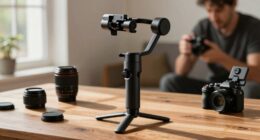
The best audio reactive LED displays balance clear sound response, useful controls, and a display style that fits the room. I rank the fosa 240 RGB LED Audio Visualizer first for its AGC feature and substantial LED count, while the Douk Audio VU9-MINI suits buyers who prefer a tube-meter look and the Soulpunk four-pack spreads lighting around a room. The main tradeoff is between a focused spectrum display and broader ambient lighting, with audio inputs, app control, and power options shaping setup. A large pixel count alone does not tell you how well a display will suit your space or audio source. Read on for the full comparison and buying advice.
Complete the kit



Key Takeaways
- fosa ranks first because its 240 RGB LEDs and AGC make it the strongest all-around choice among the listed models; buyers should still check the exact input and mounting details before ordering.
- Douk Audio VU9-MINI favors a distinct meter aesthetic, while panel-style options such as Diyeeni and Qiase prioritize broader spectrum patterns and display effects.
- Soulpunk is the room-coverage pick: its four lights and app control suit distributed ambient lighting better than a single central analyzer.
- Pixel totals do not make these products interchangeable. The 250-pixel, 10-tube rechargeable display, 240-light tube designs, and 16-by-24 Diyeeni panel create different visual formats.
- Audio connection and placement matter as much as effects. Qiase specifies a 3.5mm input, while wireless, voice-controlled, and rechargeable designs call for closer checks of how sound is detected and how each display is powered.




| audio reactive LED display | Power |
|---|---|
| Rechargeable RGB Sound Activat | 5V; corded or battery powered |
| Soulpunk RGB Voice-Controlled | Battery powered; 3.7V |
| Douk Audio VU9-MINI RGB LED So | USB-C, DC 5V ≥1A |
| Qiase Music Rhythm Spectrum Di | USB 5V/1A |
| Diyeeni Music Spectrum Display | USB 5V/1A, 3W |
| fosa LED Music Spectrum Displa | — |
| LED Music Spectrum Visualizer | USB |
| Zunate LED Music Spectrum Disp | — |
| PUSOKEI Sound-Activated LED Mu | — |
More Details on Our Top Picks
Rechargeable RGB Sound Activated Audio Visualizer Light Bar – 250 Pixels, 10-Tube Music Spectrum Analyzer Display
The 10-tube layout and 250 addressable pixels give this light bar a denser, more detailed display than the compact 55-LED Douk Audio VU9-MINI. Its built-in microphone reacts to nearby music, game audio, or voices, and physical buttons let me adjust color, brightness, sensitivity, and speed without relying on an app. That makes it a flexible fit for a desk or gaming setup where quick setup matters. The tradeoff is power: although a battery is included, runtime and charging details are not specified, so extended use may call for a 5V connection. Compared with the Soulpunk four-light set, this pick gives me one concentrated, higher-resolution display rather than several separately placed lights.
Pros:- 250 individually addressable pixels across 10 light tubes
- Built-in microphone enables sound activation without extra audio wiring
- Physical controls adjust color, brightness, sensitivity, and speed
- Compact, lightweight design with mounting clips and adhesive pads
Cons:- Battery runtime and charging details are not specified
- Extended use may require a 5V power source
Best for: Desktop and gaming setup owners who want a detailed, self-contained sound-reactive display with button controls.
Not ideal for: Buyers who need confirmed long battery runtime or several lights spread around a room.
- LED pixels:250
- Light tubes:10
- Power:5V; corded or battery powered
- Wattage:5W
- Dimensions:6.89 × 0.86 × 3.46 in
- Weight:0.17 lb net
- Controls:Three physical buttons
Our verdict“Choose this light bar for a detailed, easy-to-control desktop visualizer; skip it if dependable cordless runtime is a priority.”
Soulpunk RGB Voice-Controlled Music Rhythm Lights (4-Pack, App Control)
Four separate lights make the Soulpunk BK4 a better fit for spreading reactive color across a car cabin, desk, or bar than the single Diyeeni 16×24 panel. The app can manage all four together, and 15 music-sync modes offer several ways to shape the response. Its 32-bit audio spectrum processing is aimed at music and voice-reactive effects, while the rechargeable battery-powered design avoids a permanent power lead. The compromise is control and placement: full control depends on the app, and the listed table-mount format offers less flexibility than a display designed for surface mounting with clips. Compared with the 250-pixel light bar, Soulpunk trades one detailed display for a coordinated set of smaller lights.
Pros:- Four lights can be controlled together through the app
- Offers 15 music-sync modes
- Rechargeable battery-powered design
- Small individual lights suit distributed placement
Cons:- Full control requires a mobile app
- Table-mount format limits installation choices
Best for: People who want synchronized sound-reactive accents in several spots, such as around a gaming desk or inside a car.
Not ideal for: Buyers who prefer button-only controls or need a single, high-resolution spectrum panel.
- Number of lights:4
- Music-sync modes:15
- Audio processing:32-bit audio spectrum
- Power:Battery powered; 3.7V
- Controls:Mobile app
- Mounting:Table mount
- Dimensions per light:0.7 × 0.6 × 7.1 in
Our verdict“Pick Soulpunk for coordinated lighting across several locations, but choose the 250-pixel light bar if display detail matters more.”
Douk Audio VU9-MINI RGB LED Sound Level Tube Meter Music Spectrum Display
The magnetic tube design gives the Douk Audio VU9-MINI a retro meter look that stands apart from the Soulpunk BK4’s four slim accent lights. It uses 55 LEDs and offers eight display modes, with brightness and speed adjustments for tailoring the effect to a desk or audio setup. Its 2.5× RMS signal compression is intended to make level changes more stable, which can help keep the display readable as sound varies. USB-C power also makes setup straightforward. The main limitation is its microphone-only input: unlike the Qiase display, it cannot connect directly through a 3.5mm audio cable, so ambient sound pickup is the available route. It is also not water resistant, making it a poor choice for damp locations.
Pros:- Distinctive magnetic tube attachment and retro meter styling
- Eight display modes with adjustable brightness and speed
- USB-C power supports plug-and-play desktop setup
- RMS compression is designed to steady level-meter response
Cons:- Microphone pickup only, with no direct audio input
- Not water resistant
- 55 LEDs provide less pixel detail than the 250-pixel light bar
Best for: Desktop audio enthusiasts who want a compact, retro-style meter with adjustable sound-reactive modes.
Not ideal for: Buyers who need direct audio input, a large pixel grid, or a display for a damp space.
- LED beads:55
- Display modes:8
- Audio input:Built-in microphone
- Brightness adjustment:10 levels
- Power:USB-C, DC 5V ≥1A
- Dimensions:3.35 × 3.35 × 5.71 in
- Weight:0.37 lb net
Our verdict“Choose the Douk for a compact retro meter aesthetic, while the Qiase is the better fit if direct audio connection is needed.”
Qiase Music Rhythm Spectrum Display – Dynamic LED Spectrum Analyzer with 36 Display Styles, 16 Colors, and 3.5mm Audio Input
Microphone or 3.5mm audio input gives the Qiase more flexibility than the microphone-only Douk Audio VU9-MINI: I can use ambient pickup or connect a compatible audio source directly. Its 36 display styles, 16 colors, nine spectrum modes, six floating-dot effects, and four frequency bands provide a wide range of ways to tailor the display. When music stops, it can also show a clock and weather, adding a practical desk function that the Diyeeni panel does not list. The cost of that versatility is setup complexity: buyers who only want a simple reactive light may have little use for its many modes or extra information. USB 5V/1A power keeps it suited to a stationary desktop or studio.
Pros:- Supports both built-in microphone pickup and 3.5mm audio input
- 36 display styles and 16 colors allow extensive customization
- Includes nine spectrum modes, six floating-dot effects, and four frequency bands
- Can show a clock and weather when music is not playing
Cons:- USB-powered design needs a connected 5V source
- Large set of modes may be unnecessary for buyers wanting simple sound response
Best for: Desktop listeners and home-studio users who want a direct audio connection plus a wide choice of visual modes.
Not ideal for: Buyers seeking a simple, portable display or who do not need clock and weather functions.
- Display styles:36
- Colors:16
- Spectrum modes:9
- Floating-dot effects:6
- Frequency bands:4
- Audio input:Built-in microphone or 3.5mm audio cable
- Power:USB 5V/1A
Our verdict“Pick the Qiase if direct audio input and varied display modes matter; the Douk is simpler if microphone pickup and retro styling are enough.”
Diyeeni Music Spectrum Display, 16×24 384 RGB LED Display with 20 Dynamic & 7 Color Effects
The Diyeeni uses a 16×24 grid of 384 RGB LEDs, so its visual format is more like a compact panel than the Douk Audio VU9-MINI’s tube meter. Twenty dynamic effects and seven color effects yield 140 listed combinations, giving buyers room to vary the display, while clock and alarm functions add utility when music is off. It can react through a built-in voice sensor or an audible cable, a choice that gives it more input flexibility than the microphone-only Douk. The tradeoff is that it needs constant USB power and is not presented as a portable battery option. Compared with the Qiase, Diyeeni offers a clearly specified pixel grid and alarm functions, while Qiase lists more display styles and includes weather display.
Pros:- 384 RGB LEDs arranged in a 16×24 grid
- 20 dynamic and seven color effects create 140 listed combinations
- Voice sensor and audible-cable control provide two sound-reactive options
- Clock and alarm functions add use when music is off
Cons:- Requires continuous USB power
- Panel format may not suit buyers looking for a small accent light
Best for: Desk or gaming setup owners who want a rectangular pixel-grid visualizer with clock and alarm functions.
Not ideal for: Buyers who need cordless placement or prefer a slim light bar over a panel-shaped display.
- Display:16 × 24 grid; 384 RGB LEDs
- Dynamic effects:20
- Color effects:7
- Total display combinations:140
- Brightness:7 levels
- Power:USB 5V/1A, 3W
- Material:ABS
Our verdict“Choose Diyeeni for a grid-style display with clock and alarm features; choose Qiase for more listed styles and weather display.”
fosa LED Music Spectrum Display, 240 RGB LED Audio Visualizer with AGC
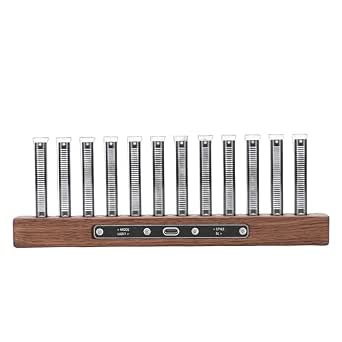
The fosa pairs 240 RGB LEDs with a quartz glass tube and CNC-machined walnut base, giving it a more furniture-like presence than the compact, freestanding Poksolfy LED Music Spectrum Visualizer. Its AGC noise filtering is intended to help the display respond to music while reducing reactions to background sound, and adjustable sensitivity gives buyers some control over pickup. Spectrum, night light, and magic modes let it serve as a visualizer or a softer room accent. The tradeoff is its wireless-only setup: there is no wired audio connection to fall back on if room noise interferes with sound pickup. The glass tube also calls for more careful handling than a simple display board. This is a strong fit for buyers who value decor and flexible lighting modes alongside music response.
Pros:- AGC automatic gain control with adjustable sensitivity
- 240 RGB LEDs and spectrum, night light, and magic modes
- Wireless sound activation
- CNC-machined black walnut base and quartz glass tube
Cons:- No wired audio connection is listed as a fallback
- Glass tube needs careful handling and cleaning
Best for: Music fans who want a wireless visualizer that can also act as a styled night light on a desk or shelf
Not ideal for: Buyers in noisy rooms who want a wired audio input, or anyone who prefers a rugged display that needs little handling
- Brand:fosa
- Model number:fosag78yr049au
- LED count:240 RGB LEDs
- Display modes:Spectrum, night light, magic display
- Base material:CNC-machined black walnut wood
- Shade material:Quartz glass
- Controls and features:Wireless operation, AGC, adjustable color, brightness, and sensitivity
Our verdict“Choose the fosa if you want a decor-forward wireless visualizer with several display modes and can work within its sound-pickup setup.”
LED Music Spectrum Visualizer with Sound-Reactive Display
The Poksolfy keeps setup simple: connect its USB power cable, place the small display, and let its sound pickup sensor react to nearby audio. That makes it a less involved starting point than the fosa LED Music Spectrum Display, which offers adjustable sensitivity and multiple modes but also relies on wireless pickup. At 7.27 inches deep and 3.2 ounces, the Poksolfy is easy to move between a desk, bedroom, or compatible car setup. Its 14 available colors add some choice, though the provided details do not explain the range of patterns or how color selection works. There is no listed audio input, and its non-waterproof design limits placement near moisture. I’d pick this for straightforward ambient lighting, not for buyers seeking detailed controls or a feature-rich analyzer.
Pros:- USB-powered plug-and-play setup
- Sound-activated display responds to surrounding audio
- 14 colors are listed
- Lightweight freestanding design
Cons:- Not waterproof, so placement near moisture is unsuitable
- No wired audio input is listed
- Pattern selection and detailed control options are not specified
Best for: First-time visualizer buyers who want a lightweight USB-powered accent for a desk, bedroom, or dry gaming space
Not ideal for: Buyers who need a wired audio input, detailed pattern controls, or a display suitable for humid or outdoor placement
- Brand:Poksolfy
- Model:Music-visualizer-led
- Power:USB
- Wattage:5 watts
- Available colors:14
- Dimensions:7.27 × 1.46 × 3.74 inches
- Weight:3.2 ounces
- Controls:Sound-activated, push button, touch control
- Waterproof:No
Our verdict“Pick the Poksolfy for an uncomplicated USB visualizer; choose the fosa if adjustable sensitivity and multiple named display modes matter more.”
Zunate LED Music Spectrum Display with 12 Light Tubes, 240 RGB Lights, Wireless Audio Analyzer with Walnut Base
The Zunate’s defining feature is its arrangement of 12 quartz glass tubes, which gives its 240 RGB lights a segmented look that stands apart from the Poksolfy’s compact rectangular board. Wireless sound pickup with AGC is intended to filter background noise, while adjustable color, brightness, and sensitivity let owners tune the display to a room. Spectrum, night light, and magic modes also make it more adaptable as decor than a basic sound-reactive accent. Its CNC-machined walnut base adds a substantial furniture-style finish, but the product details list no included components, so buyers should check what they need to power or set it up. No remote or app control is specified either. Compared with the closely featured fosa, the Zunate makes its 12-tube layout explicit; both share the same wireless-pickup tradeoff.
Pros:- 12 quartz glass tubes create a segmented display
- 240 RGB lights with adjustable color and brightness
- AGC and adjustable sensitivity for wireless sound pickup
- Spectrum, night light, and magic display modes
Cons:- No included components are listed
- Remote or app control is not specified
- No wired audio input is listed
Best for: Decor-conscious music listeners who want a segmented 12-tube look, wireless sound response, and several lighting modes
Not ideal for: Buyers who need a specified remote or app, included setup accessories, or wired audio connectivity
- Brand:Zunate
- Model:Zunateuo0ti4ega6
- LED count:240 RGB lights
- Light tubes:12
- Shade material:Quartz glass
- Base material:CNC-machined black walnut
- Display modes:Spectrum, night light, magic
- Features:Wireless sound activation, adjustable color, brightness, and sensitivity
Our verdict“Choose the Zunate for its 12-tube visual layout and walnut styling, provided its unspecified accessories and controls suit your setup.”
PUSOKEI Sound-Activated LED Music Spectrum Display
The PUSOKEI is the only option in this batch with a listed 3.5 mm audio input, giving buyers a direct connection path that the wireless fosa and Zunate do not specify. Its stated 20 Hz–25 kHz frequency range describes broad audio coverage, while the built-in sensor can react to surrounding sound when a wired feed is not being used. That flexibility suits a home theater or gaming setup where audio sources and placement may change. The tradeoff is sparse control and hardware detail: the listing names a single light source and does not explain display modes, color adjustment, or setup steps. Its PCB construction is less decor-focused than the Zunate’s walnut base and 12-tube design. I’d favor the PUSOKEI for connection options over finish or a richly specified lighting experience.
Pros:- 3.5 mm audio input is specified
- Built-in sound sensor can react to surrounding audio
- Stated frequency range spans 20 Hz–25 kHz
- Table-mount format suits theater and gaming setups
Cons:- Only one light source is listed
- Display modes and control options are not detailed
- PCB material offers a plainer finish than the Zunate’s walnut and glass construction
Best for: Home theater and gaming users who want a table-mounted visualizer with a specified 3.5 mm audio connection
Not ideal for: Buyers who want multiple documented lighting modes, detailed controls, or a decorative wood-and-glass finish
- Brand:PUSOKEI
- Light source:LED; one light source listed
- Power source:AC/DC
- Mounting type:Table mount
- Frequency range:20 Hz–25 kHz
- Audio input:3.5 mm
- Amperage:1 A
- Material:PCB
- Manufacturer warranty:90 days
Our verdict“Choose the PUSOKEI when a specified 3.5 mm input matters more than documented modes, controls, or decor styling.”
How We Picked
I compared the nine displays on the features that affect everyday use: how they respond to sound, what kind of visual presentation they offer, how much control they provide, and how readily their stated power and input options fit common setups. I gave weight to concrete details such as pixel or tube counts, AGC, listed display modes, app control, a 3.5mm input, and rechargeable operation. Those specifications help distinguish a spectrum analyzer from ambient room lights, but they do not by themselves prove response accuracy, brightness, latency, or sound quality.
The ranking favors options with a clearer combination of sound visualization and practical setup information. That puts fosa first for its 240 RGB LEDs and AGC, then gives distinct roles to the Soulpunk multi-light set and Douk’s tube-meter format. Displays with specific strengths, including Qiase’s wired input and mode selection, Diyeeni’s matrix layout, and the walnut-base Zunate, follow according to how narrowly they serve a particular preference. Where product details are limited, I avoid treating missing specifications as evidence of poor performance; buyers should verify compatibility and included accessories before choosing.
Factors to Consider When Choosing Best Audio Reactive LED Displays
Choosing an audio reactive display starts with the job you want it to do: show a changing spectrum, imitate a meter, or add sound-synced light around the room. I would decide that first, then check the signal path, placement, and controls before comparing pixel counts or effect totals.
Choose a visual format that fits the room
A tube meter, a rectangular pixel panel, and a set of separate light bars occupy space in different ways and create different focal points. A panel tends to read as one graphic surface, while tubes make the movement feel segmented and a multi-light kit can distribute color across furniture or walls. Measure the intended shelf, desk, or wall area and check whether the display needs to face you directly. Buyers often focus on LED totals and miss the viewing angle and footprint. Match the format to the room before comparing effects.
Check how the display hears the music
Audio reactive products can take sound from a wired input, a microphone, or another wireless method, and those routes behave differently in a real setup. A direct connection can avoid picking up nearby conversation or room noise, while microphone-based response may be easier to place but more sensitive to ambient sound. Confirm whether the chosen input works with your intended source, such as a computer, television, mixer, or phone. A 3.5mm jack does not guarantee compatibility with every device without the right output or adapter. Check what cables and adapters are included before purchase.
Treat effect counts as a control question
A long list of modes only helps if you can quickly select the ones you like and return to them later. Look for clear controls, app requirements, memory behavior, and whether the display responds automatically or needs manual adjustment. If several people will use the setup, simpler controls may matter more than a large menu of patterns. App-based lighting can offer convenient changes, but it may add setup steps and depend on a phone. Decide whether you want a set-and-forget visualizer or something you will tune often.
Plan power and placement together
Rechargeable operation can make placement more flexible, but it also introduces charging intervals and battery upkeep. A powered display may be easier to leave running in a permanent position, provided an outlet and cable can reach without crossing a walkway. Check whether the base, mounting hardware, or power adapter is included and whether the unit can stand securely on the surface you have. Wireless audio does not necessarily mean wireless power. Consider cable routing and charging access before choosing a spot.
Spend more only for a feature you will use
Different models may add app control, a wood base, a particular visual format, or additional effects, but a larger feature list does not always improve the listening setup. Identify the one limitation you want to solve, such as covering more than one area or connecting directly to a source. Then compare options that address that need and ignore extras that will stay unused. Buyers can overvalue pixel counts when their real concern is whether the unit works with a television or fits on a narrow shelf. Treat unclear specifications as a reason to verify the listing, not as a feature.
Frequently Asked Questions
Can I connect an audio reactive LED display directly to my television?
That depends on the display’s input and the audio outputs available on your television. Qiase lists a 3.5mm audio input, but many newer televisions do not provide an analog headphone output, so an adapter or audio extractor may be needed. Microphone-based or wireless models may avoid a direct cable, though they can respond to room sound rather than the television signal alone. Check the display’s input method against your exact TV ports before buying. Also confirm whether sound from streaming apps is available through the output you plan to use.
Is a microphone-based visualizer a poor choice in a shared room?
Not necessarily, but a microphone can react to voices, fans, or other nearby audio as well as music. That may be fine for a casual ambient effect, yet distracting if you want the display to follow one source precisely. A wired input can help isolate the signal when the product supports a connection compatible with your equipment. Placement also matters: moving the display closer to speakers and farther from conversation may change what it picks up. Check whether sensitivity or gain can be adjusted before choosing a microphone-based model.
Should I choose more LEDs or more display modes?
Neither specification guarantees the display will look better in your room. More LEDs can provide a denser visual pattern, while additional modes give you more choices in how movement is shown. The actual effect also depends on layout, brightness, viewing distance, and how clearly the controls let you select a mode. If you want a simple visual meter, prioritize the format and responsiveness over a large mode count. If you enjoy changing the look, confirm how modes are selected and whether settings persist after power-off.
Do rechargeable audio visualizers work well as permanent desk displays?
They can, especially when an outlet is inconvenient or you want to move the display between locations. For a permanent setup, battery runtime and charging access become part of daily use, so check the product details rather than assuming it can stay on indefinitely. A continuously powered model may be simpler if it will live beside a computer or stereo. Also check whether the rechargeable unit can operate while plugged in. The best choice depends on whether flexible placement outweighs charging upkeep.
Which type should I choose for a multi-speaker or whole-room setup?
A multi-light set such as Soulpunk is designed to place separate lights around a space, while a single analyzer creates a more concentrated focal point. Before choosing a distributed kit, confirm whether each light follows the same audio input and whether the app can control all units together. For a multi-speaker arrangement, check how the sound is detected; a microphone may hear several sources at once, while a wired input may follow only one output. Think about where the lights will sit and whether they will remain visible from the main listening position. Room coverage and signal behavior matter more here than a single unit’s pixel count.
Conclusion
I recommend the fosa 240 RGB LED Audio Visualizer as the best overall starting point for its AGC and substantial LED count. For a room-spanning setup, the Soulpunk four-pack is the best fit; for a classic meter appearance, choose the Douk Audio VU9-MINI. Buyers seeking a more feature-led panel should compare Qiase and Diyeeni, while the rechargeable 250-pixel, 10-tube unit suits those who need flexible placement. I would call any pick the best value only after checking current price and included accessories; for beginners, favor the model whose input, power, and controls match your existing setup with the fewest extra steps. Check those details against your space and sound source, then choose the format you will enjoy seeing every day.