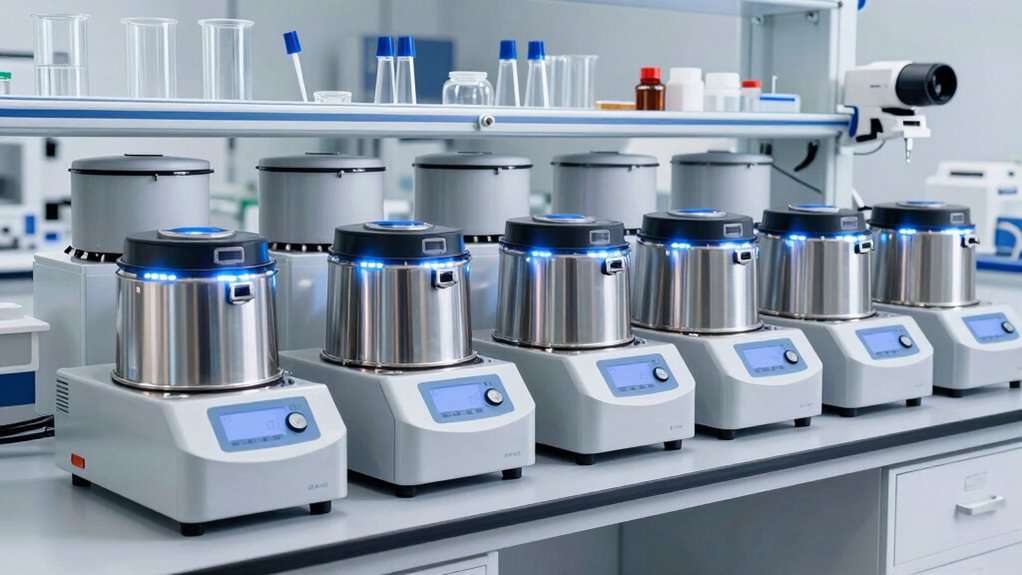
Shopping for a lab centrifuge for a DIY benchtop lab means balancing speed range, tube capacity, and budget on a machine that has to fit a hobby-scale workspace. The Lab Mini Centrifuge with LCD Display (100–12,000 RPM) stands out as the best overall pick because it’s the only option here that covers both gentle low-speed separations and high-speed work up to 7245×g, making it the most versatile for experimentation. For tighter budgets and simpler tasks like separating soil samples or preparing small liquid fractions, the CGOLDENWALL 8×15 mL low-speed model offers more tube capacity per dollar than most rivals. If PRP-style work or precise speed control matters, the ONiLAB PRP series brings programmable control rarely seen at this price class. The core tradeoff in this category: most budget models cap out at 4000 RPM, so paying more mainly buys you a wider speed range, bigger rotors, and better build quality rather than raw separation power. Keep reading for the full breakdown.

Get the latest gadgets delivered free with Prime
- Fast, free delivery on millions of items
- Prime Video, Amazon Music and more included
- Member-only deals all year
Complete the kit



Key Takeaways
- Speed range is the biggest differentiator in this lineup: only the Lab Mini Centrifuge (100–12,000 RPM) reaches high-speed separations, while the other fourteen models are low-speed machines capped at 4000–5000 RPM.
- Rotor capacity splits the field into two camps — 6×15 mL or 6×20 mL machines for everyday DIY work, and larger 6×50 mL units (the LD-3 and ONiLAB 6×50 mL) for bigger sample volumes at the cost of a larger bench footprint.
- The ONiLAB models are the only ones in the group with a 300 RPM starting speed and fine increments, which matters for delicate PRP/PRF protocols; buyers doing crude separations can safely skip that precision.
- Four products in this roundup share nearly identical 4000 RPM / 6-tube specs (CALU LUKY, Mxmoonant, XygZythror 80-1, and the generic 20 mL x 6 model), so the deciding factors become timer quality, build materials, and after-sales support rather than performance numbers.
- Digital displays and timers appear on most models but vary widely in usability — analog knobs on cheaper units like the XygZythror 80-1 trade precision for simplicity, which is fine for beginners but frustrating for repeatable protocols.
| NEWTRY Mini Electric Lab Centrifuge |  | Best for Small Benchtop Spaces | Speed range: 300–4,000 rpm | Timer range: 0–60 hours (5-minute increments) | Supported tube sizes: 5 ml and 10 ml | VIEW ON AMAZON | See Our Full Breakdown |
| ONiLAB Laboratory PRP Centrifuge, 6-Tube, 300–5000 RPM |  | Best Overall | Speed range: 300–5,000 RPM | Max RCF: 2,600 × g | Tube capacity: 6 tubes, 1.5–15 mL | VIEW ON AMAZON | See Our Full Breakdown |
| CGOLDENWALL Benchtop Lab Centrifuge, 8×15ml | 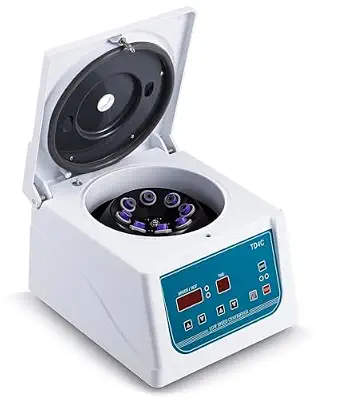 | Best Throughput for the Price | Speed range: 100–4,000 RPM | Capacity: 15 ml × 8 tubes | Max RCF: 1,880 × g | VIEW ON AMAZON | See Our Full Breakdown |
| NEWTRY Desktop Lab Centrifuge, 6 × 20 mL Rotor |  | Best for Larger Tubes | Rotor capacity: 6 × 20 mL | Speed range: 0–4,000 RPM | Timer range: 0–60 minutes | VIEW ON AMAZON | See Our Full Breakdown |
| Mxmoonant Benchtop Lab Centrifuge Machine, 15ml × 6 |  | Best Value for PRP Work | Capacity: 15 ml × 6 tubes | Speed range: 300–4,000 RPM | Max RCF: 1,953 × g | VIEW ON AMAZON | See Our Full Breakdown |
| CALU LUKY Lab Centrifuge, 4000 RPM, 6 × 20 mL, 110 V | 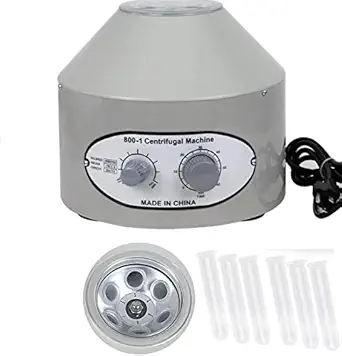 | Best Budget Workhorse | Maximum speed: 4000 RPM | Capacity: 6 × 20 mL | Maximum RCF: 1790 × g | VIEW ON AMAZON | See Our Full Breakdown |
| ONiLAB DM0506 Lab PRP Centrifuge, 6×15ml/10ml/7ml/1.5-5ml, 300-5000 RPM, Max 2600×g |  | Best for PRP Protocols | Speed Range: 300-5000 RPM | Max RCF: 2600×g | Capacity: 6 tubes: 15mL/10mL/7mL/1.5-5mL | VIEW ON AMAZON | See Our Full Breakdown |
| Maccx Lab PRP PRF Benchtop Low Speed Centrifuge Machine, 300-5000 RPM |  | Quietest Operation | Speed Range: 300-5000 RPM (10 RPM increments) | Max RCF: 2600×g (10×g increments) | Timer: 0-99 min / continuous | VIEW ON AMAZON | See Our Full Breakdown |
| Lab Mini Centrifuge Machine, LCD Display, 100-12,000 RPM, 99-Minute Timer, 7245×g RCF |  | Best Compact Performer | Dimensions: 6.7″ x 5.7″ x 4.7″ | Speed Range: 100-12,000 RPM | Max RCF: 7245×g | VIEW ON AMAZON | See Our Full Breakdown |
| XygZythror 80-1 Benchtop Electric Centrifuge |  | Best Basic Build | Maximum RCF: 2350 × g | Timer: 0–60 minutes or continuous | Speed adjustment: Stepless | VIEW ON AMAZON | See Our Full Breakdown |
| LD-3 Electric Benchtop Centrifuge, 6x50ml, 4000rpm with 0-60min Timer |  | Best for Larger Tube Loads | Capacity: 6 × 50 mL | Maximum speed: 4000 rpm | Maximum RCF: 2770 × g | VIEW ON AMAZON | See Our Full Breakdown |
| LAB FISH LC-8S Low-Speed Benchtop Centrifuge, 8 x 2/5/10/15ml Tubes | 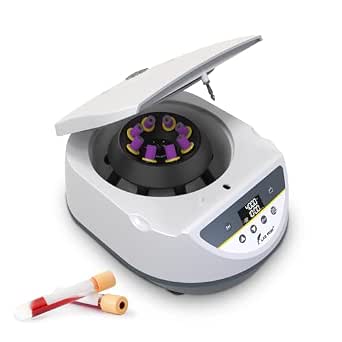 | Best for Small-Tube Flexibility | Model: LC-8S-1 | Capacity: 8 × 10/15 mL centrifuge tubes or 8 × 2/5/10 mL vacuum collection tubes | Speed range: 500–5000 rpm | VIEW ON AMAZON | See Our Full Breakdown |
| NEWTRY Electric Benchtop Centrifuge with Digital Display |  | Best for a Simple Six-Tube Setup | Model: 900-3 | Capacity: 6 × 15 mL | Speed: 0–4000 rpm | VIEW ON AMAZON | See Our Full Breakdown |
| Benchtop Lab Centrifuge Machine, 4000 RPM Low-Speed with Timer and Speed Control, 20mL x 6 Tube Capacity, 110V |  | Best for Six 20 mL Tubes | Capacity: 6 × 20 mL tubes | Maximum speed: 4000 rpm | Maximum RCF: 1790 × g | VIEW ON AMAZON | See Our Full Breakdown |
| ONiLAB Benchtop Centrifuge, 6X50ml, 300-4000 RPM, Max 1800×g |  | Best for Adaptable Tube Formats | Capacity: 6 × 50 mL; adaptors for 15, 10, 7, and 1.5–5 mL tubes | Speed range: 300–4000 rpm | Maximum RCF: 1800 × g | VIEW ON AMAZON | See Our Full Breakdown |
| lab centrifuge for diy labs benchtop | Timer | Speed range | Capacity |
|---|---|---|---|
| NEWTRY Mini Electric Lab Centr | — | 300–4,000 rpm | — |
| ONiLAB Laboratory PRP Centrifu | 30 s–99 min or continuous | 300–5,000 RPM | — |
| CGOLDENWALL Benchtop Lab Centr | 1–99 minutes or continuous | 100–4,000 RPM | 15 ml × 8 tubes |
| NEWTRY Desktop Lab Centrifuge | — | 0–4,000 RPM | — |
| Mxmoonant Benchtop Lab Centrif | 0–100 minutes | 300–4,000 RPM | 15 ml × 6 tubes |
| CALU LUKY Lab Centrifuge | 0–60 minutes or continuous | — | 6 × 20 mL |
| ONiLAB DM0506 Lab PRP Centrifu | 30 sec – 99 min or continuous | 300-5000 RPM | 6 tubes: 15mL/10mL/7mL/1.5-5mL |
| Maccx Lab PRP PRF Benchtop Low | 0-99 min / continuous | 300-5000 RPM (10 RPM increments) | — |
| Lab Mini Centrifuge Machine | 1-99 minutes | 100-12,000 RPM | — |
| XygZythror 80-1 Benchtop Elect | 0–60 minutes or continuous | — | — |
| LD-3 Electric Benchtop Centrif | 0–60 minutes or continuous operation | — | 6 × 50 mL |
| LAB FISH LC-8S Low-Speed Bench | 10 seconds–99 minutes 59 seconds | 500–5000 rpm | 8 × 10/15 mL centrifuge tubes or 8 × 2/5/10 mL vacuum collection tubes |
| NEWTRY Electric Benchtop Centr | 1–60 minutes | — | 6 × 15 mL |
| Benchtop Lab Centrifuge Machin | 0–60 minutes or continuous | — | 6 × 20 mL tubes |
| ONiLAB Benchtop Centrifuge | 30 seconds–99 minutes or continuous | 300–4000 rpm | 6 × 50 mL; adaptors for 15, 10, 7, and 1.5–5 mL tubes |
More Details on Our Top Picks
NEWTRY Mini Electric Lab Centrifuge
At just 9 × 8.6 × 6.8 inches and 3.5 pounds, this is the most portable option in the lineup, and that portability is the whole point. It fits on a crowded DIY bench where the ONiLAB PRP model would eat valuable workspace, and its ≤50 dB noise rating means it can run in a shared space without becoming a distraction — quieter than the CGOLDENWALL, which is rated up to 65 dB. The tradeoff is capacity: a six-position rotor limited to 5 ml and 10 ml tubes is fine for micro-scale separations, but anyone working with 15 ml or 20 ml tubes needs to look elsewhere. The 60-hour timer is generous for this class, though it only adjusts in 5-minute steps, which limits fine control for short spins.
Pros:- Extremely compact and lightweight — easy to store or move between workspaces
- Very quiet operation at 50 dB or less, suitable for shared or home environments
- Wide 0–60 hour timer range for long unattended runs
- Anti-slip feet keep it stable during spins
Cons:- Only supports 5 ml and 10 ml tubes — no path to larger volumes
- Timer adjusts in coarse 5-minute increments, limiting precision on short runs
Best for: DIY biologists with limited bench space who run small-volume separations in 5–10 ml tubes
Not ideal for: Anyone processing 15 ml or larger tubes, or those needing precise short-run timing — the 5-minute timer steps and tube size limits will frustrate both
- Speed range:300–4,000 rpm
- Timer range:0–60 hours (5-minute increments)
- Supported tube sizes:5 ml and 10 ml
- Disc capacity:6 × 10 ml tubes
- Motor power:50 W
- Noise level:≤50 dB
- Dimensions:9 × 8.6 × 6.8 inches
- Weight:3.5 lb
Our verdict“Buy this if bench real estate is your scarcest resource and your tubes are 10 ml or smaller; skip it if volume capacity matters more than footprint.”
ONiLAB Laboratory PRP Centrifuge, 6-Tube, 300–5000 RPM
This is the pick that best balances capability, safety, and precision for a serious DIY lab. Where the NEWTRY Mini tops out at 4,000 rpm and two tube sizes, the ONiLAB reaches 5,000 RPM / 2,600 × g and handles everything from 1.5 ml microtubes to 15 ml centrifuge tubes — the widest tube compatibility in this batch. The RPM and RCF display matters more than it sounds: if you’re following published protocols written in relative centrifugal force, guessing conversions invites failed separations. Add a brushless motor, lid interlock, overspeed detection, and two recallable programs, and it behaves like a professional instrument. The compromises are a fixed rotor — no swapping for 50 ml tubes like the ONiLAB 6×50ml model elsewhere in this guide — and a six-tube ceiling that slows high-throughput work.
Pros:- Speed settable and displayed in RPM or RCF, matching published protocols exactly
- Two saved quick-start programs for repeatable runs
- Brushless DC motor is maintenance-free and durable
- Lid interlock and overspeed detection add real safety for home settings
Cons:- Fixed rotor limits you to listed tube sizes with no upgrade path
- Six-tube capacity is modest for batch processing
Best for: DIY lab operators running repeatable protocols (like PRP or reagent prep) who need accurate RCF control and professional safety interlocks
Not ideal for: High-throughput users or anyone needing 20 ml+ tubes — the fixed six-tube rotor caps both volume and batch size
- Speed range:300–5,000 RPM
- Max RCF:2,600 × g
- Tube capacity:6 tubes, 1.5–15 mL
- Timer:30 s–99 min or continuous
- Programs:2 (P1/P2)
- Noise level:≤56 dB
- Weight:11.4 lb
- Certifications:CE, cTUVus, FCC
Our verdict“The most complete package here — buy it if you want lab-grade control and safety in a compact benchtop unit, and skip it only if tube capacity is your bottleneck.”
CGOLDENWALL Benchtop Lab Centrifuge, 8×15ml
If your bottleneck is samples per run rather than precision, this model’s eight-tube, 15 ml rotor beats every six-tube machine in this lineup by a third — the Mxmoonant and both NEWTRY units all stop at six positions. The LED display showing time, speed, and RCF simultaneously puts it ahead of the knob-only NEWTRY 800D, and the 100 RPM floor is the lowest starting speed here, useful for gentle separations that would get churned at 300+ RPM. The ceiling, though, is the story: 1,880 × g maximum trails the ONiLAB’s 2,600 × g, so dense-particle protocols may simply not separate fully. One quirk worth knowing: the timer only starts counting once the rotor reaches set speed, which changes effective run length if you’re used to simpler machines.
Pros:- Eight-tube capacity is the highest in this batch
- LED display shows time, speed, and RCF at once for easy monitoring
- Very low 100 RPM starting speed for delicate separations
- Locking lid adds safety for home-lab environments
Cons:- Low-speed ceiling of 1,880 × g limits demanding applications
- Timer starts only after reaching set speed, which can confuse users expecting immediate countdown
- Noise rating of ≤65 dB is the loudest in this lineup
Best for: Budget-conscious DIY labs processing multiple 5–15 ml samples per session who value batch size over maximum force
Not ideal for: Protocols requiring high centrifugal force — 1,880 × g is not enough for tightly packed pellets or small particles
- Speed range:100–4,000 RPM
- Capacity:15 ml × 8 tubes
- Max RCF:1,880 × g
- Timer:1–99 minutes or continuous
- Compatible tubes:5–10 ml vacuum tubes, 10–15 ml centrifuge tubes
- Noise level:≤65 dB
- Display:LED
Our verdict“The right choice when you need more tubes per run on a budget — just confirm your protocols work below 2,000 × g before buying.”
NEWTRY Desktop Lab Centrifuge, 6 × 20 mL Rotor
This is the only machine in this batch that takes 20 ml tubes, which makes it the default pick if your workflow involves larger volumes that would physically not fit in the CGOLDENWALL or ONiLAB rotors. The damping column and covered rotor head are thoughtful touches aimed at vibration and noise, two things that matter in a home setting. But it’s a simpler machine than it first appears: knob controls instead of the digital displays on the ONiLAB or Mxmoonant mean no RCF readout and less run-to-run repeatability, and the 1,435 × g ceiling is the lowest in this lineup. Newtry also publishes no independent noise or vibration figures, unlike the Mxmoonant’s stated ≤50 dB, so you’re trusting the design rather than data.
Pros:- Only option in this batch accepting 20 ml tubes
- Damping column reduces vibration on lightweight benches
- Covered rotor head dampens noise during operation
- Simple knob controls with almost no learning curve
Cons:- Knob-only controls offer no digital display or RCF readout
- Plastic housing is less durable than metal-bodied alternatives
- Lowest maximum force in this lineup at 1,435 × g
Best for: DIY labs working with 20 ml tubes — plant extractions, larger reagent preps — where volume matters more than digital precision
Not ideal for: Users who need repeatable, documented runs — no digital display, no RCF readout, and the lowest force ceiling here make protocol consistency difficult
- Rotor capacity:6 × 20 mL
- Speed range:0–4,000 RPM
- Timer range:0–60 minutes
- Max RCF:1,435 × g
- Controls:Knob
- Housing:High-strength plastic
- Weight:6.39 lb
Our verdict“Buy it for the 20 ml tube capacity and nothing else — if your tubes are 15 ml or smaller, better-equipped machines in this guide serve you well.”
Mxmoonant Benchtop Lab Centrifuge Machine, 15ml × 6
For PRP-focused DIY work, this model hits a sweet spot the others miss. Its 1,953 × g maximum edges past the CGOLDENWALL’s 1,880 × g — meaningful for platelet concentration protocols that live right around that threshold — while its ≤50 dB noise rating undercuts the CGOLDENWALL by a wide margin. The LCD display gives you the real-time monitoring the knob-based NEWTRY 800D lacks, and the 0–100 minute timer is the longest in this batch for its size class. The main caveat is operational discipline: tubes must be loaded symmetrically, so single samples need a water-filled counterweight or the imbalance will chew up the rotor. It’s also 110V only, a non-starter for anyone outside North America without a converter.
Pros:- 1,953 × g max force handles PRP-class separations
- Whisper-quiet at ≤50 dB, the joint-quietest in this batch
- LCD display for real-time speed and time monitoring
- Long 0–100 minute timer with continuous flexibility
Cons:- Symmetric loading required — single samples need a counterweight tube
- 110V only, incompatible with 220V outlets without a converter
- Tube size limits (≤16 mm diameter, ≤118 mm length) restrict rotor flexibility
Best for: Home-lab users running PRP or similar protocols who want digital monitoring and quiet operation without paying for the ONiLAB’s extra features
Not ideal for: Anyone outside 110V regions, or users who frequently spin odd numbers of samples and won’t maintain counterweight discipline
- Capacity:15 ml × 6 tubes
- Speed range:300–4,000 RPM
- Max RCF:1,953 × g
- Timer:0–100 minutes
- Motor power:50 W
- Noise level:≤50 dB
- Suitable tubes:Length ≤118 mm, diameter ≤16 mm
- Weight:5.44 lb
Our verdict“The smart middle pick for quiet, digitally-monitored PRP work at 15 ml scale — as long as you’re on 110V power and load tubes in pairs.”
CALU LUKY Lab Centrifuge, 4000 RPM, 6 × 20 mL, 110 V
The CALU LUKY earns its spot by doing the basics without asking much in return. Six 20 mL tubes is a genuinely useful capacity for a home or garage lab, and the 0–60 minute timer with continuous mode covers both quick spins and longer settling runs. Compared with the Maccx or ONiLAB DM0506, it gives up programmability and digital displays — you get analog-style speed and timer control instead — but for straightforward cell or particle separation that simplicity is a feature, not a flaw. The tradeoff is real, though: a 4000 RPM ceiling and 1790 × g mean it cannot pull off the denser separations the ONiLAB DM0506 handles at 2600 × g, let alone the mini centrifuge’s 7245 × g. It also ships on 110 V AC only, so buyers outside North America need a converter.
Pros:- Six 20 mL tube capacity handles larger sample volumes than most mini units
- Timer supports both timed runs and continuous operation
- Simple controls with almost nothing to misconfigure or break
- Tubes included out of the box
Cons:- 4000 RPM / 1790 × g ceiling limits denser or finer separations
- 110 V AC, 60 Hz only — not usable abroad without a converter
- No digital display or programmable settings
Best for: DIY biologists and hobby chemists who need reliable 20 mL tube separation for routine protocols at minimal cost
Not ideal for: Anyone running PRP, plasmid preps, or other protocols requiring RCF above ~1800 × g
- Maximum speed:4000 RPM
- Capacity:6 × 20 mL
- Maximum RCF:1790 × g
- Timer:0–60 minutes or continuous
- Voltage:110 V AC, 60 Hz
- Included tubes:6
Our verdict“A dependable, no-frills pick for routine low-speed separations where capacity matters more than precision.”
ONiLAB DM0506 Lab PRP Centrifuge, 6×15ml/10ml/7ml/1.5-5ml, 300-5000 RPM, Max 2600×g
This option stands out for repeatable PRP and PRF workflows, where hitting the exact same speed and time every run matters more than raw power. The two quick-start programs let you dial in a buffy coat protocol once and recall it with one press — something the CALU LUKY simply cannot do. Included adaptors for 15/10/7 mL and 1.5–5 mL tubes cover most clinical-style consumables, and the brushless DC motor running at ≤56 dB makes it apartment-lab friendly. Compared with the Maccx, it matches the speed range and RCF but runs slightly louder and weighs nearly 14 pounds. The lid interlock and overspeed detection are genuine safety wins for a DIY setting. Skip it if your samples are temperature-sensitive — there is no refrigeration — or if you need RCF beyond 2600 × g.
Pros:- Two programmable quick-start settings for repeatable protocols
- Quiet brushless DC motor at ≤56 dB
- Lid interlock, overspeed detection, and automatic self-testing
- Adaptors included for four tube-size families
Cons:- No refrigeration for temperature-sensitive samples
- Heavier than comparable units at nearly 14 pounds
- RCF capped at 2600 × g
Best for: DIY practitioners running repeatable PRP/PRF or blood-fractionation protocols who need programmable consistency
Not ideal for: Buyers doing high-speed microbiology work or needing chilled runs for heat-sensitive samples
- Speed Range:300-5000 RPM
- Max RCF:2600×g
- Capacity:6 tubes: 15mL/10mL/7mL/1.5-5mL
- Timer:30 sec – 99 min or continuous
- Noise Level:≤56 dB
- Motor:Brushless DC
- Certifications:CE, cTUVus, FCC
- Warranty:1 year
Our verdict“The most protocol-friendly pick here for PRP-style work, provided low-speed centrifugation covers your needs.”
Maccx Lab PRP PRF Benchtop Low Speed Centrifuge Machine, 300-5000 RPM
If your bench sits in a shared space or apartment, the Maccx at ≤52 dB is the quietest of the PRP-capable units here — noticeably calmer than the ONiLAB DM0506 at ≤56 dB, and that difference is audible in a small room. It matches the ONiLAB’s 300–5000 RPM range and 2600 × g ceiling but adds 10 RPM / 10 × g increments and two-level braking, giving finer control over how softly samples settle — genuinely useful for delicate PRF matrices that disrupt under hard stops. The cast iron base with rubber feet keeps vibration out of the bench, and the two P1/P2 memory slots work like the ONiLAB’s. The catch: only two adaptors are included, so odd tube sizes mean extra purchases, and like its rival it tops out at 5000 RPM.
Pros:- Quietest in class at ≤52 dB
- Fine 10 RPM / 10 × g increments with two-level braking for gentle stops
- Cast iron base eliminates vibration and bench walking
- Programmable P1/P2 memory with one-press recall
Cons:- Only two adaptors included — other tube sizes cost extra
- 5000 RPM ceiling rules out high-speed applications
- No cooling for heat-sensitive samples
Best for: Home-lab operators in noise-sensitive spaces running PRP/PRF who want fine speed control and gentle braking
Not ideal for: Labs needing many tube formats out of the box, or any protocol above 2600 × g
- Speed Range:300-5000 RPM (10 RPM increments)
- Max RCF:2600×g (10×g increments)
- Timer:0-99 min / continuous
- Noise Level:≤52 dB
- Programs:2 user-defined (P1/P2)
- Compatible Tubes:15mL/10mL/7mL/1.5-5mL × 6
- Certifications:CE, cTUVus, FCC
- Warranty:1 year limited
Our verdict“The pick for shared or quiet spaces where subtle control and low noise outweigh raw versatility.”
Lab Mini Centrifuge Machine, LCD Display, 100-12,000 RPM, 99-Minute Timer, 7245×g RCF
For a small footprint, this mini unit punches far above its size: 12,000 RPM and 7245 × g nearly triples the pulling power of the Maccx or ONiLAB DM0506, opening the door to microbe pelleting and nucleic-acid-adjacent work the low-speed machines can’t touch. At 6.7 × 5.7 × 4.7 inches, it fits where nothing else in this roundup would, and the 100–240 V universal supply means no converter headaches. The interchangeable 8-place and 16-place rotors handle 0.2–2 mL tubes and strips. The tradeoffs are structural: a 30-minute maximum continuous run limits long protocols, tube capacity is tiny compared with the CALU LUKY’s six 20 mL slots, and the unit demands careful symmetric loading to avoid damage.
Pros:- Highest RCF in this group at 7245×g for demanding microtube separations
- Tiny footprint fits crowded or portable benches
- Interchangeable 8-place and 16-place rotors add flexibility
- Universal 100-240V input and stop-on-lid-open safety
Cons:- Maximum 30-minute continuous run limits long protocols
- Requires careful symmetric load balancing to avoid damage
- Microtube-scale only — no large-volume capability
Best for: Space-constrained DIY labs doing microtube work — mini-preps, pelleting, quick spins — at higher g-forces
Not ideal for: Anyone processing larger 10–20 mL volumes or running protocols longer than 30 minutes at a stretch
- Dimensions:6.7″ x 5.7″ x 4.7″
- Speed Range:100-12,000 RPM
- Max RCF:7245×g
- Timer:1-99 minutes
- Rotors:8-place (0.2/0.5/1.5/2 mL) and 16-place strip rotor
- Power Supply:100-240V universal
- Max Continuous Run:30 minutes
Our verdict“The strongest centrifuge per square inch here, ideal for high-g microtube work in tight quarters.”
XygZythror 80-1 Benchtop Electric Centrifuge
The XygZythror 80-1 takes a old-school approach: a coated cold-rolled steel body, acrylic lid, and stepless dial-based speed adjustment with no screen to fuss with. Compared with the CALU LUKY, which shares the same 60-minute-or-continuous timer logic, it feels more physically robust and adds fuse protection against overloads — a nice safeguard on a DIY bench. But the spec sheet has a hole: no stated RPM range is published, only a 2350 × g maximum RCF, which makes protocol transfer from published methods a guessing game. It also demands near-perfect load balance, with samples kept within 0.002 lb of each other or you risk rotor damage. This model is better suited to buyers who value a sturdy chassis and simple dial control over documentation and repeatability.
Pros:- Sturdy coated steel body with corrosion and impact resistance
- Stepless speed adjustment for simple, continuous tuning
- Fuse protection against overloads and short circuits
- Timer runs up to 60 minutes or continuously
Cons:- No published RPM range — speed settings are guesswork
- Strict 0.002 lb sample balance requirement
- No digital display or programmable memory
Best for: Buyers who prioritize a durable steel-frame unit for casual, non-critical separations where exact speed doesn’t matter
Not ideal for: Anyone following published protocols that specify exact RPM — the undocumented speed range makes that impractical
- Maximum RCF:2350 × g
- Timer:0–60 minutes or continuous
- Speed adjustment:Stepless
- Sample balance tolerance:No more than 0.002 lb deviation
- Materials:Plastic rotor, acrylic cover, coated cold-rolled steel body
- Net weight:5–7 kg
Our verdict“A rugged, dial-driven workhorse for undemanding separations, held back by vague speed documentation.”
LD-3 Electric Benchtop Centrifuge, 6x50ml, 4000rpm with 0-60min Timer
For a DIY lab that needs to spin several larger samples at once, the LD-3’s six 50 mL positions are its clearest advantage. That capacity is greater per tube than the NEWTRY 900-3, which holds six 15 mL tubes, so it better suits workflows where splitting samples into smaller tubes would add handling. Its stepless 0–4000 rpm control and choice of a timed or continuous run offer basic flexibility, though the stated 2770 × g maximum is still a low-speed range. The acrylic cover, plastic rotor, and overload protection provide a straightforward setup without assembly. The tradeoff is the plastic rotor, which may be less durable than the aluminum rotor in the LAB FISH LC-8S; buyers should also check that their intended protocol fits this unit’s speed and force limits.
Pros:- Holds six 50 mL tubes, accommodating larger samples than the NEWTRY 900-3
- Stepless speed control from 0 to 4000 rpm
- Timer supports runs up to 60 minutes or continuous operation
- Overload and short-circuit protection, anti-slip feet, and a sealed ring
Cons:- Maximum speed of 4000 rpm limits it to low-speed applications
- Plastic rotor may be less durable than the LAB FISH LC-8S aluminum rotor
- The supplied data does not specify tube adaptors for smaller formats
Best for: DIY lab users who routinely process up to six samples in 50 mL tubes and need adjustable low-speed separation.
Not ideal for: Users whose protocols require higher centrifugal force or who prefer a metal rotor for frequent, long-term use.
- Capacity:6 × 50 mL
- Maximum speed:4000 rpm
- Maximum RCF:2770 × g
- Speed control:Stepless, 0–4000 rpm
- Timer:0–60 minutes or continuous operation
- Rotor material:Plastic
- Cover material:Acrylic
- Safety:Fuse overload and short-circuit protection, anti-slip feet, sealed rubber ring
Our verdict“Choose the LD-3 if your DIY lab needs six 50 mL positions and your separation work fits its low-speed range.”
LAB FISH LC-8S Low-Speed Benchtop Centrifuge, 8 x 2/5/10/15ml Tubes
The LC-8S earns its place for DIY labs built around smaller collection tubes: its rotor accommodates eight tubes across specified 2, 5, 10, and 15 mL formats. That gives it more positions than the six-tube NEWTRY 900-3, while its aluminum fixed-angle rotor offers a more substantial rotor material than the LD-3’s plastic one. A 500–5000 rpm range, digital timer extending to 99 minutes 59 seconds, and momentary spin mode make it easier to tailor short runs than simpler dial-controlled units. The brushless motor and lid lock with alarms add useful operating features, but its compatibility is limited to the listed tube sizes. Its 3074 × g maximum remains a low-speed ceiling, so the broader controls do not make it appropriate for protocols needing greater force.
Pros:- Eight tube positions for the specified small formats
- Aluminum alloy fixed-angle rotor
- Digital timing from 10 seconds to 99 minutes 59 seconds and momentary spin mode
- Brushless motor, electronic lid lock, automatic lid opening, and malfunction alarms
Cons:- Rotor compatibility is limited to the specified tube sizes
- Maximum speed of 5000 rpm and 3074 × g RCF restrict it to low-speed work
- At 14.27 lb with a 16 × 14 × 10.8 inch package, it needs more bench space than a compact unit
Best for: DIY researchers processing multiple small vacuum collection or centrifuge tubes who value digital timing and a metal rotor.
Not ideal for: Users working with 20–50 mL tubes or protocols requiring high RCF; its rotor supports only listed small tube formats.
- Model:LC-8S-1
- Capacity:8 × 10/15 mL centrifuge tubes or 8 × 2/5/10 mL vacuum collection tubes
- Speed range:500–5000 rpm
- Maximum RCF:3074 × g
- Timer:10 seconds–99 minutes 59 seconds
- Rotor:Aluminum alloy fixed-angle
- Motor:Brushless
- Weight:14.27 lb
- Warranty:1-year limited
Our verdict“Pick the LC-8S if your DIY lab uses its specified small tubes and benefits from eight positions and digital controls.”
NEWTRY Electric Benchtop Centrifuge with Digital Display
The NEWTRY 900-3 is a focused option for a DIY bench that uses six 15 mL tubes and wants basic digital monitoring. Its display makes speed and run time easier to track than the LD-3’s listed controls, while the suction feet and lid interlock address vibration and opening during operation. At 2156 × g, however, it has less stated maximum force than the LD-3’s 2770 × g, and both top out at 4000 rpm. The 60 W copper motor and modest 9.18 lb weight suit a small setup, but the machine depends on a stable, level surface and carefully balanced loads with matching volumes. The LAB FISH LC-8S holds more tubes and offers a broader timer; choose this NEWTRY when six 15 mL positions are enough and simplicity matters more than capacity.
Pros:- Digital display for monitoring and adjusting settings
- Six 15 mL tube capacity in a 9.18 lb unit
- Suction cup feet help reduce vibration
- Lid lock stops operation if the lid is opened
Cons:- Maximum speed is 4000 rpm and maximum RCF is 2156 × g
- Loads require evenly distributed tubes with identical volumes
- Requires a stable, level operating surface
Best for: DIY lab users who need a compact, digitally monitored centrifuge for balanced batches of six 15 mL tubes.
Not ideal for: Users handling larger tubes, unbalanced sample volumes, or protocols needing more than 2156 × g.
- Model:900-3
- Capacity:6 × 15 mL
- Speed:0–4000 rpm
- Maximum RCF:2156 × g
- Timer:1–60 minutes
- Motor power:60 W
- Noise:≤50 dB(A)
- Weight:9.18 lb
- Voltage:110 V / 60 Hz
Our verdict“Choose the NEWTRY 900-3 for compact, straightforward runs with balanced six-tube batches at modest force.”
Benchtop Lab Centrifuge Machine, 4000 RPM Low-Speed with Timer and Speed Control, 20mL x 6 Tube Capacity, 110V
This unit fills a specific gap for DIY labs using six 20 mL tubes: it offers more volume per position than the NEWTRY 900-3’s 15 mL format without moving to the LD-3’s 50 mL tubes. Its adjustable speed and 0–60 minute or continuous timer cover basic low-speed runs, but the stated 1790 × g maximum is the lowest among these five options. That makes the nominal 4000 rpm ceiling a poor guide for force-sensitive protocols; check the RCF your method requires before choosing it. Tube placement must also be symmetrical, so each run needs a balanced arrangement. Compared with the ONiLAB, it lacks listed adaptors and a longer timer, but its 20 mL capacity may fit a narrow workflow without extra tube-format options.
Pros:- Six 20 mL tube capacity
- Adjustable speed and timer up to 60 minutes
- Continuous operation option
- 110 V, 60 Hz power specification
Cons:- Maximum RCF of 1790 × g is lower than the other listed products in this batch
- Tubes must be inserted symmetrically for balance
- 90-day return and exchange warranty is shorter than the one-year warranties listed for the LC-8S and ONiLAB
Best for: DIY lab operators whose routine samples fit six 20 mL tubes and whose protocols call for low centrifugal force.
Not ideal for: Users needing higher RCF, broad tube compatibility, or flexibility to switch among tube sizes.
- Capacity:6 × 20 mL tubes
- Maximum speed:4000 rpm
- Maximum RCF:1790 × g
- Timer:0–60 minutes or continuous
- Power:AC 110 V, 60 Hz
- Tube placement:Symmetrical insertion required
- Warranty:90-day return and exchange
Our verdict“Choose this model if six 20 mL tubes match your workflow and its 1790 × g ceiling meets your protocol.”
ONiLAB Benchtop Centrifuge, 6X50ml, 300-4000 RPM, Max 1800×g
The ONiLAB is the most adaptable choice here for a DIY lab that switches between sample sizes: its six 50 mL positions come with adaptors for 15, 10, 7, and 1.5–5 mL tubes. That flexibility gives it an edge over the LD-3, which lists only 50 mL capacity, and the LC-8S, which is tied to its specified small formats. Its LCD can show RPM or RCF, while pulse spin and a timer up to 99 minutes suit varied low-speed routines. The compromise is a stated maximum of just 1800 × g, below the LD-3’s 2770 × g, despite both reaching 4000 rpm. It is also the heaviest unit in this group at 13.2 lb, so it is less convenient to move between work areas.
Pros:- Six 50 mL positions with adaptors for several smaller tube sizes
- LCD displays RPM or RCF
- Pulse spin and timer from 30 seconds to 99 minutes or continuous operation
- Brushless DC motor, lid interlock, overspeed detection, and vacuum suction feet
Cons:- Maximum RCF of 1800 × g limits force-sensitive applications
- At 13.2 lb, it is heavier than the NEWTRY 900-3
- The 4000 rpm maximum is lower than 5000 rpm models such as the LAB FISH LC-8S
Best for: DIY labs that rotate among 50 mL, 15 mL, and smaller tubes and want RPM or RCF display options.
Not ideal for: Users who need higher RCF or want a particularly light centrifuge to move frequently.
- Capacity:6 × 50 mL; adaptors for 15, 10, 7, and 1.5–5 mL tubes
- Speed range:300–4000 rpm
- Maximum RCF:1800 × g
- Timer:30 seconds–99 minutes or continuous
- Motor:Brushless DC
- Dimensions:13.93 × 11.97 × 8.46 inches
- Weight:13.2 lb
- Certifications:CE, cTUVus, FCC, IEC/EN61010-2-20 (MCA tested)
- Warranty:1 year
Our verdict“Choose the ONiLAB if your DIY lab needs one rotor system for several tube sizes and can work within 1800 × g.”
How We Picked
I ranked these fifteen centrifuges by asking what actually matters in a D.I.Y. benchtop setting: usable speed range, rotor flexibility, footprint, control precision, and whether the build quality justifies the price. Because most home labs handle mixed tasks — separating liquids, spinning down particles, or small-batch sample prep — versatility weighed heavier than raw specs. A machine that only does one speed well ranked below one that covers a broad range reliably.
Capacity was the second filter: a 6×15 mL rotor covers typical hobby workflows, while 6×50 mL models earned points for volume flexibility but lost points for bench space and weight. I also prioritized timer accuracy and speed display, since repeatable results depend on them, and penalized models with vague analog controls or unclear documentation. Finally, brand support and parts availability broke ties between otherwise identical low-speed units — a real differentiator in this crowded budget segment.
Factors to Consider When Choosing Lab Centrifuge For Diy Labs Benchtop
Before settling on a specific model, it helps to understand what actually separates these machines beyond the spec sheet. The DIY context changes the calculus: you likely share bench space with other tools, may not need clinical-grade precision, and probably value versatility over specialization. These are the factors that matter most when choosing.Speed Range and RCF: Match the Machine to Your Actual Work
The single most common mistake DIY buyers make is paying for speed they’ll never use — or worse, buying a 4000 RPM machine when their protocol needs 10,000. Separation power is measured in relative centrifugal force (RCF or ×g), not RPM alone, and RCF scales with the square of speed, so a 12,000 RPM machine is dramatically more capable than a 4000 RPM one, not three times better. Low-speed machines in the 3000–5000 RPM range handle soil separations, plant extractions, juice clarification, and basic particle settling just fine. High-speed work like DNA-adjacent prep, plasma fractionation, or fine precipitate collection demands something like the 7245×g Lab Mini model. Be honest about your use case before you spend: a wider speed range is the main thing your extra money buys in this category.
Rotor Capacity and Tube Compatibility
Capacity determines how much you can accomplish per spin, but bigger rotors bring real downsides for a home bench: more weight, more vibration at speed, and a larger footprint. A 6×15 mL rotor suits most hobby workflows, while 6×50 mL rotors like those on the LD-3 and ONiLAB 6×50 mL make sense only if you regularly process larger volumes. Also check adapter availability — machines like the LAB FISH LC-8S and ONiLAB DM0506 ship with sleeves for multiple tube sizes, which adds flexibility cheaply. A common trap is buying a rotor sized for one tube format and discovering adapters are hard to source later. If you work with mixed tube sizes, prioritize models with interchangeable sleeves over raw capacity numbers.
Control Precision: Digital vs. Analog
Repeatability is where budget centrifuges diverge hardest. Analog knob-and-dial machines can’t reproduce an exact setting between runs, which is fine for rough separations but useless if you’re developing a protocol you want to repeat. Digital displays with settable speed and a real timer — standard on the ONiLAB and NEWTRY digital models — let you document conditions and reproduce results. Look for machines with a 300 RPM minimum speed if you need gentle handling, since many budget units jump too high at their lowest setting for delicate samples. The timer matters more than beginners expect: overshooting a spin time can ruin a preparation, so a 60- or 99-minute digital timer beats a mechanical dial you have to babysit.
Build Quality, Noise, and Vibration
A centrifuge is a spinning mass on your desk, and cheap ones announce every imbalance loudly. Metal housings and proper rubber feet dampen vibration far better than thin plastic shells, and a well-balanced rotor extends motor life dramatically. Noise is especially relevant in a home lab where the bench might be in a garage, basement, or shared room — expect louder operation from the larger 6×50 mL machines. Check whether the lid interlock actually prevents opening while the rotor spins; some budget units have weak or bypassable interlocks, which is a genuine safety issue at speed. Uneven tube loading is the top cause of wobble and premature motor failure, so models with clear tube-position markings earn their keep over time.
Power Supply and Placement Realities
Most of these machines run on 110V mains power, but import-sourced units occasionally arrive with plugs or voltage ratings mismatched to your region, so verify before ordering. Placement matters too: a centrifuge needs a level, solid surface — not a wobbly folding table — because vibration at 4000+ RPM amplifies any instability. Consider cord length and whether your bench circuit can handle the motor draw alongside other equipment. Smaller mini units like the NEWTRY Mini are more forgiving about placement, which is part of why they suit cramped DIY spaces. Measure your bench before buying the bigger 6×50 mL models; they are meaningfully heavier and wider than the 6×15 mL class.
When to Pay More — and When Not To
Paying more in this category buys three things: wider speed range, finer control increments, and better after-sales support. If your work is occasional and low-stakes, a basic 4000 RPM machine will serve you well and the money saved can go toward tubes and adapters. If you’re developing repeatable protocols, doing PRP/PRF-adjacent work, or separating fine particles, the ONiLAB tier justifies itself through precision alone. Where I’d avoid overspending is on capacity you won’t use — a 6×50 mL rotor is wasted money if your typical batch is four small tubes. The pattern across this lineup is that the mid-priced digital models hit the sweet spot for most DIY buyers, while both the cheapest analog units and the priciest high-speed machines serve narrower audiences.
Frequently Asked Questions
Is a 4000 RPM centrifuge enough for DIY lab work?
For most hobby-scale applications, yes. Separating soil particles, clarifying liquids, settling plant matter, and basic fractionation all complete successfully at 3000–4000 RPM, which is why so many machines in this category cluster at that speed. Where 4000 RPM falls short is fine precipitate collection, tight plasma fractionation, and any protocol specifying an RCF above roughly 1800×g. The Lab Mini model reaching 7245×g covers those cases, but if your reference protocols never call for high force, spending more buys capability you won’t touch. Match the machine to documented protocols you actually follow rather than buying headroom speculatively.
What’s the real difference between the cheap 4000 RPM 6-tube models that look identical?
On paper, models like the CALU LUKY, Mxmoonant, XygZythror 80-1, and the generic 20 mL × 6 unit are nearly interchangeable, and honestly, their separation performance is similar. What differs is housing material quality, timer mechanism durability, how well the rotor is balanced from the factory, and whether the seller answers support messages. Analog dial timers on the cheapest units drift over time, while digital timer versions hold settings more reliably. Since replacement parts are essentially unavailable for this class, the seller’s responsiveness is your only safety net if a motor or lid latch fails. Reading the listing for warranty language and checking what’s actually included — adapters, spare fuses, tube caps — often reveals which version deserves your money.
Do I need a centrifuge with a 300 RPM starting speed for PRP-style work?
If you’re doing anything PRP or PRF adjacent, yes — the low starting speed is the whole point. Platelet-rich preparations are sensitive to initial g-force, and a machine that jumps straight to 1500+ RPM at its lowest setting can damage the cell fractions you’re trying to isolate. The ONiLAB PRP models and the Maccx PRP/PRF machine start at 300 RPM with fine increments, giving you the gentle first spin those protocols require. If PRP isn’t in your plans, that precision is wasted on you, and a standard low-speed model will do the same general separations for less. Decide this before shopping because it cleanly splits this category into two buyer groups.
How much bench space and electrical setup do these actually need?
The compact 6×15 mL and 6×20 mL machines generally fit in a footprint smaller than a shoebox and run fine on any standard household outlet, which is why they dominate DIY setups. The 6×50 mL models — the LD-3 and ONiLAB 6×50 mL — are a step up in both size and weight, and they need a genuinely level, stable surface to run without walking across the bench. All of them are 110V appliances, so verify plug type and voltage if buying imported units. Placement matters more than people expect: an unsteady table amplifies rotor vibration, shortens motor life, and adds noise. Reserve a dedicated, level spot rather than sharing a wobbly workbench with other tools.
Are mini centrifuges like the NEWTRY Mini a serious option or just a toy?
They’re serious within a narrow scope. Mini units trade rotor capacity and maximum speed for a tiny footprint, quiet operation, and gentle handling of small tubes — great for micro-scale separations, quick spins of 1.5–5 mL tubes, or desk-side work where a full machine would be overkill. Their limit is volume: anything beyond a handful of small tubes per session, or any protocol needing real g-force, pushes you toward a full benchtop unit. Compared with the CGOLDENWALL 8×15 mL, the mini handles a fraction of the throughput but takes up a third of the space. For a DIY lab that does occasional small-volume work alongside other projects, it’s a legitimate complement rather than a gimmick.
Conclusion
The right pick depends entirely on what your DIY bench is actually for. For the best overall, the Lab Mini Centrifuge with LCD Display wins on versatility — its 100–12,000 RPM range and 7245×g capability mean it won’t be outgrown as your projects evolve. For best value, the CGOLDENWALL 8×15 mL delivers the most tube capacity and dependable low-speed performance per dollar, with the CALU LUKY 6×20 mL as a solid alternative if you prefer a smaller footprint. The best premium choice goes to the ONiLAB DM0506, whose 300 RPM floor, multi-size adapters, and precise digital control make it the most capable protocol machine in this group. Beginners should start with the NEWTRY Mini or the NEWTRY Desktop 6×20 mL — simple operation, forgiving design, and enough capability to learn on. For specific needs: PRP/PRF work points to the ONiLAB PRP or Maccx models, larger volumes point to the LD-3 or ONiLAB 6×50 mL, and mixed tube sizes point to the LAB FISH LC-8S. Whatever you choose, buy for the protocols you run today, not the ones you imagine running someday — that single discipline separates a satisfying purchase from an oversized paperweight.
Halloween Picks
halloween
As an affiliate, we earn on qualifying purchases.