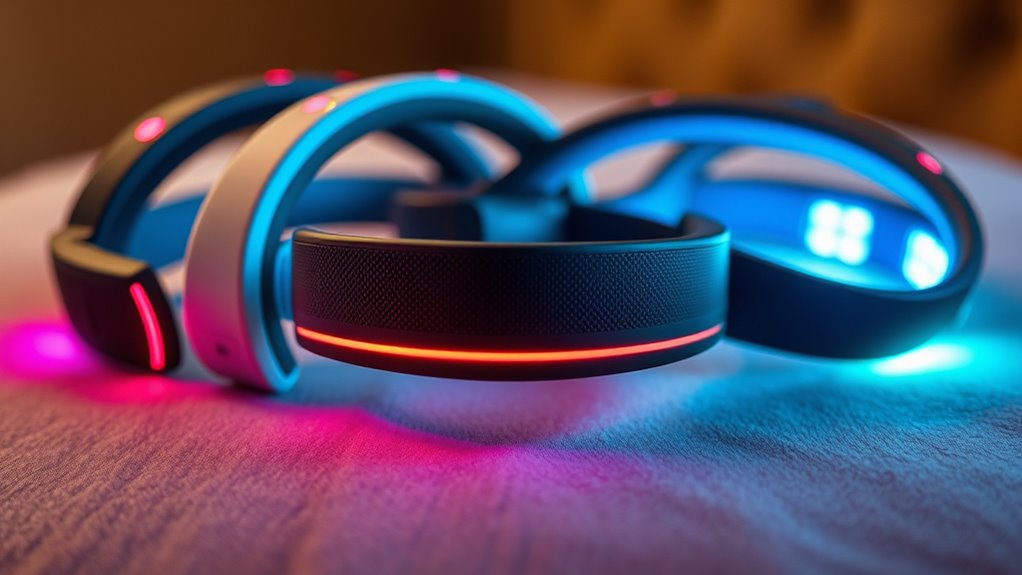

A smart headband can add a structured check-in to an art therapy routine, but these devices are biofeedback tools, not art materials or therapy replacements. I’d start with the MUSE S Athena if sleep, focus, and recovery insights matter alongside creative sessions; choose the Flowtime for a broader set of meditation-related signals and session reports; or pick the SereniBrain for EEG feedback with downloadable session data. The MUSE 2 takes a simpler path, using responsive sound and a post-session calm score to support meditation.

Get the latest gadgets delivered free with Prime
- Fast, free delivery on millions of items
- Prime Video, Amazon Music and more included
- Member-only deals all year
The main tradeoff is between breadth of sensing and ease of use. More metrics can help users notice patterns before or after making art, but extra sensors, app features, and optional subscriptions may add friction. None of these headbands directly evaluates artwork or guides art therapy; I’m ranking them by how clearly their sensing and feedback can complement a creative wellness practice.
Complete the kit



Key Takeaways
- The MUSE S Athena is the broadest fit here for people who want sleep, focus, and recovery tracking alongside meditation features.
- Flowtime reports brainwaves, heart rate, HRV, relaxation, attention, and pressure, making it the clearest pick for comparing several session signals.
- SereniBrain suits users who want EEG feedback, guided exercises, session records, and downloadable data without a stated Premium tier.
- MUSE 2 favors a low-complexity meditation loop: responsive sound during a session and a calm score afterward.
- All four require a compatible phone and app, and none is a substitute for professional art therapy or clinical assessment.
| Muse S Athena 3rd Gen Brain-Sensing Sleep Tracking Headband, Dark Grey |  | Best Overall for Creative Wellness Routines | Generation: 3rd Gen | Sensors: EEG and fNIRS | Connectivity: Bluetooth | VIEW ON AMAZON | See Our Full Breakdown |
| Flowtime Biosensing Meditation Headband |  | Best for Multi-Metric Session Reflection | Brand: Entertech | Model: Flowtime, ET-BIO-001 | Weight: 29 g | VIEW ON AMAZON | See Our Full Breakdown |
| SereniBrain EEG Neurofeedback Headband for Meditation and Brainwave Monitoring |  | Best for EEG Feedback and Downloadable Records | Brand: SereniBrain | Model: TH21A | Sensor type: EEG | VIEW ON AMAZON | See Our Full Breakdown |
| MUSE 2 EEG Meditation Headband |  | Best for Guided, Low-Complexity Check-Ins | Brand: MUSE | Model number: MS-03-OP-ML | Sensors: EEG | VIEW ON AMAZON | See Our Full Breakdown |
| smart multi sensory headband for art therapy | Connectivity | Sensors | Brand | Model |
|---|---|---|---|---|
| Muse S Athena 3rd Gen Brain-Se | Bluetooth | EEG and fNIRS | — | — |
| Flowtime Biosensing Meditation | Bluetooth | Brainwave and heart rate monitors | Entertech | Flowtime, ET-BIO-001 |
| SereniBrain EEG Neurofeedback | Bluetooth | — | SereniBrain | TH21A |
| MUSE 2 EEG Meditation Headband | Bluetooth | EEG | MUSE | — |
More Details on Our Top Picks
Muse S Athena 3rd Gen Brain-Sensing Sleep Tracking Headband, Dark Grey
The Muse S Athena is my strongest overall choice for someone who wants a headband to support a wider wellness routine around art-making, rather than only a brief meditation check-in. Its EEG and fNIRS sensors track sleep, focus, and recovery through the Muse app, and its listed features include sleep support, meditation, and brain-training experiences. That range may help a user notice whether a creative session feels different after rest or a focused pause.
Compared with the MUSE 2, Athena reaches beyond meditation feedback into sleep and recovery tracking; compared with Flowtime, its described strengths lean more toward broad routine support than detailed biometrics such as heart rate and HRV. Its adjustable fit is useful, but sensor contact with skin is required, so placement and tolerance matter. An optional Premium subscription adds an AI coach, more brain insights, and a large meditation library; the core appeal should still make sense to buyers who want to begin with the app’s included features.
For art therapy-adjacent use, I see this as a companion for checking in before or after a creative exercise, not as a tool that measures emotional meaning or judges the artwork. The bigger feature set also makes this less direct than SereniBrain if all a buyer wants is EEG session data. I’d choose Athena for the broadest described mix, while skipping it if skin-contact sensors or subscription-gated extras are deal-breakers.
Pros:- Combines EEG and fNIRS sensing
- Tracks sleep, focus, and recovery
- Includes meditation and sleep-support features
- Adjustable headband works with the Muse app
Cons:- Sensors need skin contact, which may not suit every wearer
- An optional Premium subscription adds some of the expanded coaching and content
- The listed description does not provide battery-life details
Best for: People who want meditation support plus sleep, focus, and recovery tracking around a regular creative wellness routine.
Not ideal for: Buyers who want a simple EEG-only tool, dislike skin-contact sensors, or expect every app feature and meditation to be included without an optional subscription.
- Generation:3rd Gen
- Sensors:EEG and fNIRS
- Connectivity:Bluetooth
- App:Muse app
- Tracked areas:Sleep, focus, and recovery
- Subscription:Optional Premium subscription
- Color:Dark Grey
Our verdict“I’d choose Athena for the broadest stated mix of sensing and routine support, provided its skin-contact fit and optional subscription features suit the buyer.”
Flowtime Biosensing Meditation Headband
Flowtime is the most explicit pick for buyers who want to compare several body and brain signals around a meditation or art-making routine. It tracks brainwaves, heart rate, HRV, relaxation, attention, and pressure, then provides real-time feedback and detailed session reports. That range makes it easier to build a structured before-and-after check-in than the MUSE 2’s more focused calm-score approach.
For a creative practice, the reports and progress comparisons may help a person keep notes alongside artwork or session reflections. This is still self-tracking, not an interpretation of what a drawing means. Compared with Athena, Flowtime is more specific about its listed biometric measures and its operating time; Athena, by contrast, adds sleep and recovery tracking. Flowtime also includes guided lessons and an unguided mode, giving users a choice between instruction and quiet work.
The 29 g weight and stated battery life of about eight hours of use make it a practical portable option, with up to 50 days on standby. Its limits are clear: it requires a smartphone and companion app, is not water resistant, and some lessons require a subscription. I’d rank it behind Athena as an all-around routine companion, but ahead of the more meditation-focused MUSE 2 when detailed session comparison is the priority.
Pros:- Tracks brainwaves, heart rate, and HRV alongside attention and relaxation
- Offers real-time feedback and detailed reports
- Includes guided lessons and an unguided mode
- Lightweight at 29 g with stated use and standby figures
Cons:- Needs a smartphone and companion app
- Not water resistant
- Some app lessons require a subscription
Best for: People who want multiple meditation-related signals and session reports to pair with written or artistic reflection.
Not ideal for: Anyone seeking a standalone device, water-resistant wear, or lessons that never depend on subscription access.
- Brand:Entertech
- Model:Flowtime, ET-BIO-001
- Weight:29 g
- Sensors:Brainwave and heart rate monitors
- Connectivity:Bluetooth
- Compatible systems:Android 6.0 and iOS 14
- Battery:About 8 hours of use; up to 50 days standby
- Water resistance:Not water resistant
- Warranty:One year
Our verdict“I’d pick Flowtime when session-by-session biometric reporting matters more than Athena’s additional sleep and recovery emphasis.”
SereniBrain EEG Neurofeedback Headband for Meditation and Brainwave Monitoring
SereniBrain is a straightforward choice for people who want brainwave feedback and a record of their sessions without needing the broadest list of biometrics. Its forehead sensors track alpha, beta, and theta patterns during meditation, focus, and relaxation sessions. The companion app offers guided exercises, real-time feedback, session recording, and downloadable data—useful if a buyer wants to pair a creative session with personal notes or maintain a record over time.
Compared with Flowtime, SereniBrain reports a narrower set of signals: the supplied details describe EEG patterns rather than heart rate and HRV. Compared with the MUSE 2, it puts more emphasis on recording and exporting sessions, while MUSE 2 centers on responsive sound guidance and a calm score. The included carrying case and six signal-collecting pads add practical value for setup and storage.
The tradeoff is phone dependence: a compatible smartphone or tablet and the app are required. The listed information also does not state battery life, so it is harder to plan frequent use than with Flowtime. I’d favor SereniBrain for users who value accessible EEG feedback and downloadable records, but not for anyone looking for sleep tracking, multi-metric body data, or a headband that works independently of an app.
Pros:- Tracks alpha, beta, and theta brainwave patterns
- Provides real-time feedback and guided exercises
- Records sessions and allows data downloads
- Includes a carrying case and six signal-collecting pads
Cons:- Requires a compatible smartphone or tablet and companion app
- Battery life is not specified in the supplied product details
- The described tracking is narrower than Flowtime’s biometrics or Athena’s sleep and recovery features
Best for: People who want EEG-based meditation feedback, guided exercises, and downloadable records to pair with their own creative reflections.
Not ideal for: Buyers who want heart-rate or sleep metrics, a device independent of a smartphone, or clear battery-life information before choosing.
- Brand:SereniBrain
- Model:TH21A
- Sensor type:EEG
- Tracked patterns:Alpha, beta, and theta
- Connectivity:Bluetooth
- Compatibility:Smartphones and tablets
- Operating systems:iOS 14 or higher; Android 10 or higher
- Included components:Headband, carrying case, USB charging cable, manual, and six signal-collecting pads
- Warranty:1 year
Our verdict“I’d choose SereniBrain for EEG feedback and exportable session records, while accepting its app dependence and narrower sensor scope.”
MUSE 2 EEG Meditation Headband
The MUSE 2 makes the most sense for a buyer who wants a guided meditation loop rather than a broad dashboard of measurements. It tracks brain activity and stress, pairs with the MUSE app, and uses responsive sound guidance during sessions. A calm score afterward gives the user a simple way to review the experience without sorting through Flowtime’s wider set of biometric reports.
That focused approach can fit a short pause before or after making art: the user can follow sound feedback, then reflect on how the session felt. Compared with the newer MUSE S Athena, MUSE 2 is less oriented toward sleep, focus, and recovery tracking. Compared with SereniBrain, the listed strengths lean toward guided audio feedback and a post-session score rather than downloadable session data. Headphones are not included, so the buyer should account for how they plan to hear the guidance.
Core features work without a Premium subscription, which keeps the starting routine simpler than options where extra content or coaching is subscription-based. Still, some features require Premium, and the device is not water resistant. I’d place it fourth because its described sensing and reporting are less expansive for multi-sensory self-observation, not because responsive guidance lacks value. Choose it when ease of guided meditation matters more than sensor breadth.
Pros:- Provides EEG-powered meditation feedback and session tracking
- Offers responsive sound guidance
- Tracks stress and brain activity with a post-session calm score
- Core features work without a Premium subscription
Cons:- Not water resistant
- Headphones are not included
- Some app features require an optional Premium subscription
Best for: People who want sound-guided meditation, a simple post-session calm score, and core app features without starting with Premium.
Not ideal for: Buyers who prioritize sleep tracking, multiple biometrics, included headphones, or a water-resistant device.
- Brand:MUSE
- Model number:MS-03-OP-ML
- Sensors:EEG
- Connectivity:Bluetooth
- Compatible devices:iOS and Android smartphones
- Supported application:Meditation & Sleep App
- Metrics:Stress and brain activity
- Water resistance:Not water resistant
- Headphones:Not included
Our verdict“I’d choose MUSE 2 for a guided and relatively simple meditation check-in, not for the broadest set of measurements.”

How We Picked
I ranked these products for the specific job implied by smart multi sensory headband for art therapy: supporting reflection around creative activity with measurable signals, useful feedback, and a manageable routine. Since none is described as an art-making device, I did not treat artistic prompts or clinical outcomes as established capabilities. Instead, I looked at whether a headband could reasonably fit before or after drawing, painting, collage, or other expressive work.
My ranking gives weight to sensor breadth and relevance, the clarity of feedback, the usefulness of session records, and practical friction such as phone dependence or subscription features. Flowtime places highly for its range of reported biometrics and detailed comparisons, while MUSE S Athena earns the lead for combining EEG and fNIRS with sleep, focus, and recovery features. SereniBrain offers a direct EEG-and-data route, and MUSE 2 stands out for responsive sound guidance rather than broad reporting.
I also accounted for known limitations, including skin-contact needs, no water resistance where specified, missing battery-life information, and optional paid app features. Comfort and sensory tolerance are personal, so I avoid assuming a sensor band will suit everyone. These products can support self-observation, but they do not diagnose conditions, interpret artwork, or replace guidance from a qualified art therapist.
| smart multi sensory headband for art therapy | Sensors | Brand | Model |
|---|---|---|---|
| Muse S Athena 3rd Gen Brain-Se | EEG and fNIRS | — | — |
| Flowtime Biosensing Meditation | Brainwave and heart rate monitors | Entertech | Flowtime, ET-BIO-001 |
| SereniBrain EEG Neurofeedback | — | SereniBrain | TH21A |
| MUSE 2 EEG Meditation Headband | EEG | MUSE | — |
Factors to Consider When Choosing Smart Multi Sensory Headband For Art Therapy
I’d choose a headband based on the kind of check-in that will actually fit beside creative work. First decide whether you want a simple guided pause, brainwave feedback, or several signals to compare over time. Then check fit, app requirements, and which features sit behind optional subscriptions. A larger feature list only helps if it supports a routine you are comfortable repeating.
Match the feedback to your art practice
For a brief grounding exercise before drawing or painting, responsive sound guidance may be more useful than a dense metrics screen. MUSE 2 is the clearest fit for this style, while SereniBrain adds guided exercises and session recording. If your goal is to reflect on changes across sessions, Flowtime’s detailed reports and comparisons may offer more material to pair with a journal or artwork log.
A headband cannot tell you what a piece of art means, whether a session was therapeutic, or what emotion you should feel. I’d treat readings as optional prompts for personal reflection and keep the creative activity itself at the center.
Decide how many signals you want
These products differ in the range of measurements they describe. SereniBrain and MUSE 2 focus on EEG-related feedback, though their app experiences differ. Flowtime lists brainwaves plus heart rate, HRV, relaxation, attention, and pressure. Athena combines EEG and fNIRS with sleep, focus, and recovery tracking. More signals may support richer pattern-spotting, but can also invite more data review than a buyer wants.
I’d avoid choosing by sensor count alone. Pick the smallest set that answers a real question for your practice, such as whether a brief guided pause feels helpful or whether sleep and recovery patterns matter to your routine.
Check app and subscription needs
All four rely on a phone app, so compatibility and willingness to keep a phone nearby matter. SereniBrain lists iOS 14 or higher and Android 10 or higher; Flowtime lists iOS 14 and Android 6.0; MUSE 2 supports iOS and Android smartphones. Athena works through the Muse app. Check the current app requirements before buying, since software support can change.
Optional Premium features vary. MUSE 2’s core features work without Premium, while its additional features may require it. Athena’s optional tier adds an AI coach, brain insights, and more meditations. Flowtime notes that some lessons require a subscription. I’d base a decision on the included experience rather than assuming paid extras are necessary.
Think about comfort and setup
Fit and sensor contact affect whether a headband becomes part of a regular routine. Athena specifically requires skin contact for its sensors. SereniBrain includes hydrogel sensor pads, while its forehead-sensor placement may involve a setup step. The supplied details describe Flowtime as lightweight at 29 g, but personal comfort still depends on head shape and sensitivity.
If pressure, skin contact, or wearing a band during creative work feels distracting, consider using it only for a separate check-in before or after making art. None of these products is described as water resistant, so they are not suited to wet or messy workspaces where splashes are likely.
Use data as reflection, not diagnosis
Brainwave and stress-related readouts can be useful as self-tracking prompts, but they do not explain the causes of a feeling or establish a clinical condition. A session report may show patterns; it cannot assess the meaning of a painting or replace discussion with an art therapist. Keep notes about context—sleep, surroundings, and the type of activity—rather than treating any single score as a verdict.
If you are working with a therapist, ask whether self-tracking fits your goals and how to use it without adding pressure. Buyers seeking treatment or assessment should look to a qualified professional rather than relying on a consumer headband.
Frequently Asked Questions
Can a smart headband provide art therapy?
No. These headbands provide sensor-based feedback, guided meditation, or session tracking; the supplied details do not describe art-making guidance or therapy. I’d treat one as an optional companion to creative reflection, not as a substitute for a qualified art therapist or a clinical service.
Which option has the broadest range of measurements?
Flowtime lists brainwaves, heart rate, HRV, relaxation, attention, and pressure. Athena covers EEG and fNIRS alongside sleep, focus, and recovery. The better fit depends on whether you want several meditation-session signals or a wider routine that includes sleep and recovery; a longer metric list does not automatically make a device more useful for every buyer.
Which headband is simplest for guided meditation?
MUSE 2 is the most focused choice for responsive sound guidance and a calm score after a session. Its core features work without Premium, though some other features require an optional subscription. SereniBrain also includes guided exercises, but adds session records and downloads for users who want more documentation.
Do these headbands need a smartphone?
Yes, the listed options depend on a companion app and compatible phone or tablet. SereniBrain specifies smartphone and tablet compatibility, while MUSE 2 is described for iOS and Android smartphones; Flowtime and Athena also use apps. I’d check the current operating-system requirements and app access before choosing a model.
Should I trust a calm score or brainwave reading as a diagnosis?
No. The described scores and sensor readings are for feedback and self-tracking, not diagnosis or treatment. They cannot establish what a person feels, interpret creative work, or replace professional care. Use them as one optional reflection point and seek qualified support for clinical questions.
Conclusion
For the widest described wellness mix around creative practice, I’d choose MUSE S Athena, especially if sleep, focus, and recovery belong in the same routine. Pick Flowtime if comparing several meditation-related signals and reading session reports is the priority. SereniBrain is a better match for EEG feedback with recorded, downloadable sessions, while MUSE 2 suits buyers who want sound-guided meditation and a simple post-session check-in.
Whichever option you choose, let the headband support your process rather than direct it. These devices do not provide art therapy or interpret artwork, and their phone-dependent apps and sensor fit deserve a practical check before purchase. For professional help, pair creative work with guidance from a qualified practitioner.
Halloween Picks

Fun Costumes Creepy Twin Boys Halloween Animatronic

12-Foot Inflatable Pumpkin Halloween Archway with LED Lights

Jenaai 5.3-Foot Motion-Activated Halloween Animatronic Skeleton
As an affiliate, we earn on qualifying purchases.