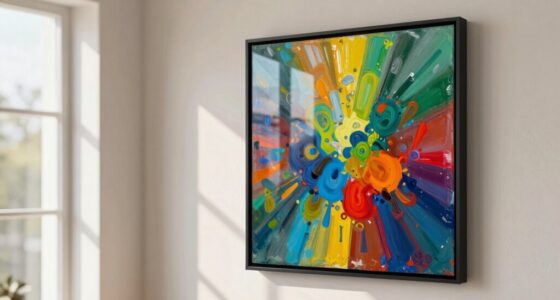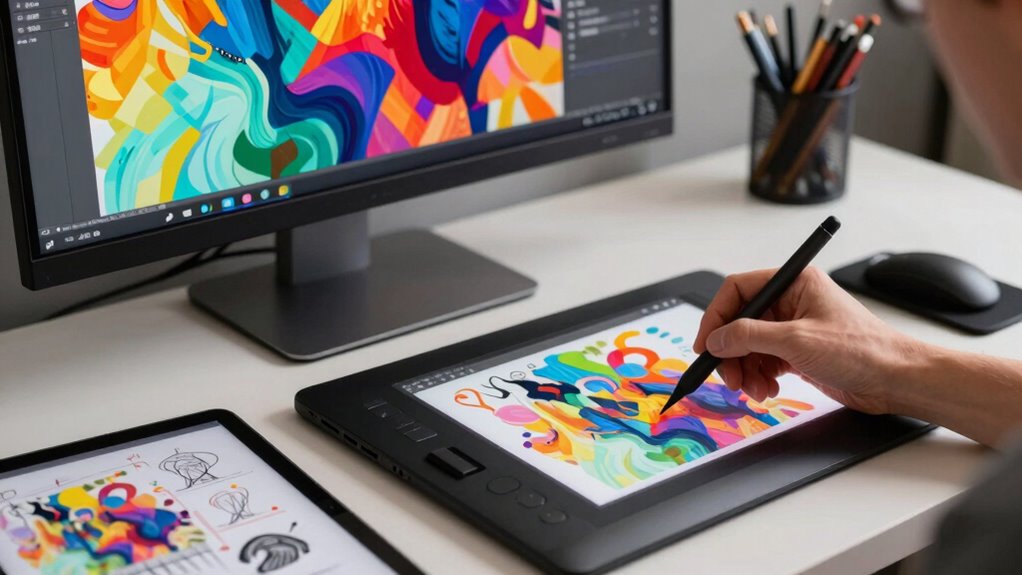

To turn synthetic images into meaningful visual language, you can actively manipulate and abstract them using digital tools. Focus on reshaping, distorting, or enhancing visuals to evoke emotion or communicate ideas beyond their surface. By combining elements creatively and exploring symbolism, you guide viewers to interpret your work on a deeper level. Embracing this approach invites you to craft powerful stories and challenge conventions. Continue exploring, and you’ll discover even more ways to craft impactful visual narratives.
Key Takeaways
- Artists manipulate and distort synthetic images to evoke emotions and challenge perceptions, transforming mechanical visuals into compelling narratives.
- They strip realistic details to create abstract symbols that convey complex ideas and encourage deeper viewer interpretation.
- Digital tools enable layered, inventive manipulations that develop unique aesthetic languages and expand expressive possibilities.
- By fostering active engagement and layered meanings, artists use abstraction to generate dialogue and challenge artistic conventions.
- Intentional selections of manipulations and concepts help artists craft visuals that communicate specific messages and evoke emotional responses.
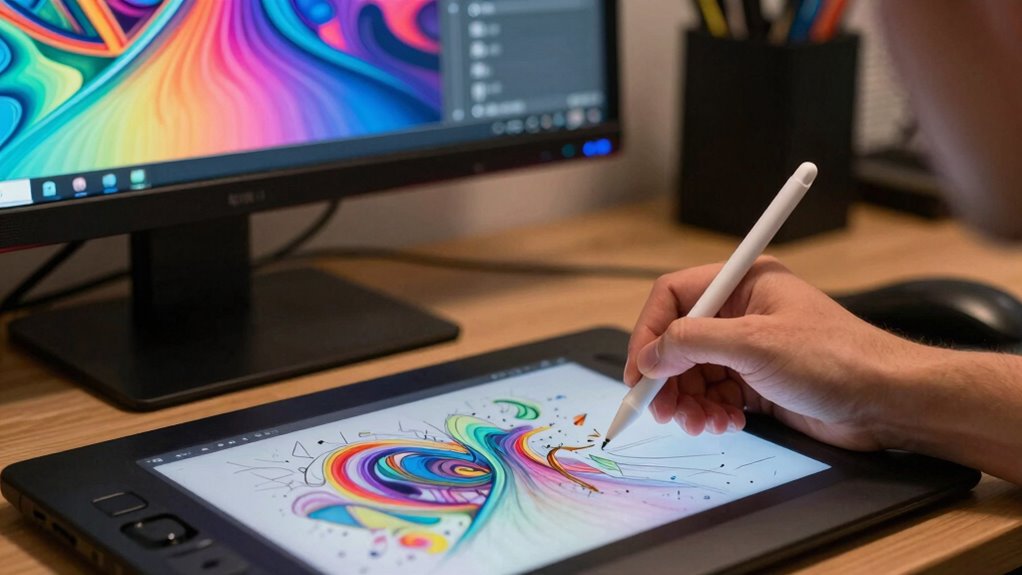
In a world saturated with digital images, artists are increasingly transforming synthetic visuals into powerful forms of communication. You might think that creating meaning from these images is straightforward, but it often involves intricate processes like digital manipulation and conceptual abstraction. Digital manipulation allows you to reshape, distort, or enhance synthetic images, giving you the ability to craft visuals that challenge perception or evoke emotion. Instead of simply presenting a raw image, you can tweak colors, merge elements, or introduce textures that weren’t originally there, all to serve a deeper artistic purpose. This control over the digital medium empowers you to push boundaries and experiment with new visual languages, turning cold, mechanical images into something compelling and thought-provoking.
Transform synthetic visuals through digital manipulation and abstraction, turning mechanical images into compelling, thought-provoking artistic expressions.
But it’s not just about technical skill; it’s about how you interpret and reframe these images through conceptual abstraction. You can strip away realistic details and focus on core ideas or themes, encouraging viewers to look beyond surface appearances. By abstracting the concept, you guide your audience to engage with the image on a more interpretive level. For instance, you might distort familiar shapes or combine disparate elements to symbolize complex ideas—translating abstract notions into visual forms that resonate on an emotional or intellectual level. This process makes synthetic images more than just digital artifacts; it transforms them into visual metaphors or symbols that communicate nuanced messages. Additionally, understanding the role of digital tools** in shaping artistic expression enhances your capacity to develop meaningful visual language. Recognizing the importance of digital manipulation techniques allows artists to effectively communicate their intended message through layered and inventive visuals. Exploring digital aesthetics can further inspire innovative approaches to image creation and interpretation. Embracing the potential of digital abstraction** enables artists to unlock new dimensions of expressive possibility.
Your ability to manipulate digital tools and embrace abstraction allows you to create a dialogue with your audience. Instead of passive viewing, your synthetic images become an active experience, inviting viewers to decipher layered meanings. The fusion of digital manipulation and conceptual abstraction opens up endless possibilities for innovation. You’re not limited to traditional representations; you can challenge conventions and explore new visual vocabularies that reflect contemporary issues, personal visions, or philosophical questions. Recognizing the importance of artistic intent helps you craft images that resonate more deeply and communicate your message effectively.
Ultimately, turning synthetic images into meaningful visual language is about intentionality. You select specific manipulations and abstract concepts to shape perceptions, evoke feelings, and provoke thought. It’s a dynamic dance between technology and creativity—using digital tools to craft images that transcend their mechanical origins and speak directly to human experience. In doing so, you elevate synthetic visuals from simple representations to compelling narratives, forging a new domain of artistic expression that is both innovative and deeply resonant.

Deepfake and Image Forgery Detection: Cybersecurity, Multimedia Forensics, Image Manipulation (De Gruyter STEM)
As an affiliate, we earn on qualifying purchases.
As an affiliate, we earn on qualifying purchases.
Frequently Asked Questions
What Tools Do Artists Use to Create Synthetic Images?
You use tools like digital manipulation software, such as Photoshop or GIMP, to craft synthetic images. These tools let you blend textures seamlessly and adjust details easily. You can add or remove elements, change colors, and experiment with effects to create a unique visual language. Texture blending helps you merge different visual components smoothly, giving your synthetic images depth and meaning, transforming them into compelling artistic expressions.
How Do Artists Choose Color Palettes for Synthetic Images?
You choose color palettes for synthetic images by considering color symbolism, which conveys emotions and ideas, and palette harmony, guaranteeing colors work well together. You analyze the message you want to communicate and pick hues that reinforce it. Balancing bold and subtle tones helps create visual interest, while maintaining harmony ensures your image feels cohesive. By thoughtfully selecting colors, you craft synthetic images that resonate meaningfully with viewers.
What Are Common Challenges in Transforming Synthetic Images?
Ever wonder what makes transforming synthetic images challenging? You might face perception gaps, where viewers struggle to interpret artificial visuals authentically. Authenticity concerns can also hinder acceptance, as audiences question if these images truly reflect reality. To overcome this, you need to guarantee perception gaps by adding subtle details and context, making synthetic images feel more genuine. Staying mindful of these challenges ensures your work resonates and communicates effectively.
How Does Audience Interpretation Influence Synthetic Image Creation?
Your audience’s perception influence shapes how you create synthetic images, as their interpretations can vary widely. You consider cultural context to guarantee your visuals resonate meaningfully, avoiding misinterpretation. By understanding different perspectives, you craft images that evoke intended emotions and messages. Audience feedback helps refine your work, making sure your synthetic images communicate effectively and connect deeply within diverse cultural backgrounds.
Can Synthetic Images Evoke Emotional Responses Effectively?
Synthetic images can evoke emotional responses effectively, even if they look like digital doodles. Imagine a pixelated sunset stirring your feelings—it’s all about emotional resonance and viewer perception. Artists craft these images to tap into universal emotions, making you feel joy, fear, or nostalgia. So, yes, synthetic images can be powerful emotional storytellers, proving that sometimes, digital art beats traditional canvases at tugging at your heartstrings.

Textured Art Tools, 4 Pcs with 4 Colors & Texture Designs Plastic Flexible Spreader Tool for Plaster Paint Scraper, DIY Graffiti Oil Painting, Plaster Art Pottery Scraper (Multicolor)
✔️ COMPLETE 4-PACK WITH 4 COLOR-CODED DESIGNS Get 4 durable textured art supplies in 4 vibrant colors (blue,…
As an affiliate, we earn on qualifying purchases.
As an affiliate, we earn on qualifying purchases.
Conclusion
You might think synthetic images lack depth, but as an artist, you can transform them into powerful visual stories. By carefully layering, manipulating, and infusing personal meaning, you turn cold pixels into emotive expressions. It’s natural to doubt their authenticity, yet through your creative process, synthetic images become a versatile tool—able to evoke emotion and provoke thought just like traditional art. Embrace the challenge, and you’ll discover endless ways to communicate visually in this digital age.
![WavePad Audio Editing Software - Professional Audio and Music Editor for Anyone [Download]](https://m.media-amazon.com/images/I/B1fcLEGCs6S._SL500_.png)
WavePad Audio Editing Software – Professional Audio and Music Editor for Anyone [Download]
Full-featured professional audio and music editor that lets you record and edit music, voice and other audio recordings
As an affiliate, we earn on qualifying purchases.
As an affiliate, we earn on qualifying purchases.
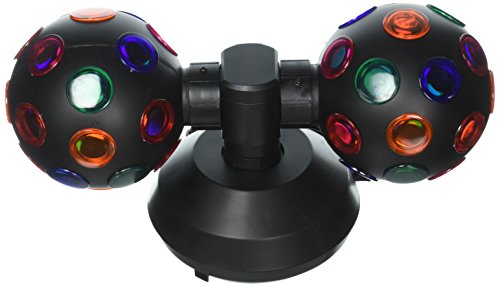
Visual Effects (V0231JR)
ETL approved
As an affiliate, we earn on qualifying purchases.
As an affiliate, we earn on qualifying purchases.