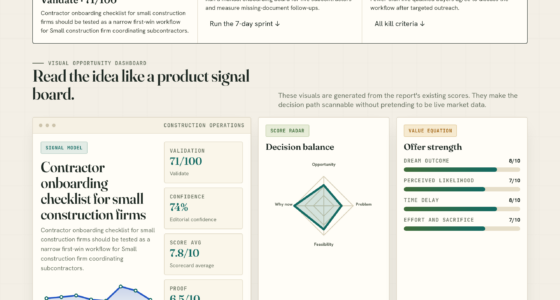

📊 Full opportunity report: The Gulf: Own the Capital on ThorstenMeyerAI.com — validation score, market gap, and execution plan.
TL;DR
Gulf countries are using their sovereign wealth funds to acquire AI infrastructure, aiming to own the technology and its returns. This marks a significant shift in how resource-rich states approach economic future and citizen welfare.
Gulf countries are rapidly investing their sovereign wealth funds into AI infrastructure, aiming to secure ownership of the technology that will define the next economy. This strategy marks a deliberate shift from resource-based wealth to digital capital ownership, with implications for global economic models and regional influence.
Since 2017, the Gulf states have launched major initiatives to own and control AI technology, including the UAE’s G42 conglomerate and Saudi Arabia’s HUMAIN subsidiary. This effort is part of the broader regional AI investment. These efforts involve deploying over two trillion dollars into AI, data centers, and frontier tech, making the region a significant player in the AI infrastructure race. Unlike Western models that focus on private markets and minimal state intervention, the Gulf’s approach emphasizes direct state ownership and distribution of AI-generated wealth to citizens, effectively turning their resource wealth into a digital dividend. This strategy leverages cheap energy and abundant solar power to support power-intensive AI infrastructure, aiming to outlast the depletion of oil reserves and secure economic dominance in the AI era. The region’s model contrasts sharply with Norway’s sovereign fund, which primarily acts as a savings vehicle, whereas Gulf funds are designed for current wealth distribution, funded by resource windfalls rather than taxes.Own the Capital
For five rows, one lever stayed dark. The Gulf pulls it hard: own the capital, distribute its returns to citizens — and now spend that capital to buy into AI, so the dividend outlives the oil.
Independent commentary, produced with AI assistance under human editorial oversight. The views are the author’s own and may change. This is analysis, not policy, economic, investment, or legal advice. Descriptions of Gulf sovereign wealth funds, the rentier social contract, national AI champions (G42, MGX, HUMAIN, Qai), and AI-infrastructure investment reflect publicly reported information as of mid-2026 and may change; population, asset, and investment figures are indicative. This phase maps differing approaches and endorses none; characterizations of contested political and labor arrangements present competing views, not a verdict. Country, program, and company names are referenced for analysis and imply no affiliation.
Implications of Gulf States’ AI Capital Ownership
The Gulf’s focus on owning AI infrastructure signifies a strategic move to control the economic benefits of the next technological wave. By investing heavily and directly in AI and data centers, these states aim to maintain economic influence, secure citizen welfare through resource dividends, and potentially reshape global AI governance. This approach challenges Western models centered on private ownership and limited state intervention, highlighting a different path for resource-rich nations to sustain prosperity amid resource depletion and technological change. The labor share is a key indicator of how economic benefits are distributed.
As an affiliate, we earn on qualifying purchases.
Regional AI Investment and Strategic Shifts
Since 2017, Gulf countries have established national AI strategies and invested over two trillion dollars into AI, compute, and digital infrastructure. Initiatives include the UAE’s G42 conglomerate, Saudi Arabia’s HUMAIN, and Qatar’s Qai, all designed to make the state a direct owner of the AI economy. This is part of a broader regional effort to diversify away from oil dependence and leverage their energy advantage—cheap electricity and solar power—to build a digital capital base that can outlive their resource assets. These efforts are also driven by geopolitical considerations, aiming to secure regional influence through technological sovereignty and economic resilience.
“The Gulf states are using oil wealth to acquire the next means of production—compute, data centers, frontier-AI stakes—while it still can.”
— Thorsten Meyer
As an affiliate, we earn on qualifying purchases.
Uncertainties in Gulf’s AI Ownership Strategy
It remains unclear how sustainable or scalable the Gulf’s AI ownership model will be over the long term, especially given geopolitical tensions, potential technological shifts, and the challenges of managing such large-scale investments. Additionally, the social and political implications of a system that ties citizen welfare to authoritarian governance are still to be fully understood.
solar-powered AI infrastructure equipment
As an affiliate, we earn on qualifying purchases.
As an affiliate, we earn on qualifying purchases.
Next Steps in Gulf AI and Capital Ownership
Gulf countries are expected to continue expanding their AI investments, with new projects and partnerships announced regularly. Monitoring the development of regional AI industries, governance frameworks, and citizen participation will be crucial. This is related to the free-download question for AI models. Additionally, global reactions and potential shifts in AI technology standards could influence the region’s strategic trajectory.
As an affiliate, we earn on qualifying purchases.
Key Questions
Why are Gulf states investing so heavily in AI now?
They aim to diversify their economies, secure ownership of future technological benefits, and convert resource wealth into digital capital that can sustain prosperity beyond oil depletion.
How does this approach differ from Western models?
Gulf states emphasize direct state ownership and distribution of AI wealth, contrasting with Western reliance on private markets and minimal government intervention.
What are the risks of Gulf’s AI ownership strategy?
Potential risks include geopolitical tensions, technological dependence on external actors, and social implications of wealth distribution tied to authoritarian governance.
Will this strategy benefit Gulf citizens directly?
Yes, the model aims to provide a form of income or social dividend through resource wealth and AI infrastructure ownership, but it is contingent on political stability and effective management.
Source: ThorstenMeyerAI.com