📊 Full opportunity report: From Development Build To Deal: Assessing Game Technology on IdeaNavigator AI — validation score, market gap, and execution plan.

Get the latest gadgets delivered free with Prime
- Fast, free delivery on millions of items
- Prime Video, Amazon Music and more included
- Member-only deals all year
TL;DR
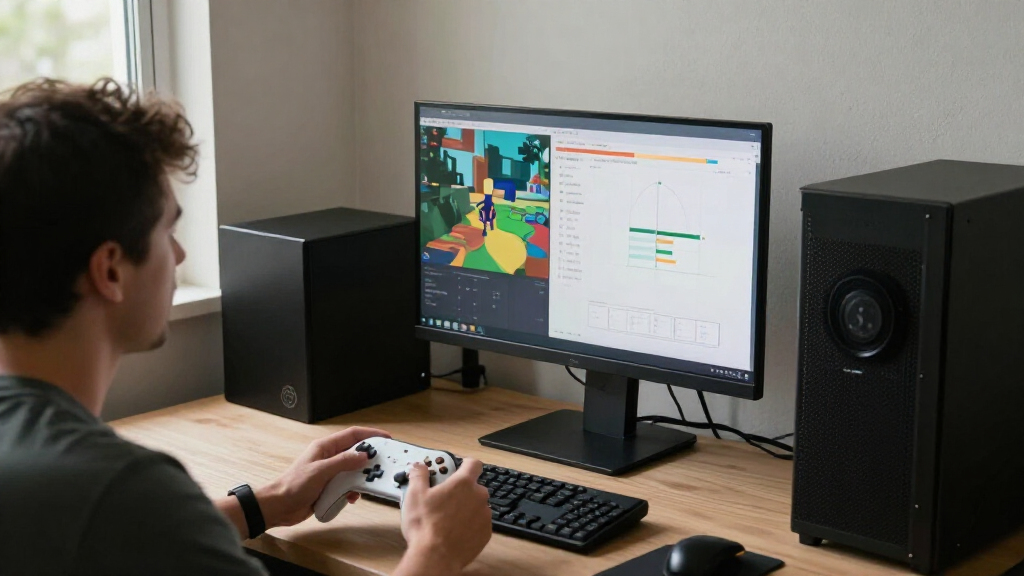
IdeaNavigator AI proposes a fixed-scope technical audit for independent game publishers considering milestone-funded deals with external studios. The proposed service would review engine versions, middleware licenses, build processes and platform readiness, but its commercial demand has not yet been validated.
IdeaNavigator AI has proposed a technical due-diligence service for independent game publishers that fund external studios against milestones. The suggested audit would check a game’s engine and middleware, licensing, build process and platform readiness before a publisher commits money, but the proposal has not been presented as a launched product or validated business.
The proposal targets a specific buyer: a publisher’s head of production or business development assessing an external studio’s project. The concern is that a publisher may approve funding on the basis of a pitch and vertical slice, then discover technical issues months later. Examples identified in the proposal include an outdated or unpatched engine, middleware without appropriate platform licenses, builds that cannot be reproduced reliably, or work that may face console-certification difficulties.
The proposed minimum viable service is a fixed-scope audit conducted under a nondisclosure agreement on the studio’s repository and build machine. It would inventory engine versions and patch levels, plugins and middleware licenses, open-source licenses, continuous-integration and reproducible-build practices, and performance captures on target hardware. A studio would complete a platform-certification readiness checklist using its own developer access; the audit provider would not independently claim access to platform-holder systems.
An expert review would turn those checks into a red, amber and green report tied to deal milestones. Repeat scans at each milestone could flag changes in the project’s technical profile. The suggested revenue model combines a fee for each pre-signing audit with a recurring monitoring subscription. Neither the product’s availability nor its price, operating results or customer commitments are reported.
From Development Build To Deal
IdeaNavigator AI proposes a technical audit for independent publishers funding external game studios. The service is still unvalidated, with demand and commercial value yet to be tested.
What the audit would check
A fixed-scope review would examine technical evidence before or during milestone funding.
Engines and licenses
Inventory engine versions, patch levels, plugins, middleware and open-source license obligations.
Reproducible process
Review continuous integration and whether builds can be reproduced reliably.
Readiness evidence
Review performance captures on target hardware and a studio-completed certification checklist.
How findings could shape a deal
An expert report would link technical checks to funding milestones.
Examine the studio repository and build machine with agreed access.
Summarize checks in a red, amber and green report tied to deal milestones.
Repeat scans at milestones to flag changes in the project’s technical profile.
Value depends on proof
The proposal identifies a timing problem, but does not establish how often audits would catch issues or prevent losses.
- Find technical questions while deal terms and milestones are being assessed.
- Make engine, license and build risks clearer to business teams.
- No pilot results, customer commitments or pricing are reported.
- An audit cannot guarantee console certification or predict production outcomes.
The proposed pilot
Three discounted audits would test whether the workflow is useful to publishers.
Technical Risk Before Funding
For publishers, the proposal addresses a timing problem: a technical issue found before signing may affect whether to fund a project, how to structure milestones, or what remediation to require. The same issue discovered after funding can contribute to missed milestones, re-scoping or write-offs, although the proposal provides no measured data on how often those outcomes occur or how much an audit could prevent.
A focused audit could also make technical questions more legible to business teams. Engine versions, license obligations and build reliability can be difficult to assess from a polished demo alone. A milestone-linked report would offer a repeatable checklist for comparing findings with contractual commitments. Its value would depend on whether the checks catch problems early, whether studios can provide the needed access, and whether publishers find the report worth its price.
The opportunity is narrower than general software due diligence: it concentrates on game-specific dependencies such as engines, middleware and console certification. That focus may fit a defined buyer and use case, but it does not establish that publishers will adopt a separate audit or that one review can reliably predict production outcomes.
Products Worth Considering

Logitech MX Creative Console with 9 Customizable Keys, Graphite

Anker SOLIX C1000 Gen 2 Portable Power Station, 1,024Wh

Samsung Odyssey G9 49-Inch Curved Dual QHD Gaming Monitor
As an affiliate, we earn on qualifying purchases.
Engine Terms and Patch Risks
The proposal points to changes in engine pricing, included tools and security support as reasons to check technical dependencies while a project is live. It states that Unity raised Pro and Enterprise prices by 5% from January 12, 2026, and that Havok Physics is no longer included with paid plans from Unity 6.3. These details are presented as rationale for verifying a project’s engine and middleware arrangements; they do not establish that any particular game has been affected.
It also cites Unreal Engine’s 3.5% “Launch Everywhere with Epic” royalty, in place of a 5% rate, since January 1, 2025, subject to ongoing release conditions. The proposal gives no deal-specific assessment of how those conditions apply, so publishers would need to verify terms against the relevant project and agreement.
Security is another stated reason to record engine versions. The proposal says Unity patched CVE-2025-59489 in October 2025 for builds from 2017.1 onward, while no patch was available for the 2017 and 2018 editors. These examples make version and patch checks relevant due-diligence questions; they are not evidence of a breach or vulnerability in a named studio’s project.
Demand and Audit Scope
No pilot results, customer commitments or pricing are provided. It is not clear whether publishers have agreed to trial the service, how an audit would be staffed, how long it would take, or what evidence would qualify a project as red, amber or green. The proposal also does not set out how findings would be independently verified or how disagreements between an auditor and a studio would be handled.
Platform readiness is a particular boundary: the suggested checklist is completed by the studio through its own developer access. The proposal does not establish that an auditor could confirm platform-holder decisions or guarantee certification. Nor does it quantify the frequency or financial cost of the technical problems described.
The stated engine pricing, royalty and security details are rationale for the idea, not proof that the proposed service can reduce project risk. Whether a report changes a deal decision or prevents later production problems remains untested.
Three-Publisher Pilot Test
The proposed next step is to offer three publishers discounted audits on current or recently signed deals. The test would compare audit findings with problems that later arise during production and ask each publisher whether it would make the audit a standard pre-signing step at the proposed price.
No timetable or results are reported. Evidence from those trials would help establish whether publishers will provide access to repositories and build machines, whether the checklist finds actionable issues, and whether milestone-by-milestone monitoring justifies a recurring subscription. Until then, the concept remains a proposed workflow rather than a confirmed commercial service.
Source: IdeaNavigator AI
Key Questions
What is the proposed service?
It is a technical audit for game publishing deals, intended to review a studio’s engine, dependencies, licenses, build practices and readiness for target platforms before or during milestone funding.
Who would use the audit?
The proposal identifies heads of production or business development at independent publishers that fund external studios against milestones as its initial buyers.
Is the service already available?
The information describes a proposed minimum viable service and a plan to test it with three publishers. It does not report a launch, paying customers or completed pilot audits.
Would an audit guarantee console certification?
No such guarantee is described. The proposed platform-readiness checklist would be completed by the studio using its own developer access, and the proposal does not claim that an auditor can determine a platform holder’s certification decision.
How would demand be tested?
The suggested test is to conduct discounted audits for three publishers, compare findings with subsequent production problems, and ask whether each would adopt the audit before signing at the quoted price.
Source: IdeaNavigator AI