
Throughout history, your way of talking about art has shifted from personal taste and religious values to detailed analysis of meaning and context. Critics once focused on technical skill and tradition but now emphasize innovation, emotion, and concepts. Their language influences how society perceives and values art, shaping public opinion and artistic standards. If you keep exploring, you’ll discover how these evolving conversations continue to shape our understanding and appreciation of art today.
Key Takeaways
- Art criticism has evolved from valuing tradition and technical mastery to analyzing meaning, context, and emotional expression.
- Influential critics like Greenberg shaped standards, guiding both public perception and artistic innovation over time.
- Critical language and criteria reflect broader cultural shifts, illustrating changing societal values and aesthetic ideals.
- Critics serve as mediators, translating complex ideas into accessible evaluations and shaping emerging artistic movements.
- Awareness of critic influence enhances appreciation by understanding the historical and cultural context behind aesthetic judgments.

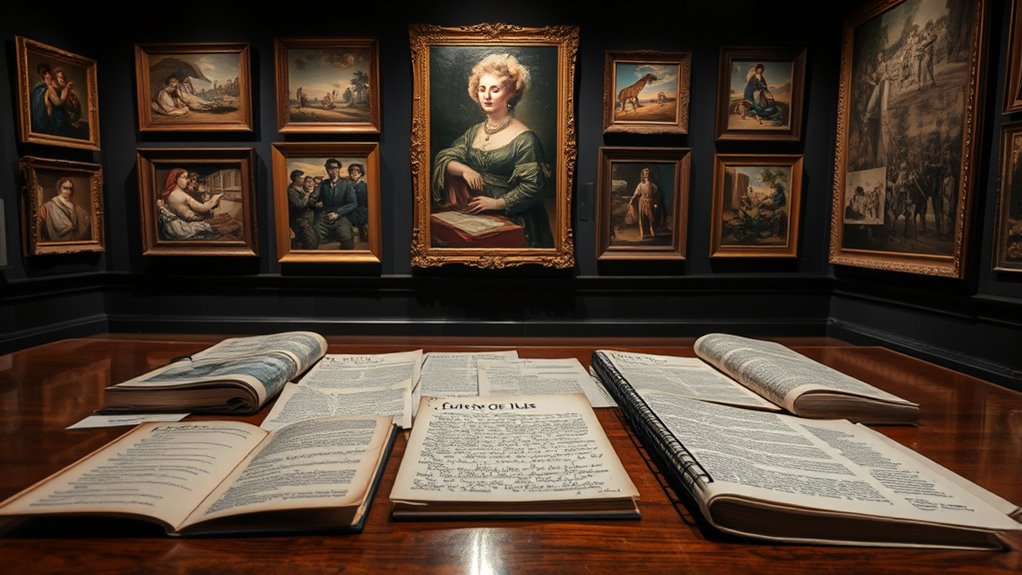
Art criticism has evolved considerably over the centuries, shaping how society perceives and values creative works. When you look back, you’ll notice that early critics often relied heavily on tradition and personal taste, emphasizing technical mastery or religious significance. Over time, the conversation shifted from simple appreciation to a deeper analysis of meaning and context. This shift reflects what’s known as aesthetic evolution — how the standards and ideals of beauty develop and change across different eras. As artistic styles diversified, critics began to question traditional notions of beauty and skill, pushing for new ways to interpret art. This process mirrors society’s broader cultural shifts, and you can see how critic influences play a *vital* role in this transformation. Influential critics like Jonathan Richardson or Clement Greenberg didn’t just judge art; they shaped public taste and set new standards for what was considered valuable or innovative. Their opinions carried weight, guiding artists and collectors alike, and fostering new ways of understanding artistic expression.
You, as a viewer or critic, are part of this ongoing dialogue. Since critics influence the conversation around art, your perceptions are often shaped by the language and values promoted by influential figures. For example, during the Renaissance, critics focused heavily on technical skill and adherence to classical ideals. Later, critics in the modern era championed innovation, emphasizing emotional expression or conceptual depth. These shifts demonstrate how critic influences can steer the aesthetic evolution of art, altering what is celebrated or dismissed. These evolving standards often reflect broader societal and cultural shifts, demonstrating that art criticism is deeply interconnected with societal change. The development of critical standards over time illustrates how societal values are reflected in aesthetic judgments, shaping the trajectory of art and its reception. As new movements emerge, critics often serve as mediators, translating complex ideas into accessible evaluations that shape public opinion. This dynamic ensures that art criticism remains a living conversation, continuously evolving with society’s values and tastes.
Moreover, your understanding of art is affected by this history of criticism. When you engage with a piece, consider how critic influences have framed your perception; their language, criteria, and values shape your interpretation. Recognizing the role of critic influences helps you appreciate that judgments are not purely objective but are embedded within a cultural and historical context. This awareness allows you to approach art with a more nuanced perspective, understanding that aesthetic evolution is ongoing and that critics have historically guided its course. As society continues to change, so too will the standards and conversations surrounding art. Your role, whether as a critic yourself or an enthusiast, is part of this rich, evolving dialogue that keeps art criticism vibrant and relevant through the ages.

iO CLEAN Screen Cleaner Spray (16oz - 473ml) – Best Large Cleaning Kit
- Versatile Screen Compatibility: Works on all electronic screens and devices
- Gentle, Scratch-Free Formula: Removes dust, fingerprints, grime safely
- Protective, Anti-Static Coating: Leaves a streak-free, smudge-free shine
As an affiliate, we earn on qualifying purchases.
Frequently Asked Questions
How Has Digital Technology Changed Art Criticism?
Digital technology transforms how you engage with art criticism today. You explore virtual galleries from anywhere and access diverse opinions instantly. Algorithms help curate personalized content, shaping your understanding of art styles and trends. You can participate in online discussions, comment on artworks, and share your views. This immediacy and connectivity make art criticism more accessible, dynamic, and inclusive, changing the way you discover and interpret art in the digital age.
What Role Does Social Media Play in Modern Art Discussions?
Social media plays a huge role in modern art discussions. You see viral trends that quickly spread across platforms, shaping public opinion. Influencer opinions often influence what gets attention and how art is interpreted. You can engage directly with artists or critics, making conversations more immediate and personal. This dynamic shifts traditional criticism, encouraging diverse perspectives and democratizing art criticism, so your voice can contribute to ongoing debates and trends.
How Do Cultural Differences Influence Art Interpretation?
Think of art interpretation as a kaleidoscope—you see different patterns based on your cultural perspectives. Your background shapes your interpretive frameworks, coloring how you understand symbols, themes, and emotions. Cultural differences act like lenses, revealing unique meanings in the same artwork. By recognizing these diverse viewpoints, you enrich your appreciation, understanding that art isn’t universal but a vibrant dialogue shaped by varied cultural stories and values.
Can Art Criticism Be Entirely Objective?
You might wonder if art criticism can ever be entirely objective. While aiming for objectivity, you’re inevitably influenced by subjectivity in critique and emotional influence, which shape your perspective. Personal experiences, cultural background, and feelings all play a role, making complete objectivity difficult. Nonetheless, endeavoring for fairness and awareness of these biases helps you provide more balanced, insightful evaluations of art.
How Do Artists Respond to Critical Reviews Historically?
You see, artists respond to critical reviews with artistic resilience, often using critique to fuel their growth. Throughout history, responses vary—some embrace feedback, while others resist it, shaping their work accordingly. This critique evolution influences how they view their art and public perception. Your reaction to criticism reflects your resilience, and understanding this dynamic helps you navigate the complex relationship between artists and critics, fostering growth and resilience.

EVEO Screen Cleaner Spray - Large Screen Cleaner Bottle - TV Screen Cleaner, Computer Screen Cleaner, for Laptop, Phone, Ipad - Computer Cleaning kit Electronic Cleaner (1 Pack)
- Versatile Electronic Screen Cleaner: Suitable for TVs, laptops, phones, and tablets
- Effective Streak-Free Cleaning: Removes dust, fingerprints, smudges easily
- Gentle on Sensitive Screens: Safe for LCD, LED, OLED, CRT screens
As an affiliate, we earn on qualifying purchases.
Conclusion
Throughout history, art criticism has evolved alongside society’s changing values and perspectives. Did you know that over 60% of art critics today believe that digital platforms have democratized art appreciation? This shift means your voice matters more than ever. As you engage with art, remember it’s part of a long, rich conversation that continues to adapt. Embrace your role in shaping how art is understood, appreciated, and critiqued for generations to come.

Screen Mom Screen Cleaner Spray 16oz Bottle for TV, Car, Laptop & Computer
- Streak-Free Formula: Leaves screens crystal clear and spotless
- Scratch-Free Cleaning: Includes microfiber cloth for gentle cleaning
- Safe for All Screens: Free from alcohol and ammonia
As an affiliate, we earn on qualifying purchases.