
Conceptual art focuses on ideas rather than physical objects, shifting the emphasis from craftsmanship to the message behind the work. It encourages you to think about the concepts and intentions that shape art, often using simple statements, instructions, or ephemeral forms. Your participation becomes key, as understanding and interpreting the meaning are more important than aesthetics. Exploring these ideas opens new ways to see creativity, and if you keep exploring, you’ll uncover even deeper insights.
Key Takeaways
- Conceptual art prioritizes ideas and concepts over traditional visual or material qualities of artworks.
- It encourages viewer participation and interpretation, making the concept central to the experience.
- The creative process often involves instructions, text, or ephemeral installations rather than finished objects.
- The value of the artwork lies in its underlying message and the dialogue it fosters, not in aesthetic appeal.
- It challenges conventional notions of art by emphasizing intellectual engagement over craftsmanship.
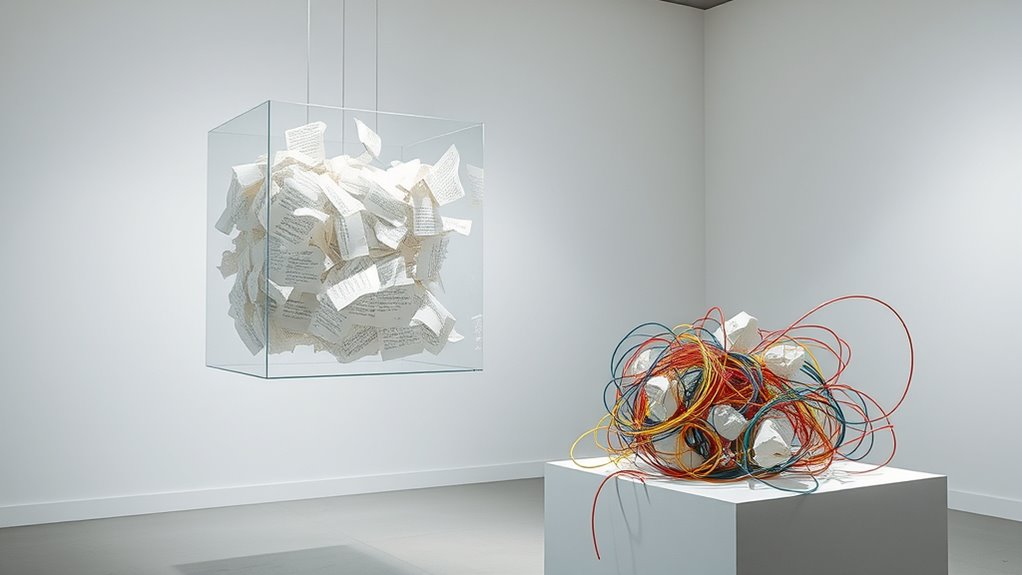
Conceptual art challenges traditional notions of art by emphasizing ideas over visual or material aspects. Instead of focusing on the finished object, you, as an observer or creator, are encouraged to explore the underlying concepts and intentions behind the work. This shift in focus invites you to contemplate the artistic philosophy that drives the piece, where the meaning takes precedence over aesthetics or craftsmanship. You might find yourself questioning what art really is and how it communicates ideas, rather than simply appreciating visual beauty or technical skill. The emphasis on ideas often leads artists to experiment with new forms of expression, such as text, instructions, or ephemeral installations that challenge the notion of art as a tangible object.
Understanding the artistic philosophy behind conceptual art helps you grasp its core purpose: to provoke thought, debate, and reflection. Artists deliberately blur the lines between art and everyday life, encouraging you to engage with their ideas in unconventional ways. This approach shifts the creative process from the traditional act of producing a visual object to a focus on the conceptual development itself. For you, the creative process becomes a journey of exploring and communicating complex ideas, often through minimal or unconventional means. For example, an artist might create a piece that consists of a simple statement or a set of instructions designed for others to interpret or execute. The act of sharing these ideas becomes as important, if not more so, than the physical artifact.
As you explore conceptual art, you’ll notice that the work often invites participation or mental engagement rather than passive observation. You may be asked to read, interpret, or even complete the artwork yourself, emphasizing the importance of your personal experience and understanding. This participatory nature underscores the belief that art is not static but a dynamic exchange of ideas. The creative process in conceptual art is less about the mastery of traditional skills and more about the clarity of thought and intent behind the work. It challenges you to think critically about the role of art in society and how it can serve as a vehicle for communication and social commentary.
Ultimately, conceptual art pushes you to move beyond surface appearances and confront the ideas that shape our perception of the world. It invites you to participate in a dialogue where the value of art lies in the concepts it embodies and the conversations it sparks. This shift in artistic philosophy transforms your understanding of creativity, making the idea itself the true artwork. Additionally, recognizing that cultural influences can shape the meaning and interpretation of conceptual art enhances your appreciation of its diversity across societies.
Frequently Asked Questions
How Did Conceptual Art Originate Historically?
You can see that conceptual art originated in the 1960s, driven by artists questioning traditional forms. They focused on artistic intentions and embraced philosophical influences like language and perception. Artists like Sol LeWitt and Joseph Kosuth challenged the importance of objects, emphasizing ideas over physical art. This movement aimed to shift the art world’s focus from aesthetics to meaning, inspiring new ways to think about creative expression.
Who Are Notable Artists Associated With Conceptual Art?
You’ll recognize notable artists like Sol LeWitt, known for his language-based art, and Joseph Kosuth, who pioneered performance art that emphasizes ideas over objects. These artists challenge traditional aesthetics, focusing instead on concepts, words, and actions to communicate. Their work exemplifies how conceptual art pushes boundaries, making you rethink art’s purpose beyond visual beauty, engaging your mind through innovative, thought-provoking performance and language-based art.
What Materials Are Typically Used in Conceptual Art?
You often see conceptual art using diverse materials like text, photographs, and found objects, emphasizing media experimentation. The focus isn’t on traditional art supplies but on engaging viewers through philosophical inquiry. You might encounter installation, performance, or even digital media, as artists challenge norms and explore ideas. These materials serve as tools to communicate complex concepts, encouraging you to think critically rather than just appreciate physical aesthetics.
How Is Conceptual Art Received by Mainstream Critics?
You’ll find that about 60% of mainstream critics view conceptual art as intellectually engaging, though some see it as challenging or divisive. Critics often focus on the artistic intention behind the work rather than traditional aesthetics. The critical reception varies: some praise its innovative ideas and cultural impact, while others question its artistic value. Overall, critics tend to respect conceptual art’s emphasis on ideas over objects, sparking lively debates.
What Are the Key Differences Between Conceptual and Traditional Art?
You see that conceptual art focuses on artistic philosophy and prioritizes ideas over physical objects, unlike traditional art that emphasizes craftsmanship and visual aesthetics. In conceptual art, you’re encouraged to interpret the work’s meaning, often engaging intellectually rather than visually. Traditional art, on the other hand, relies on technical skill and aesthetic appeal, making the viewer’s interpretation secondary to the artist’s craftsmanship and the artwork’s tangible presence.
Conclusion
You now hold the secret to how conceptual art turns ideas into unstoppable forces that shake the very foundation of the art world. By prioritizing thoughts over tangible objects, you’re witnessing a revolution so powerful it’s like flipping reality on its head. Concepts aren’t just fleeting; they’re the universe’s most unstoppable explosions of creativity. So, next time you see art, remember—you’re not just looking at objects, but at ideas that could change everything forever.